1
Two bunches of golden oyster, a sporulating slime mold, and a slug all on the same log.

There was also what looked like scrambled egg slime nearby, so maybe that's what's on the log?

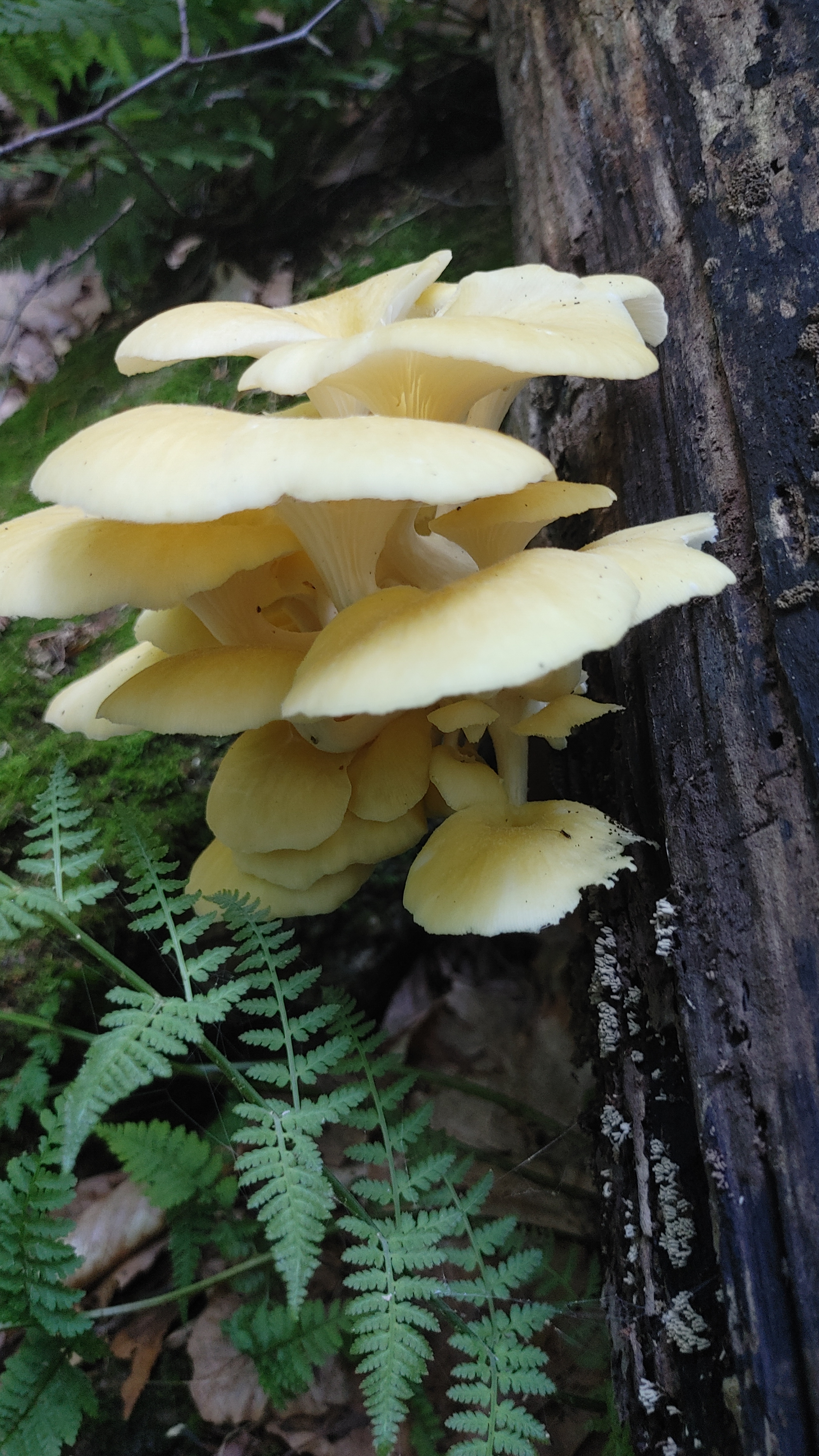
Two bunches of golden oyster, a sporulating slime mold, and a slug all on the same log.
There was also what looked like scrambled egg slime nearby, so maybe that's what's on the log?
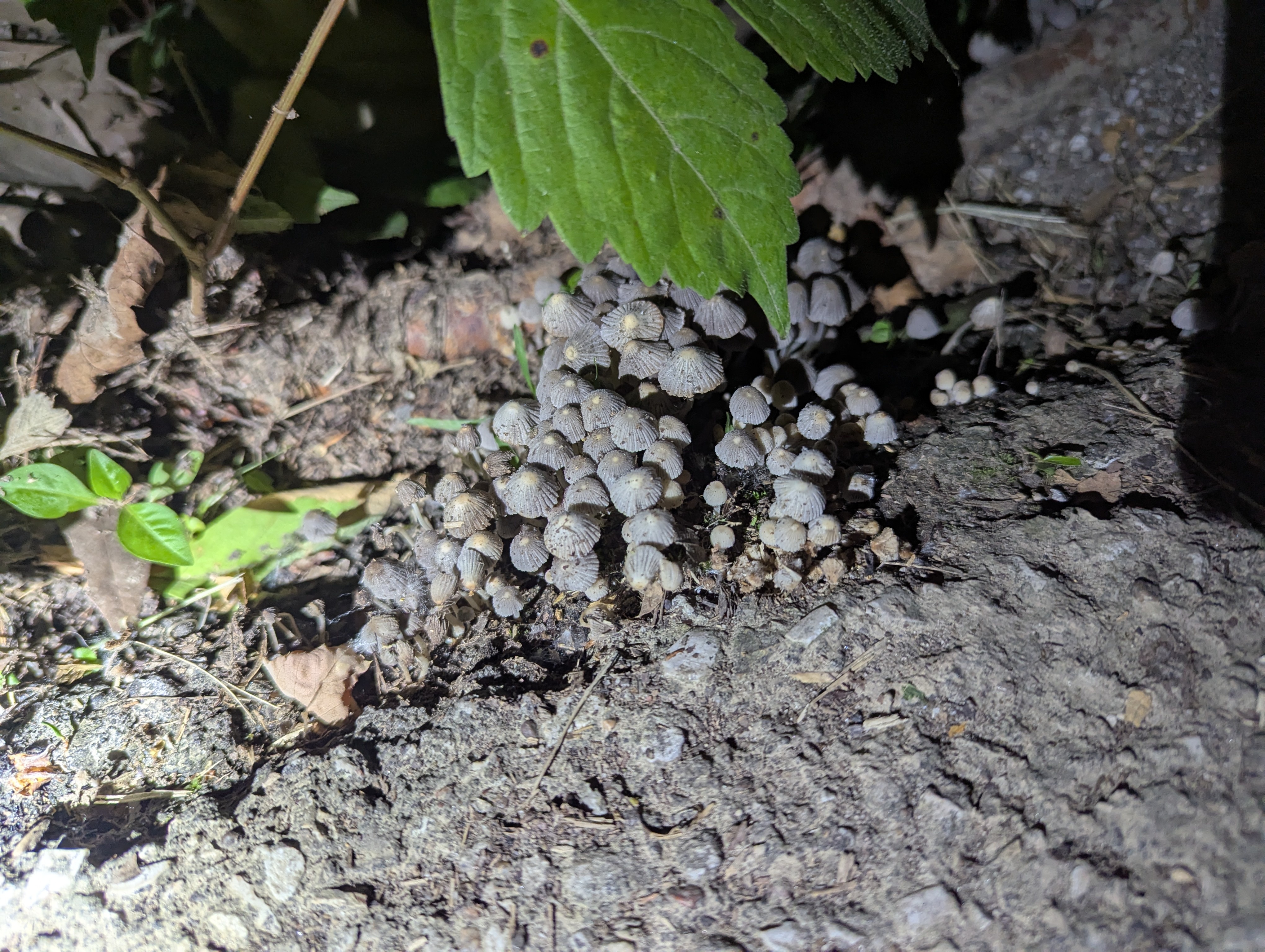
Genus Parasola doesn't really deliquesce to ink like the other inkys but they're very similar otherwise so they're usually considered inky caps anyway.
Here are the same Parasola two days after the first photo, as you can see they just sort of shrivel and tatter.

I can't say for sure which species of Parasola these are because species within this genus tend to be difficult/impossible to differentiate. Even just within the Pacific Northwest this genus contains many cryptic genetic species which don't even have names yet, much less reliable descriptions.

Will post photos in the comments but here are some details:

Sorry, no pictures of the underside. I was in a hurry and didn't have time. They shriveled up by the time I got back to them (a few hours later).

I listened to a lecture once and the presenter mentioned that these mushrooms aren't actually gilled and are actually pored mushrooms in the order Boletales that evolved gill-like structures.

I found this nice looking COTW while kayaking the other day growing on a downed tree in the middle of the river.
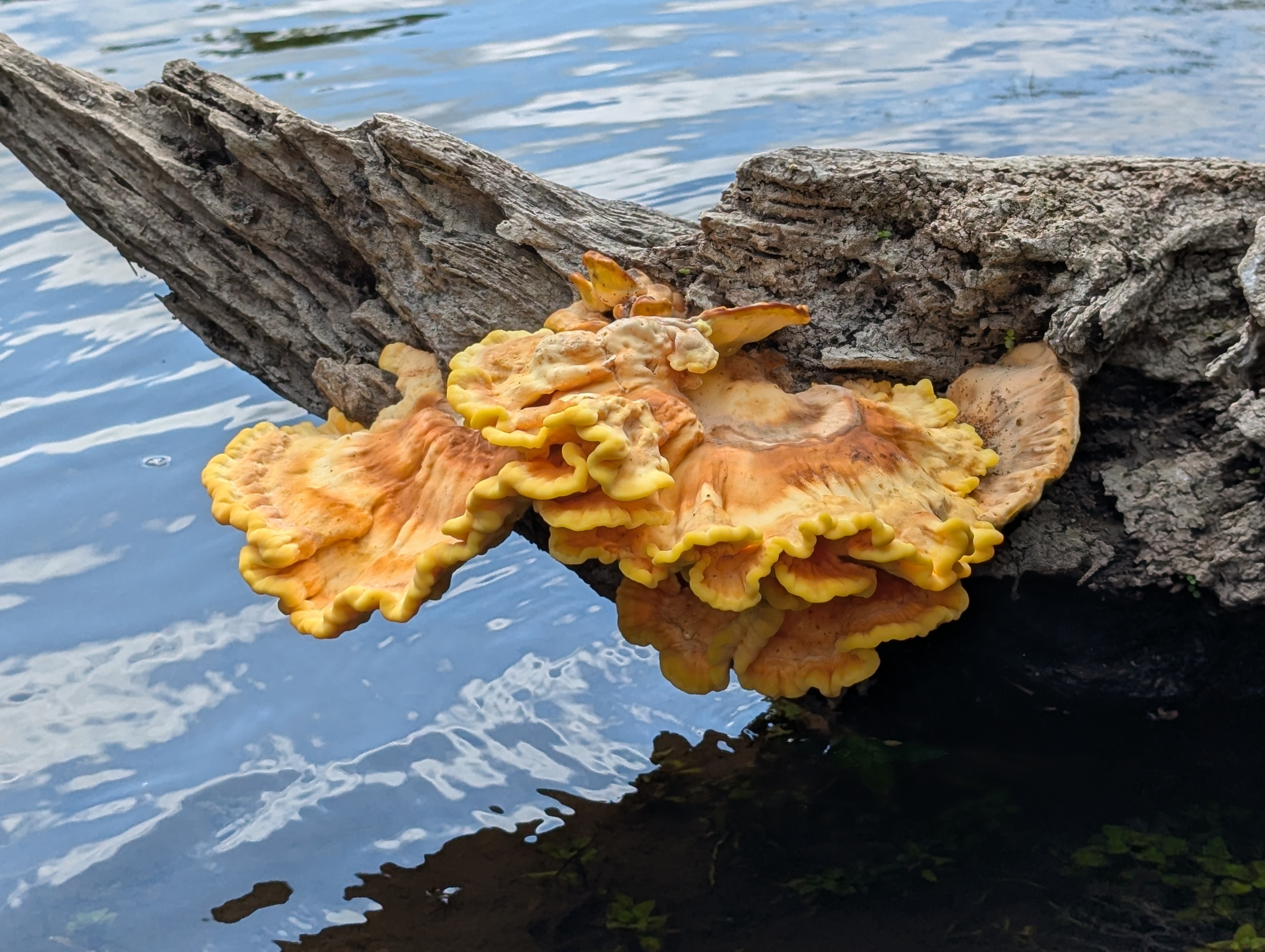
I thought this was a Hygrocybe at first and was very surprised that the spore print was brown. I love the little grooves on the stem.


Good morning to all. I have a Japanese Cherry tree, here in North Mississippi, that has a few hitchhikers. Do any of you fine folks know what this is by any chance?

Found a few weeks ago, always wondered when these came up in my area.

Spore photo taken at 600x magnification on a Swift 380T.

Update: The first photo was day 3 of growing. We harvested on day 4, and got 255 grams of tasty snack! 


It's... Bloomed? Multiple times (see background) pile of chipped wood, zone 8 US.

I didn't know what this was when I first found it but I thought that it had mycoheterotroph vibes and snapped a photo. iNat confirmed it as Corallorhiza striata. I should have waited a couple days for the flowers to open. Very neat, I will be on the look out for more next season.

Usually show up in the garden a couple weeks before they do in the woods.

I started out as a hobby mycologist but I live in Canada and mushrooms can be in short supply during the winter. I took up amateur lichenology to fill the void but I quickly became consumed by them, there was so much I didn't know and the uncharted-territory aspect of it took hold of me. Now I photograph way more lichens than mushrooms and I've started to do a bit of public speaking for my mycology group on lichens and their ecology. I am just an amateur though so I'm not an expert by any means. Pic: Stereocaulon sp. The link is below.

I normally grow things like pioppino, lions mane and oysters, this is my first time growing a polypore. It took a long time, many months haha. I think this was inoculated back in november and I just got around to fruiting a few weeks ago. Lots of spore samples to put under the microscope, let me tell you.

Went out to take a look at some massive colonies of Xanthoparmelia growing on a rock face. 5% potassium hydroxide test results in a nice deep yellow, almost green stain on the upper cortex. The medula is also K+, turning a deep blood red/orange. I blotted the soaked lichen on some paper and got this beautiful golden-rod ink. This ink was produced from less than a cm^2^ of lichen and a couple drops of KOH. I would love to experiment more given the abundance of this lichen and the small amount of material needed to produce the ink. This photo was taken 24hrs after staining the paper but I'd need to further test the colour fastness.
Edit: I am conscious of ethical harvesting practices for lichens, I normally only harvest for identification purposes and even then I try to only collect samples detached from the substrate.