Work Reform

13445 readers
243 users here now

A place to discuss positive changes that can make work more equitable, and to vent about current practices. We are NOT against work; we just want the fruits of our labor to be recognized better.

Our Philosophies:

Our Goals

founded 2 years ago
MODERATORS
1


Thanks for subscribing to /c/workreform@lemmy.world ! Now that we've grown (and are growing) so quickly, I've had some calls to discuss what this community is for!

What we stand for

As the sidebar says, Work Reform aims to increase the share of rewards reaped by the workers (as opposed to capitalists - be it shareholders or owners), and make work more equitable. We do NOT aim to abolish labor altogether - I personally don’t think that’s a viable societal system. There is no known system in human history where majority of the population can subsist without doing anything in return.

What we need to do

I see a few things necessary to reform the current economic system - let’s call it Awareness, Advocacy and Action:

  • Awareness means getting people to realise that the corporate propaganda they’re hearing isn’t the whole truth.
  • Advocacy means going out and telling people to join the cause, form a local union, etc.
  • Action means taking organized action - writing to politicians, organising dialogues and strikes, etc.

What this space can be used for

In short, all of the above!

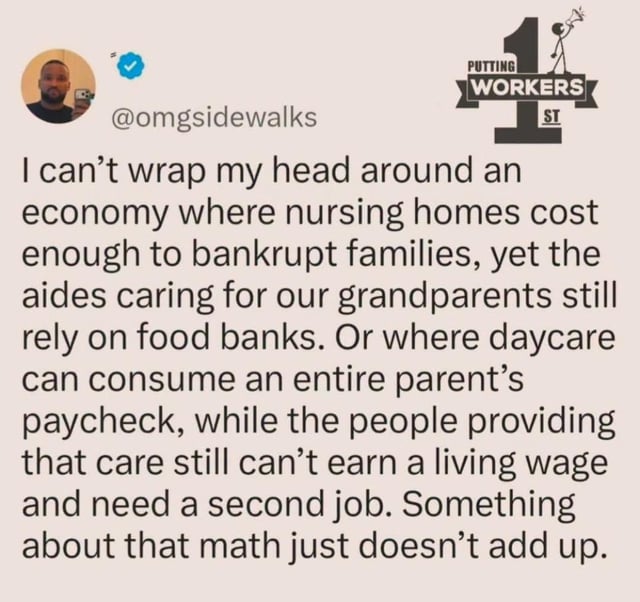
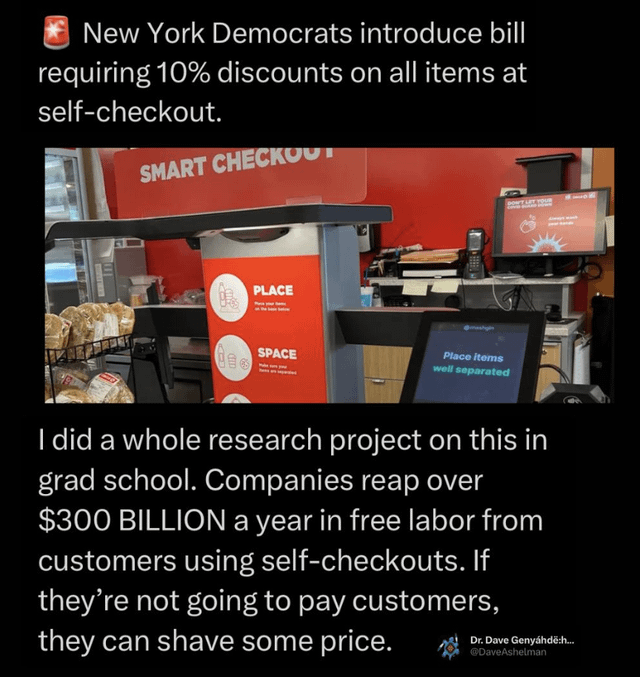
  • To raise Awareness, you can post anything that talks about the issue of wage disparity. That means venting about scummy practices, that means posting news that counters corporate propaganda, and that means posting memes and screenshots of relevant tweets.
  • To engage in Advocacy, you can post news about organised action taking place elsewhere that we can celebrate or contribute to.
  • To take Action, you can start a local chapter of your union, organize/engage in online campaigns, etc. This space can be used to help gather people for that purpose.

I personally think the most important thing now is to get more people to rally behind the cause (which means Action and Advocacy). But some of you have really good ideas on taking Action. So feel free to use this space for that purpose.

As it grows, we can discuss how best to use this community as well, so the rules may evolve over time.

2


cross-posted from: https://lemmy.dbzer0.com/post/51665085

The Fifth Circuit Court of Appeals sided with SpaceX earlier this week, ruling that the National Labor Relations Board’s current structure is unconstitutional. The decision will keep the agency hamstrung until the case makes its way to the Supreme Court.

3
4


cross-posted from: https://reddthat.com/post/48434783

Comments

Key Findings

  1. CEO pay at Low-Wage 100 firms has soared since 2019 while median worker pay has lagged behind U.S. inflation.
  • Between 2019 and 2024, average CEO compensation within this group rose 34.7 percent in nominal — unadjusted for inflation — terms, more than double the 16.3 percent increase in these firms’ average median worker pay. The U.S. inflation rate over this same period: 22.6 percent.
  • Average CEO compensation within the Low-Wage 100 hit $17.2 million in 2024. The group’s average median worker pay sat at just $35,570.
  • The average CEO-worker pay ratio of Low-Wage 100 firms has widened by 12.9 percent, from 560 to 1 in 2019 to 632 to 1 in 2024.
  • The nominal value of median pay actually fell at 22 Low-Wage 100 corporations during this period.
  • The Starbucks pay gap hit 6,666 to 1 last year, the Low-Wage 100’s widest spread by far. In 2024, the Starbucks CEO pocketed $95.8 million. Over the past six years, amid worker discontent fueling union-organizing drives at hundreds of Starbucks stores, the firm’s median pay rose just 4.2 percent in real terms to $14,674. Only seven S&P 500 firms have lower median pay.
  • Ulta Beauty reported the Low-Wage 100’s steepest drop in median pay. Between 2019 and 2024, a period when the cosmetic retailer significantly expanded the part-time worker share of its workforce, the company’s real median pay plunged by 46 percent to $11,078.
  1. From 2019 through 2024, the Low-Wage 100 spent $644 billion on stock buybacks.
  • Over the past six years, all but three Low-Wage 100 firms spent corporate dollars on stock buybacks. By repurchasing their own shares, companies artificially inflate executive stock-based pay and siphon resources out of worker wages and productive long-term investments.
  • Lowe’s ranks as the Low-Wage 100’s buyback leader. The company spent $46.6 billion on share repurchases from 2019 through 2024. Over that span, this sum could have funded an annual $28,456 bonus for each of the firm’s 273,000 employees — or added 88 employees to each of the firm’s retail outlets. In 2024, Lowe’s CEO Marvin Ellison enjoyed a total compensation of $20.2 million — 659 times more than the retailer’s $30,606 median annual worker pay.
  • Home Depot currently sits second in the Low-Wage 100 buyback rankings. The big-box chain spent $37.9 billion on share repurchases between 2019 and 2024. That outlay would have been enough to give each of Home Depot’s 470,100 global employees six annual $13,423 bonuses. The Home Depot median pay: just $35,196.
  1. From 2019 through 2024, a majority of Low-Wage 100 firms spent more on stock buybacks than on long-term capital expenditures.
  • Over the past six years, 56 Low-Wage 100 companies plowed more corporate cash into buying back their own shares of stock than investing in capital improvements.
  • If we exclude capital expenditure outlier Amazon from the calculation, the Low-Wage 100 as a whole spent more on buybacks than on “CapEx” during this period.
  1. At least 32 billionaires owe their wealth to Low-Wage 100 companies.
  • Five of these firms have spawned multiple billionaires still living today: Walmart (eight), Estee Lauder (four), DoorDash (three), Public Storage (two), and Tyson Foods (two).
  1. Policy changes can prevent wasteful stock buybacks and excessive CEO payouts.
  • Taxing extreme CEO-worker pay gaps: In one recent survey, 80 percent of likely voters expressed support for a tax hike on corporations that pay their CEO over 50 or more times what they pay their median employees.
  • Increasing the buybacks tax: If Congress in 2022 had set our current 1 percent excise tax on stock buybacks at 4 percent, the Low-Wage 100 would have owed approximately $6.3 billion in additional federal taxes on share repurchases in 2023 and 2024.
  • Restricting buybacks and CEO pay through federal contracts and subsidies: The Biden administration made modest progress on this front through the CHIPS semiconductor subsidy program. But the federal government could be doing much more to leverage the power of the public purse against wasteful stock buybacks and excessive CEO pay.
5


Paywall removed https://archive.is/kBbnO

6
7
 
 
8


cross-posted from: https://programming.dev/post/35983951

The tech industry's shifting landscape and the growing precarity of its labor force have spurred unionization efforts among tech workers. These workers turn to collective action to improve their working conditions and to protest unethical practices within their workplaces. To better understand this movement, we interviewed 44 U.S.-based tech worker-organizers to examine their motivations, strategies, challenges, and future visions for labor organizing. These workers included engineers, product managers, customer support specialists, QA analysts, logistics workers, gig workers, and union staff organizers. Our findings reveal that, contrary to popular narratives of prestige and privilege within the tech industry, tech workers face fragmented and unstable work environments which contribute to their disempowerment and hinder their organizing efforts. Despite these difficulties, organizers are laying the groundwork for a more resilient tech worker movement through community building and expanding political consciousness. By situating these dynamics within broader structural and ideological forces, we identify ways for the CSCW community to build solidarity with tech workers who are materially transforming our field through their organizing efforts.

9
10
11
12
13
14


cross-posted from: https://piefed.world/post/388044

REI union makes progress!

15
16


Didn’t see this posted here. Too early to tell exactly how it will work out but, might be of interest..

17
18
19


cross-posted from: https://lemmy.world/post/34455108

Paywall removed https://archive.is/iVtoE

20
21


While many of them still provide free food and pay well, they have little compunction cutting jobs, ordering mandatory office attendance and clamping down on employee debate. [...] “Tech could still be best in terms of free lunch and a high salary,” Ms. Grey said, but “the level of fear has gone way up.”

Along the way, the companies became less tolerant of employee outspokenness. Bosses reasserted themselves after workers protested issues including sexual harassment in the workplace. With the job market flooded with qualified engineers, it became easier to replace those who criticized. “This is a business, and not a place to act in a way that disrupts co-workers or makes them feel unsafe, to attempt to use the company as a personal platform, or to fight over disruptive issues or debate politics,” Sundar Pichai, Google’s chief executive, said in a blog post last year.

22
23
24
25
view more: next ›