this post was submitted on 13 Jul 2026
951 points (98.4% liked)
People Twitter
10181 readers
1653 users here now
People tweeting stuff. We allow tweets from anyone.
RULES:
- Mark NSFW content.
- No doxxing people.
- Must be a pic of the tweet or similar. No direct links to the tweet.
- No bullying or international politcs
- Be excellent to each other.
- Provide an archived link to the tweet (or similar) being shown if it's a major figure or a politician. Archive.is the best way.
founded 3 years ago
MODERATORS
you are viewing a single comment's thread
view the rest of the comments
view the rest of the comments
Careful, someone might call you an ecofascist for acknowledging that obvious reality...
It's like clockwork - you can almost set your watch by someone responding like that to pointing out the obvious that human population is straining global resources and making life worse for everyone.
I like to phrase it as this: who is the ecofascist? The person advocating for sustainable human population, or the person telling everyone we need to tighten our belts, give up meat, eschew fossil fuels and personal transportation, and live like a pauper in a cheap cookie-cutter dystopian apartment complex to prevent overconsumption? I would argue it's very much the latter.
Personal ethics aside (not everyone wants to eat meat and burn gas), everyone could live like a modern-day billionaire if there were fewer people. Everyone could have beachfront and slopeside property. Can't do that with 8.3 billion people. Isn't that the goal of fully-automated luxury gay space communism?
I mean, I've always said that the population is a real problem with no good solutions. People are uncomfortable talking about it because there are no good solutions, but that's no reason to pretend it doesn't exist. But people act like even mentioning it is the same as proposing or supporting an unethical solution.
Too many people are too brainwashed into that "do everything right now and fix everything right now because problems cannot be accepted" mentality which I blame on capitalism and the fast-paced modern lifestyle it imposes.
People treat me like I'm the one who's wrong for being okay with a slower pace of life, for being okay for acknowledging problems without insisting on an urgent need to solve them all right now. Sometimes we need to just accept that there are problems, sometimes we need to stew in those problems because nothing can be done about them. But that's so taboo these days that people won't even consider it a possibility, they can't comprehend someone who thinks like that, so they assume that I mean "no, we must solve these problems even though the only solutions would be evil." That's not what I mean at all.
In effect, it becomes taboo to even mention uncomfortable problems with no good solutions. Everyone wants to pretend they just don't exist. That's precisely what allows fascism to sneak in. People want to pretend everything is okay, and they'll crucify the messenger who says "everything is not okay," every time, until it's too late and there are no messengers left, but the things they were trying to warn about have already become the new reality.
Some people get upset when you mention climate change. Some people get upset when you mention overpopulation. But these aren't separate or mutually exclusive problems. They feed on each other, compound on each other in a feedback loop. They crash into each other violently.
Just as the world is struggling to maintain the balance of its delicate ecosystems, we're increasing the load we're placing upon it. That in turn accelerates the demise of those ecosystems.
Land becomes uninhabitable, glaciers melt and rivers dry up, sea levels rise, storms become more violent, coastal areas flood, rains become sporadic and erratic, arable land decreases, swaths of the globe bake. These things destabilize populations, give momentum to dictators, create resource wars, ethnic cleansings, displacements of people, mass migrations. People then coalesce in the most habitable regions, whose infrastructure and resources aren't ready to handle the influx. This creates local pushback and empowers more dictators. All while powerful people accelerate global warming to try and mitigate the symptoms it's causing, instead of addressing the underlying causes.
It's all predictable. Scholars have been writing about this for decades. I remember reading about it in the early tens, long before we crossed the event horizon. People were warning about this every bit as much as they were warning about global warming.
It's something that needs to be discussed. That doesn't mean we need to enforce birth limits, or kill masses of people, or let them die by famine, plague, and war. But throughout history you can see that whenever the population began to strain the resources of the land that contained it, these things happened and the earth found ways to restore some balance.
People don't like to think about that either, because they think we've conquered nature. We haven't. We depend on nature, and we always will. Only now, there's nowhere left to run. No new lands to expand to. No more new frontiers.
And the destruction is unprecedented, existential even. This is the first time we've strained the planet to the point where it itself might collapse.
And yet we still keep carrying on, pretending that's not an issue.
Unless we find a way to colonize an earthlike planet, or a moon that contains water (maybe borrowing some oxygen from a gas giant like Jupiter), then I don't see any ethical solutions to the population issue until the planet takes it into its own hands and we bring about our own extinction.
But even if we move to another planet or moon, isn't that just a new place to exploit? Wouldn't the population just keep growing, until it eventually strains those resources as well? Or would we be bringing life to an otherwise barren wasteland? Is that a moral quandary, or our inescapable destiny? Is that the purpose of life, to expand into new realms, just as the earliest microbes came to earth from far, far away?
Should we harvest iron from mars and use it to build space colonies at various lagrange points? Would that be exploiting the resources of mars, or is it just a dead planet with no claim to what it holds? Regolith from asteroids, hydrogen and oxygen from Jupiter. Are these resources there waiting for us to take hold of, or do they belong to something else? Can an inanimate object like a planet truly have a claim to those things?
Cutting to the core of the question, is it worth it to take advantage of those resources if it means saving the jewel of our solar system, the earth where life abounds (at least for now)?
I agree with mostly everything you wrote in that, except to say that the problem is mostly manmade and is economic in nature.
Problem: demographic collapse causes a top-heavy (old-heavy) population pyramid whereby there aren't enough young people to take care of the aging population. This is a real problem that we should engineer ourselves out of. Maybe a higher % of the workforce is redirected to healthcare, in part by automating away bullshit jobs like fast food and retail workers. Maybe we make advances in automation/robotics/AI that allows some of the caregiving labor in hospitals and nursing homes to be done by machines instead of people (extending the productivity of the human labor). Those are problems we should be working towards solving, and plausibly could solve if the political and economic will were there. I hope Japan and South Korea get really far into solving this before it becomes a problem everywhere.
Problem: our entire economy is predicated upon infinite growth, and the nanoinstant that belief in future growth falters, the stock market and entire economy collapses in a way that makes the Great Depression look like a quaint blip. This is unsolvable. All of the wealthy, powerful, and political factions would revolt if anything threatened their prospects of unlimited future growth. The entire world economy is a ponzi scheme that requires new markets, new consumers, and perpetual growth even to exist at its current level. When you hear "growth is priced in", that's basically the fundamental corner we've painted ourselves into. The markets assume untenable growth now as the baseline, and if the mirage falters, the economy will tank shockingly quickly. This is the Faustian bargain of late stage capitalism.
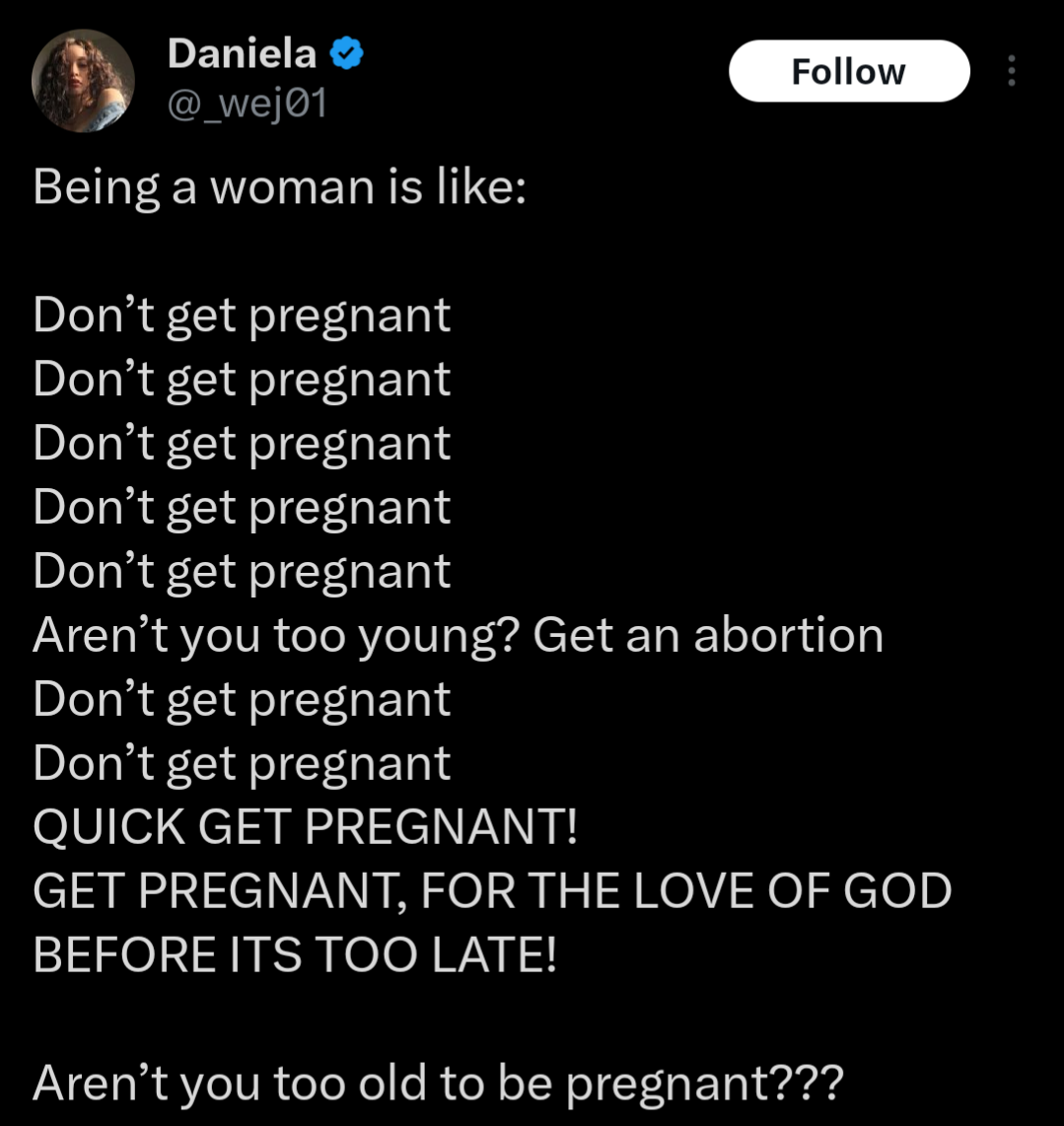
As it stands, the population growth has peaked, and the population will naturally peak and then decline. Nobody needs to be killed or sterilized to make this happen - it will happen on its own. The reason seems to be rooted in the education level of women, and the availability of reliable birth control. As someone once eloquently put it: "the average woman would choose to give birth fewer than 2.1 times" (replacement rate).
As a final thought, I will never agree with people who assert that the "carrying capacity" of Earth is far higher than the present population - double or more. This entire premise is based on living like an impoverished person in India or Africa. They will freely admit that the "carrying capacity" is much lower if the baseline living standard is the middle class of developed countries. Most of North America and Western Europe is wildly rich by global standards (fact). I'm here to say that still higher standards are desirable and attainable, at low global impact with lower global populations. We should all be filthy, filthy resource-rich, and to deprive us of that because the Earth "should" have 10-20 billion humans is fucking bollocks.