this post was submitted on 07 Feb 2026
34 points (97.2% liked)
HistoryArt
627 readers
33 users here now
This magazine is for sharing artwork of historical events, places, personages, etc. Scale models and the like also welcome!
MORE COMMS ON THE HISTORYVERSE:
- !historymusic@quokk.au
- !historygallery@quokk.au
- !historymemes@piefed.social
- !historyruins@piefed.social
- !historyartifacts@piefed.social
- !historyphotos@piefed.social
founded 8 months ago
MODERATORS
you are viewing a single comment's thread
view the rest of the comments
view the rest of the comments
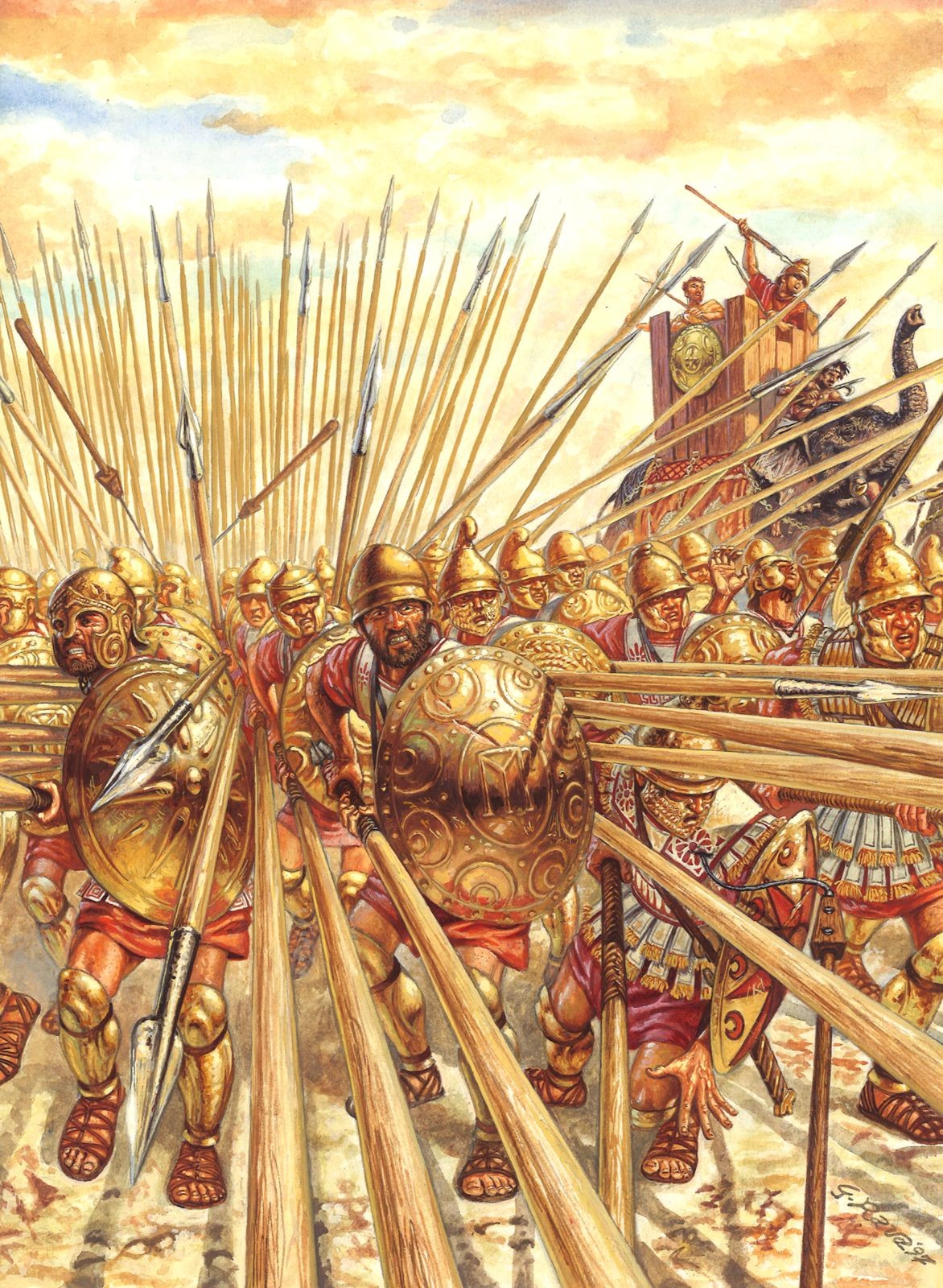
That was actually a major difference between the phalanx and later pike formations!
The Macedonian phalanx still maintained a shield, but it was smaller than the traditional hoplon, and strapped to the arm instead of held with the hand. This mean that phalangites did have two hands, technically, to handle the sarissa, but with one arm a little bit... obstructed.
Later medieval pike formations tended to prefer heavier armor and to eschew shields, leaving both hands completely free to handle the pike, making the formations more maneuverable and effective.
Makes sense! Thanks for your always detailed and informative answers ❤️