this post was submitted on 27 Feb 2026
705 points (99.0% liked)
ShermanPosting
252 readers
185 users here now
Where we meme (joking in tone and detail, serious in sentiment) about General Sherman, the Civil War, and how the secesh traitors had it coming.
RULES
-
No bigotry. The Union, or at least the part of the Union WE support, fought AGAINST that shite. We are anti-racist, anti-sexist, anti-homophobic, anti-transphobic, and in general anti-bigot here, even if not all the lads in Union blue uniforms were.
-
No Confederate sympathizing. Anti-democratic racist slaver traitors don't deserve shit.
-
Follow all Piefed.social rules
founded 7 months ago
MODERATORS
you are viewing a single comment's thread
view the rest of the comments
view the rest of the comments
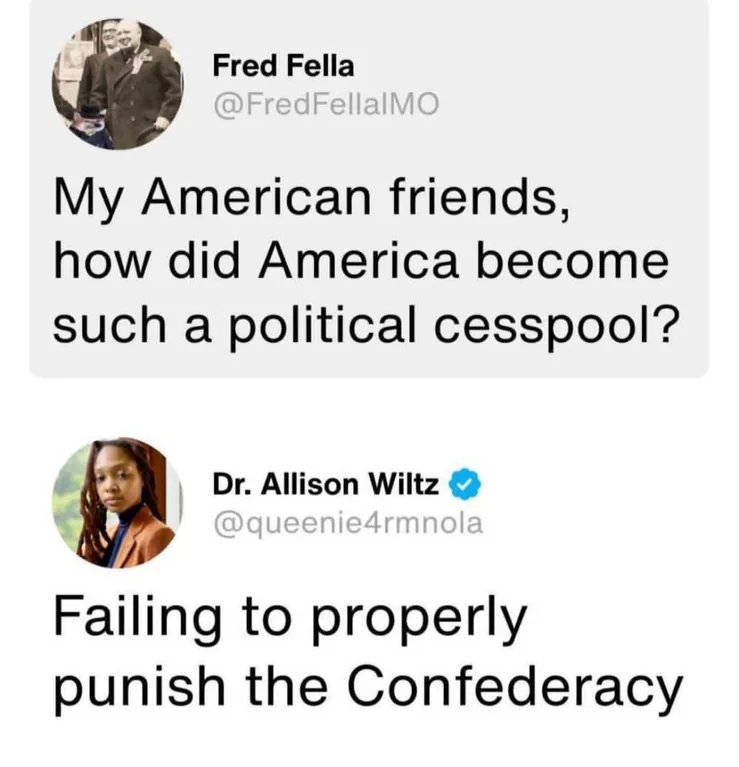
I think the “the U.S. didn’t punish the Confederacy enough” argument misses a structural piece of the puzzle.
Whether Reconstruction was too lenient or too harsh, the deeper issue is that our electoral system (first-past-the-post, single-member districts, winner-take-all) structurally favors ideological cohesion and intensity over breadth and compromise.
In a first-past-the-post system:
You can only pick one option.
Minorities with high motivation outperform majorities with lower cohesion.
Broad coalitions have to cover far more policy ground than intense factions do.
Turnout advantages go to the side that feels existentially threatened.
That creates what I’d call a ratchet toward polarization. The system doesn’t mathematically guarantee extremism, but it systematically biases toward it. The “policy surface area” of the broader coalition becomes a liability, while the more ideologically concentrated side benefits from cohesion and turnout energy.
So when we look at post–Civil War politics, the question might not just be “Was the Confederacy punished enough?” It might be:
Would any punishment regime have prevented future sectional radicalization inside a winner-take-all electoral structure?
If the underlying incentive system rewards intense minority mobilization, then over time you’ll tend to see:
Polarized regional blocks
Identity consolidation
Historical grievance becoming political fuel
That’s not unique to Reconstruction. It’s a recurring dynamic in FPTP systems.
I’m not saying punishment was irrelevant. I’m saying institutional incentives matter more in the long run than the severity of any single political settlement.
If you want to reduce extremist drift, you don’t just change policy outcomes — you change incentive structures (ranked-choice, multi-member districts, proportional systems, etc.). Otherwise the same polarization dynamics reappear under new banners.