this post was submitted on 04 Mar 2026
75 points (66.8% liked)
Electric Vehicles
2423 readers
507 users here now
Overview:
Electric Vehicles are a key part of our tomorrow and how we get there. If we can get all the fossil fuel vehicles off our roads, out of our seas and out of our skies, we'll have a much better environment. This community is where we discuss the various different vehicles and news stories regarding electric transportation.
Related communities:
- !automotive@discuss.tchncs.de
- !avs@futurology.today
- !byd@lemmy.world
- !ebike@lemm.ee
- !energy@slrpnk.net
- !geely@lemmy.world
- !micromobility@lemmy.world
- !polestar@lemmy.ca
- !rivian@lemmy.zip
- !teslamotors@lemmy.zip
- !xiaomi@lemdro.id
founded 2 years ago
MODERATORS
you are viewing a single comment's thread
view the rest of the comments
view the rest of the comments
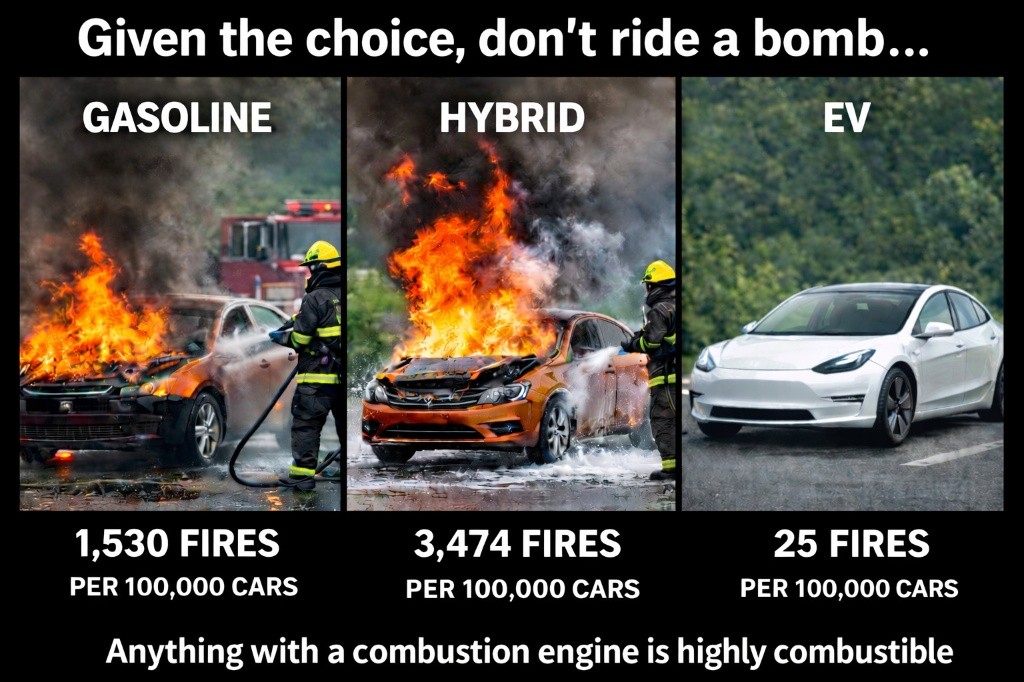
The problem is that water puts out fuel fires, but fuels battery fires.
Not true. They put out burning electric cars with water all the time. The issue is that it usually won't stop the thermal runaway reaction - it just pauses it. The car might re-ignite on its own later. That's why my local fire station has a container full of water that they submerge the car in to cool the battery pack down and actually stop the reaction.
Source (in Finnish)
Firemen know that, they are trained to use foam and dust for electrical fires even if no lithium batteries are present.
Also it's hard (or close to impossible maybe?) to extinguish a burning car with water if the petrol or diesel tank catches fire. There isn't much difference in that regard to EVs (maybe in terms of how long after the apparent flames a battery might rekindle the flames).
It took the firemen 45 minutes to put out my car after the full fuel tank ruptured.
An EV catching fire isn't an 'electrical fire', it's a metal fire. That's why it takes so long to put out and you just kind of try to suffocate it and let it die out.
(I didn't know/heard about it on safety meetings that the firefighters differentiate between them, but that makes sense. "Electrical fire" in the firefighter sense, which includes gasoline burning on some wires that carry current.)
Big battery safety is a very new thing tho, a bit like ice vehicles stopped being rolling fireballs after a few decades, I'm sure batteries will integrate fire safety features (ducts, chemicals, switches, or just different types of materials used to store charge).
You should use a fire extinguisher in any case
Please learn about fire extinguishers before using one.