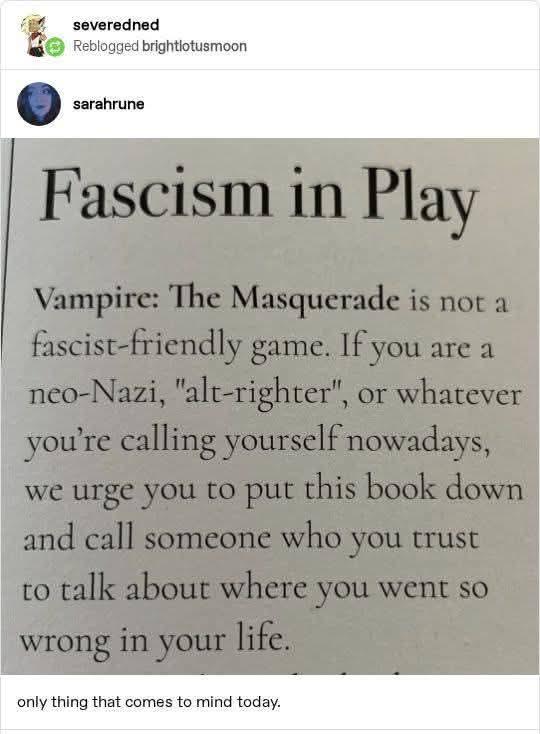
Holy shit. I had no idea about that!
Honestly I wouldn't normally share this here, but I'm reporting the bug to the devs on the official forums, and their forums aren't letting me upload the screenshot. So I figured I'd share it here and embed it using this site's URL instead, and share it with the good people of !rts while I'm at it.
My problem is that by doing that, you reward those drivers who deliberately try to take advantage and ignore the law.
Because they'll speed around the corner and go on with their day, probably not even realising they did anything wrong. What I do is still safe: I know I won't be in the way if they do keep speeding through. But it means if they try to speed through, they're gonna get one hell of a fright in the process.
You can see it shown off in full in the Jet Lag: The Game show. (YouTube link since I don't know if you're a Nebula subscriber. But it's also available without ads on Nebula. Also on Nebula is the after-show podcast where they go through some game design details and other behind-the-scenes.) That's the Japan season of Hide+Seek, which is where they first showed off the home game. There's also a Switzerland season from before the home game with quite different rules. And more recently a UK season with some minor rule tweaks + the expansion pack. And a New York–based one-off mini episode. Search their channel for those if you want. If you enjoy the show as entertainment, there are 12 other seasons with very different (not hide-and-seek) rules. I recommend starting with season 3, because Tag Eur-it is one of their best seasons, and it's after they figured out the format a lot better than seasons 1 & 2.
But the TL;DW is: the hider gets a certain amount of time to use public transport to hide. After the time, their nearest station becomes their hiding zone. The seekers then have to try and find them. They can ask certain questions such as "send me a photo of the tallest building visible from your transit station", "are you on the same transit line as me", and "are you within 5 km of me". The questions let the hider draw cards from the deck. Some cards give a time bonus. Others are "curses", which restrict the seekers in various ways. The hider has a GPS tracker on the seekers at all times, to assist with some of these.
Once the seekers enter the hider's hiding zone, the hider is no longer allowed to move throughout their zone (and questions which would require them to move are no longer allowed). Once the seekers find the hider, their time + any time bonuses are calculated, and the next hider starts their run.
There are rules for three scales. The nation scale that they play in Japan and the UK. The large city/region scale that they play in NY, and the small city/portion of a city option. The hiding time and value of time bonuses change, as do some of the questions available to seekers.
Context for the rest of the world:
Chris Minns is the Premier of the state of NSW (Premier being the state equivalent of Prime Minister) in Australia. Earlier this week, on the invitation of the Prime Minister of the country, Israel's President Herzog was in Sydney, NSW to commemorate the victims of last December's Bondi mass shooting at a Hanukkah event. Never mind that he's an Israeli political leader, not a Jewish religious leader who would have any business being there. And never mind that the shooter's motivation had nothing to do with the state of Israel (it was an ISIS-inspired shooting, not a Palestinian one).
Anyway, the event saw huge protests all over the country, especially in Sydney. And in Sydney, the police used some of the most brutal tactics we've seen in this country. "Kettling", where one set of police give an order to disperse, while other police refuse to allow them to move that way, effectively forcing protestors into direct conflict with police. Three particularly bad videos emerged, showing (a) police assaulting Muslims who were down on their knees praying, (b) a bicycle officer who tried to attack a protestor in office clothing, but comically fell over his own bike and tripped, leading the protestor to at first try to reflexively catch the guy, before the officer started beating him up while the protestor raised his arms up in the sign of surrender. Then a bunch more officers came in with full on swinging punches. And (c) a protestor restrained on his belly, as the officer holding him repeatedly close-fist punched him in the neck and around the liver.
At first the police were staunchly standing by the line that they followed all the necessary procedures, public safety, yada yada. The police have since announced that they will be conducting a review, but Minns, the Premier, has still refused to apologise.
NSW premier won’t apologise to Muslims after police grab men praying at rally against Isaac Herzog
I also do not recall anyone ever being encouraged to step out on to the road to get cars to stop! That’s lunacy if true. Unless I misheard.
I might also have misheard it, but I recall being confused by the same section you were. In my case, I heard it not as something people are actively encouraged to do, but as a learned behaviour that's somehow meant to make things safer. Only, I'm not sure how that's supposed to work...
edit: ok I just rewatched. He said
When boarding from the kerbside, the rules do say you should wait for the tram to stop before stepping onto the road, however in reality the accepted normal practice is to step out into the lane as the tram is approaching, because this forces the cars to stop.
So, I misunderstood it because I thought it was talking about when getting off the tram. Like, swing out of the tram as it's slowing down. And I was thoroughly confused how that would help anything. Probably because...it wouldn't.
But when doing it while getting on the tram, that kinda makes sense actually. You wouldn't step out right in front of a fast-moving car, but if you make it very visibly obvious you're about to step out when there's a car further away that looks like it might be headed in your direction, it can see you're there and stop in time.
I do a very similar thing all the time wherever I am, when crossing side streets, zebra crossings, etc. Places where the car is supposed to stop to give way, but where there's a high frequency that they won't actually do it. I make every effort to look like I'm about to step out in front of them without caring, while being hyper-aware and ready to stop or step back if they don't actually give way as they're required to. It nearly always works: people who weren't going to give way if I had slowed down and acted visibly cautious as most pedestrians do, end up following the law when it looks like I'm forcing them to.
Crossherd #342
🟩🟩🟩🟩⬛️
🟩🟩🟩🟩⬛️
🟩🟩🟩🟩🟩
⬛️🟩🟩🟩🟩
⬛️🟩🟩🟩🟩
Time: 0:37
crossherd.clevergoat.com 🐐
There's only one mod and they've been inactive for two years. Someone should reach out to admins to get themselves made a mod. And in the meantime, I vote we ignore that rule. In fact, I'll start.
Oh whoops, sorry I didn't get to this earlier. I have far too many unread motifs in my inbox.
Anyway, I think it's important to clarify some terms. Cadence isn't measured in km/h, it's in steps per minute. You can go the same pace (or speed) with a high cadence or low cadence, by changing your stride length.
Definitely, a low pace is also helpful when recovering from injury. But in my previous comment, I was suggesting taking a lot of very short steps. My theory is that doing that means each step has less force going through it than fewer, larger steps, at the same pace.
Pace, fwiw, is basically the inverse of speed. Speed is measured in km/h, pace in min/km. Though terminology can be weird, because "high pace" usually means "pace with a lower number" (e.g., 4 minutes per kilometre is a "higher pace" than 5 min/km).

As both a driver and a pedestrian I absolutely hate when people do this. As a driver, I'm trying to do the right thing. People need to follow the law and give way when they're required to give way. That keeps everything predictable, and predictable is safe. (There are certainly times when it's appropriate to break the letter of the law, especially as a pedestrian or cyclist. But those times are basically "when there's nothing a driver has to do to avoid even coming close to you.")
As a pedestrian, I hate it because it just reinforces motornormacy and car supremacy, as though there isn't already enough in our society that does that. In the long run, all it does is make things less safe for pedestrians, because it increases the chances that the next driver will just go through without even trying to give way.