this post was submitted on 11 Mar 2026
793 points (98.4% liked)

Climate

8420 readers
1375 users here now

Discussion of climate, how it is changing, activism around that, the politics, and the energy systems change we need in order to stabilize things.

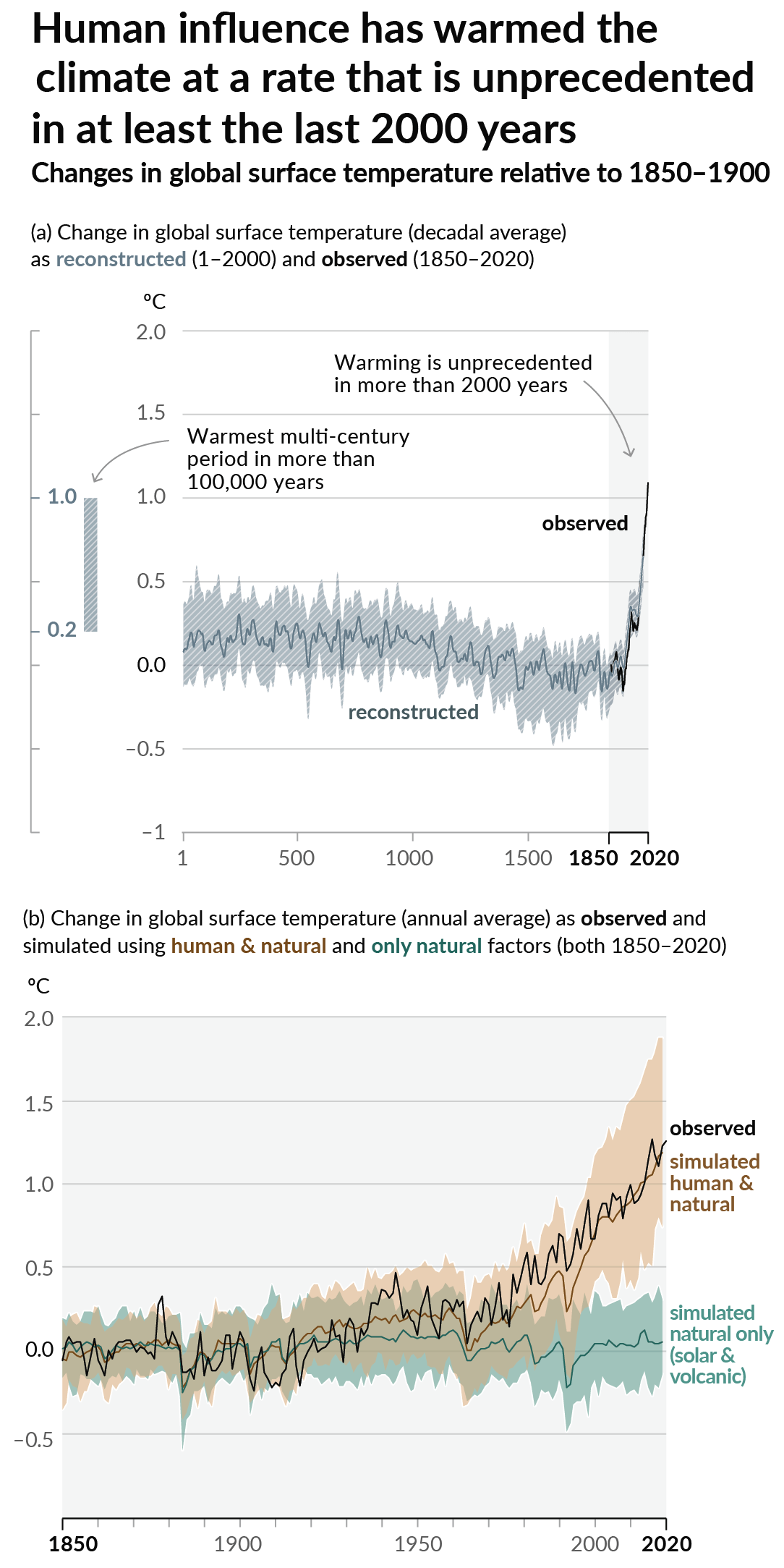
As a starting point, the burning of fossil fuels, and to a lesser extent deforestation and release of methane are responsible for the warming in recent decades: Graph of temperature as observed with significant warming, and simulated without added greenhouse gases and other anthropogentic changes, which shows no significant warming
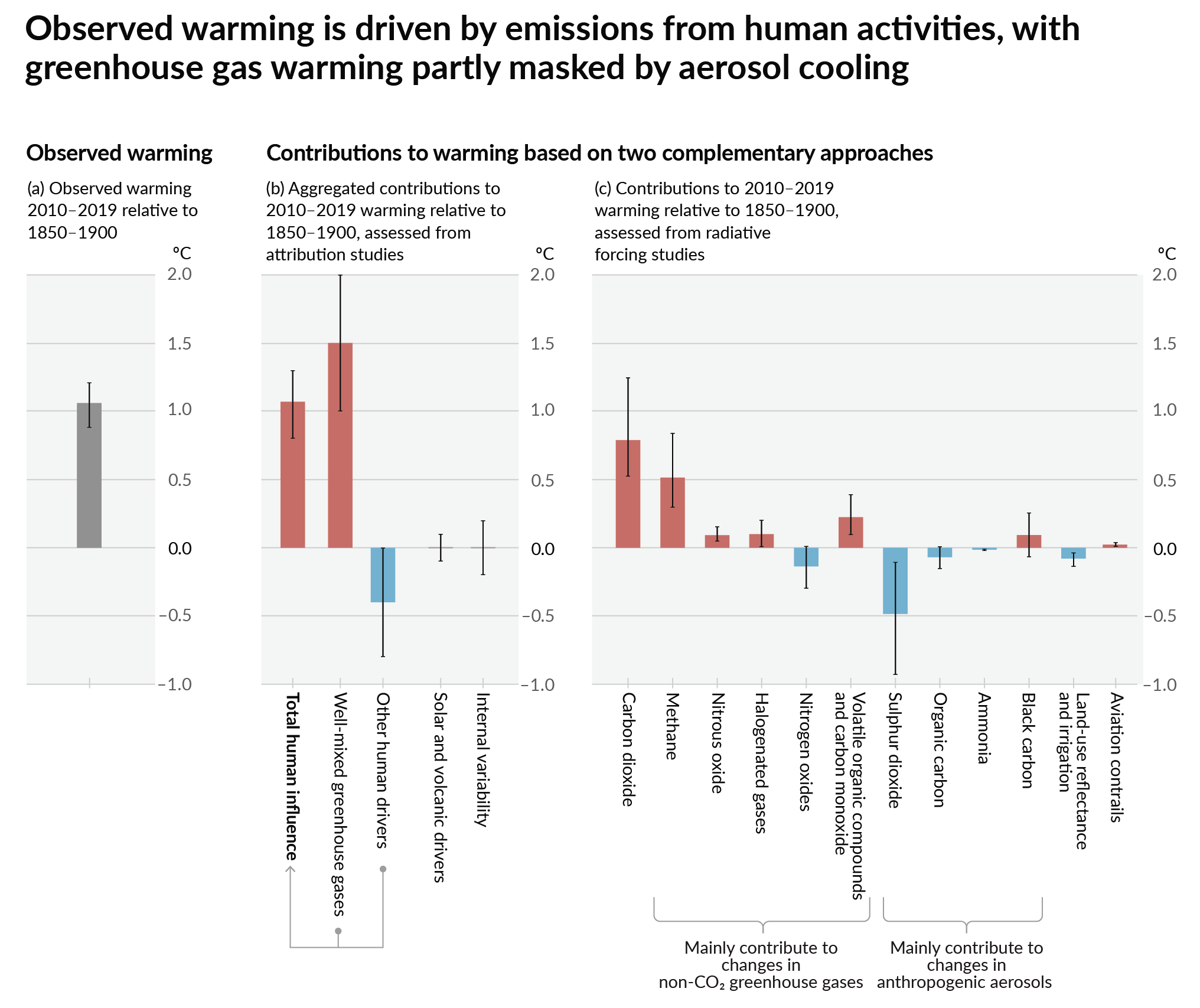
How much each change to the atmosphere has warmed the world: IPCC AR6 Figure 2 - Thee bar charts: first chart: how much each gas has warmed the world.  About 1C of total warming.  Second chart:  about 1.5C of total warming from well-mixed greenhouse gases, offset by 0.4C of cooling from aerosols and negligible influence from changes to solar output, volcanoes, and internal variability.  Third chart: about 1.25C of warming from CO2, 0.5C from methane, and a bunch more in small quantities from other gases.  About 0.5C of cooling with large error bars from SO2.
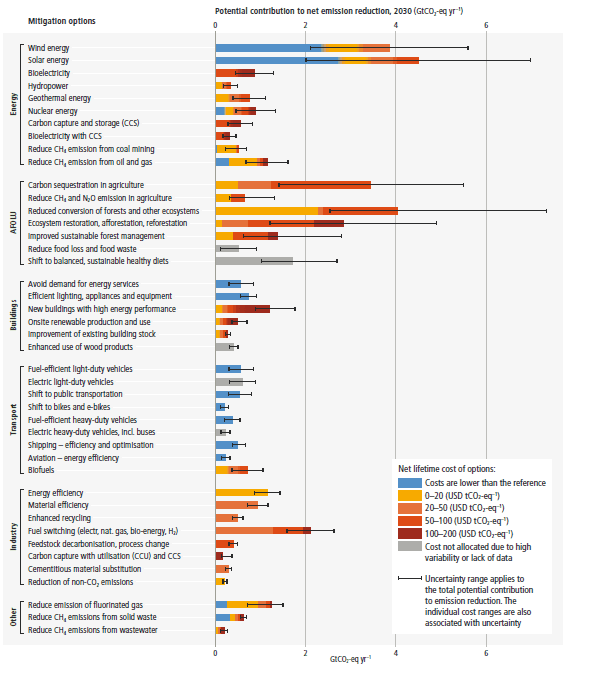
Recommended actions to cut greenhouse gas emissions in the near future:
Anti-science, inactivism, and unsupported conspiracy theories are not ok here.

founded 2 years ago
MODERATORS
you are viewing a single comment's thread
view the rest of the comments
[–] MrsVeggies@lemmy.blahaj.zone 23 points 10 hours ago (1 children)

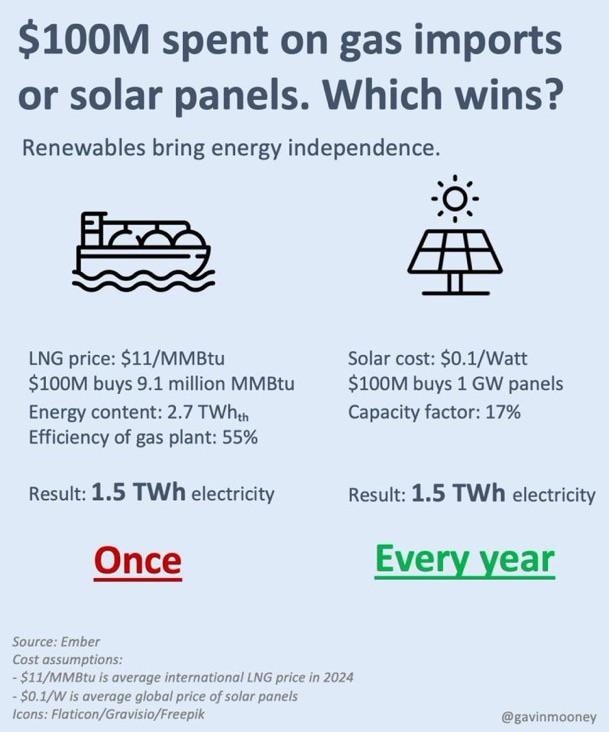
There are other expenses and location also plays a big role, but it is certainly true that solar is much cheaper when all is said and done. Hence why the energy transition continues in the US even without subsidies.

[–] copd@lemmy.world -3 points 7 hours ago (2 children)

my solar panels don't produce shit because my city never sees the sun.

[–] WhiskyTangoFoxtrot@lemmy.world 1 points 2 hours ago

Do you live in Menzoberranzan?

[–] SqueakySpider@lemmy.dbzer0.com 4 points 6 hours ago

The Short Answer

Low clouds can block light from the sun, which means less solar energy. However, certain cloudy conditions can actually increase the amount of light reaching solar panels. Weather satellites such as those in the GOES-R Series keep an eye on these clouds, which can help scientists make predictions about the capture of solar energy.

https://www.nesdis.noaa.gov/about/k-12-education/atmosphere/how-do-clouds-affect-solar-energy