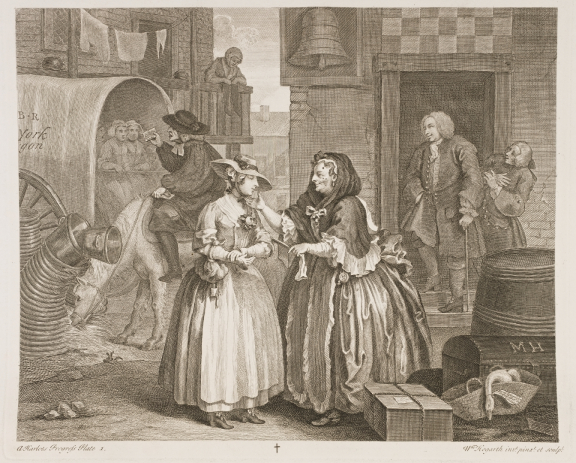
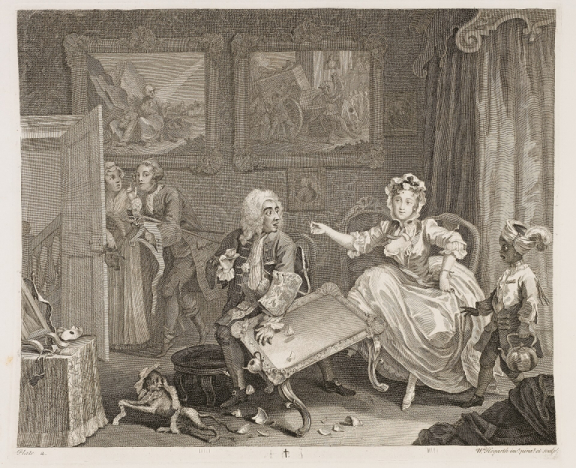
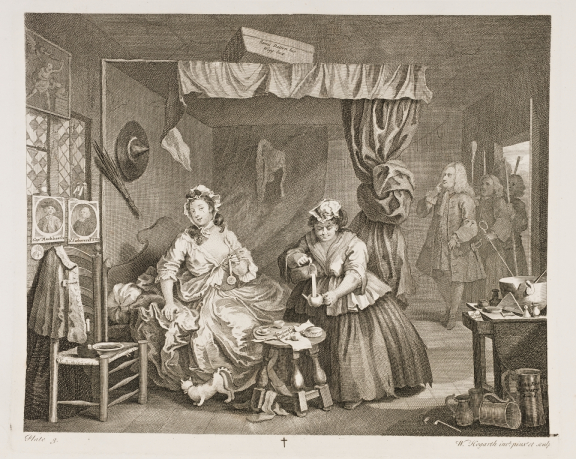
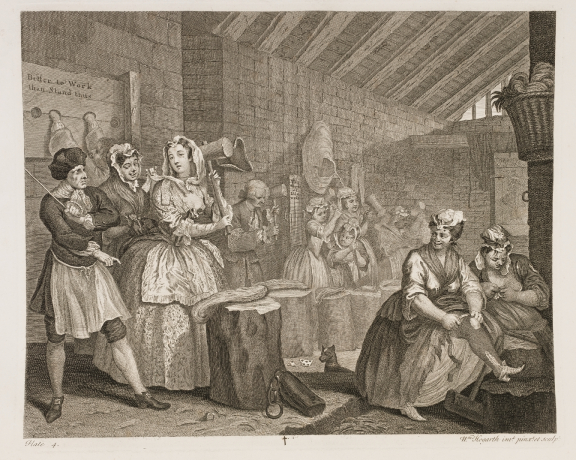
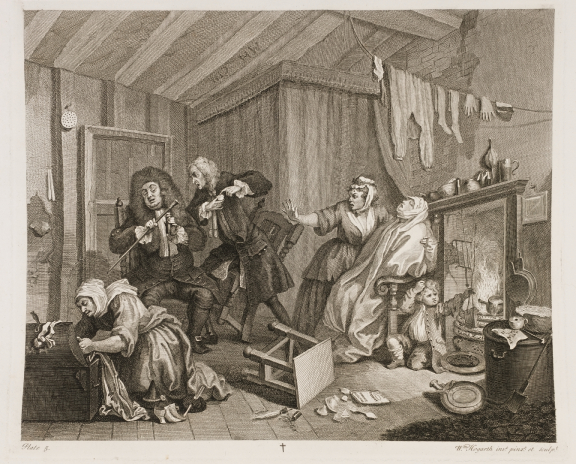
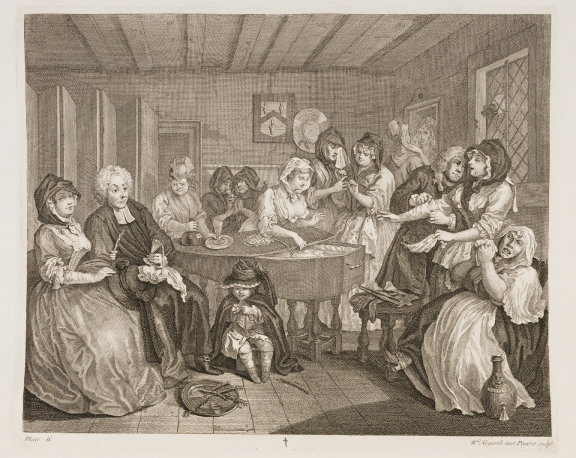
Back in 1732, William Hogarth’s A Harlot’s Progress basically lays down a rough blueprint for serial comics, a straight-line story broken into separate images that only really snap into focus when you see how each one leans on the next. Print pirates started cranking out bootleg copies of A Harlot’s Progress in 1732, and Hogarth got pissed enough to haul the whole mess into the legal arena, helping spark the 1735 Engravers’ Copyright Act that people still nickname “Hogarth’s Act.”
The six plates of this early comic follow the life of Moll Hackabout from hopeful arrival in London to death and ruin. Each scene moves the narrative forward, and they're meant to be studied in sequence, plate by plate, like chapters in a visual novel.
The work also uses tools that later become standard in comics. Hogarth repeats characters, props, and spatial arrangements so the eye tracks identity and change across the series.
Great art. The engraving work here is nuts, the kind of slow, obsessive skill that eats whole chunks of a life. Hogarth was hunched over copper, and taken care of shit. He carved lines so clean they still look amazing three centuries later.