this post was submitted on 07 Feb 2026
15 points (100.0% liked)

Climate

8263 readers
367 users here now

Discussion of climate, how it is changing, activism around that, the politics, and the energy systems change we need in order to stabilize things.

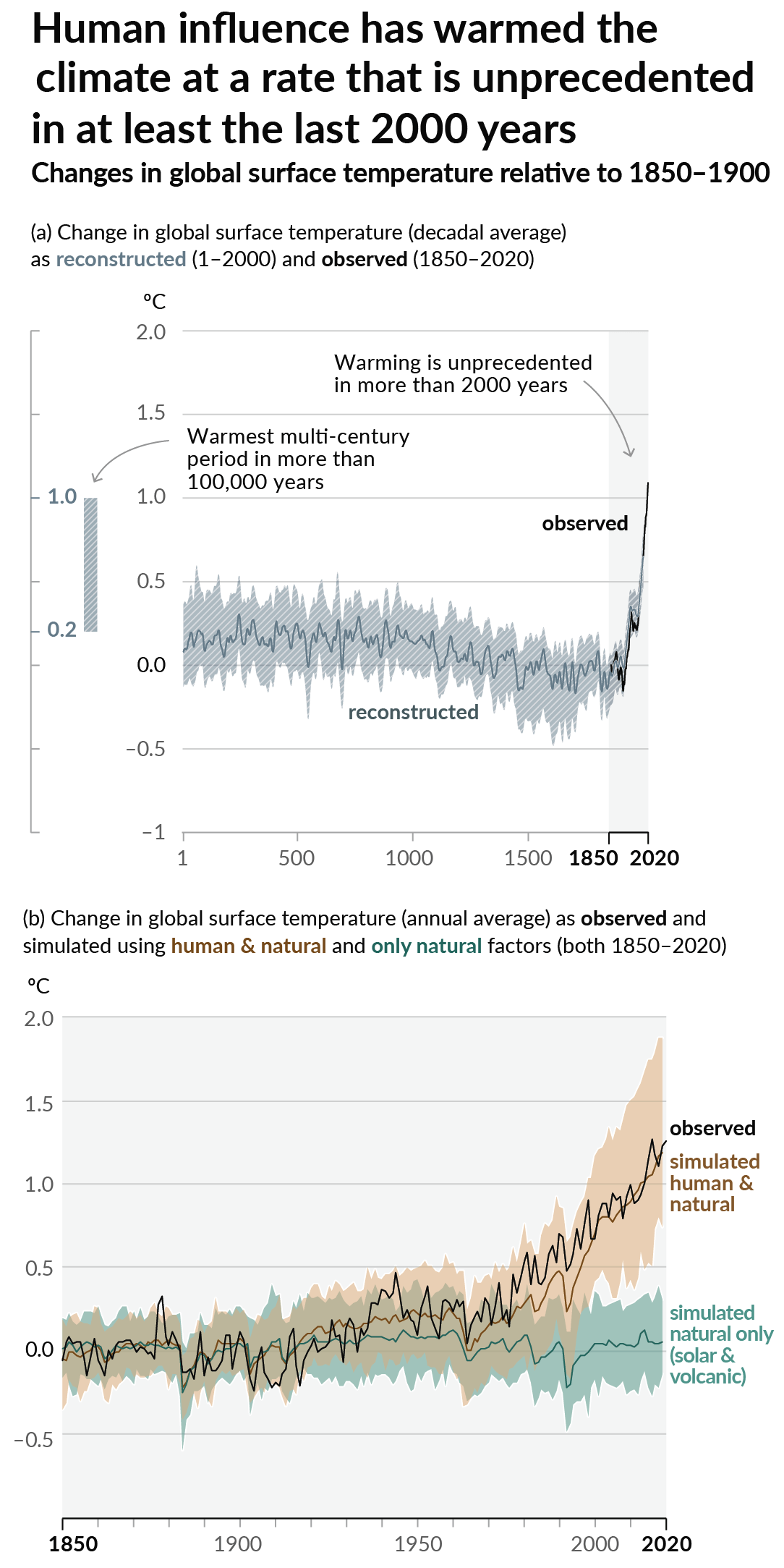
As a starting point, the burning of fossil fuels, and to a lesser extent deforestation and release of methane are responsible for the warming in recent decades: Graph of temperature as observed with significant warming, and simulated without added greenhouse gases and other anthropogentic changes, which shows no significant warming
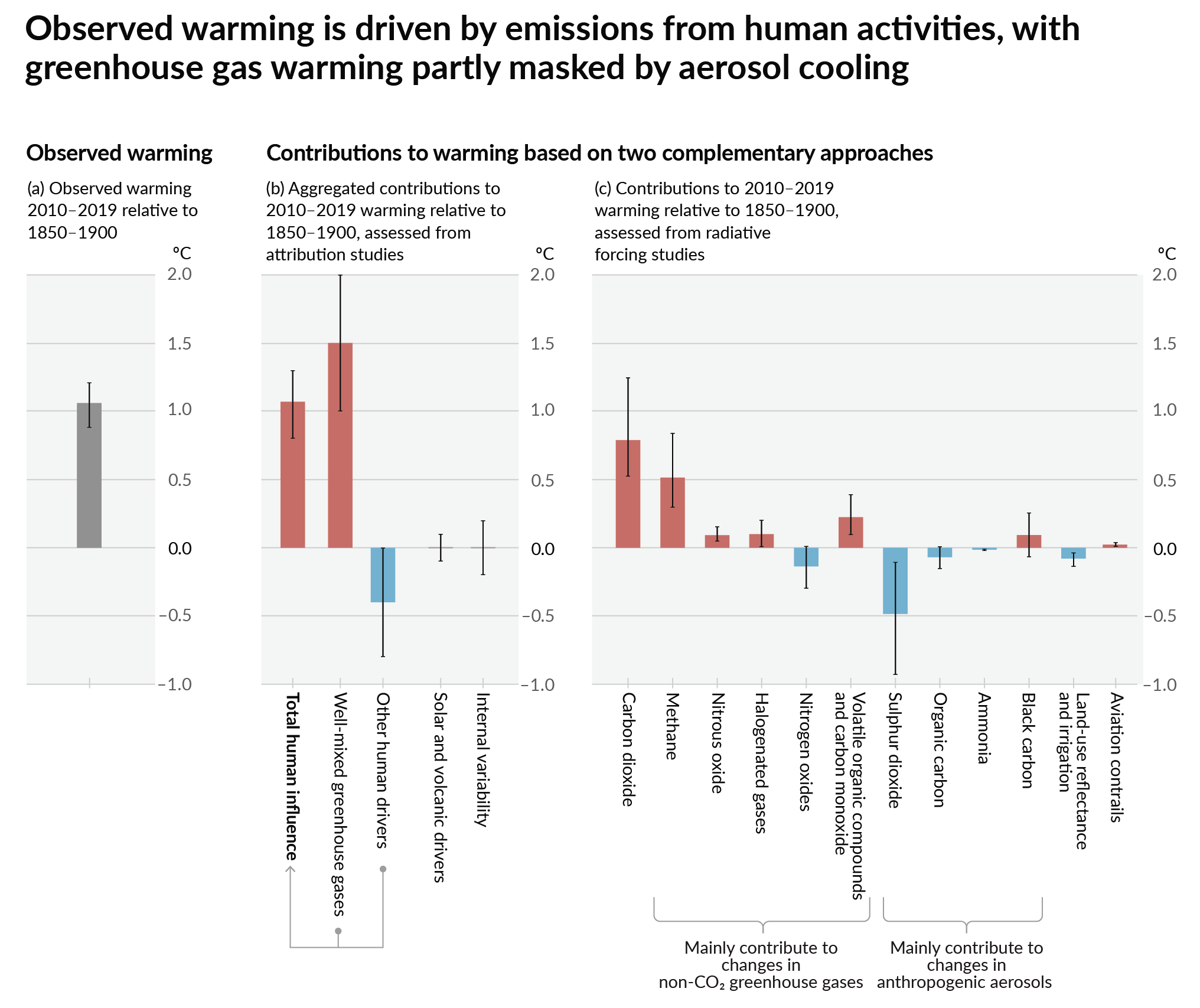
How much each change to the atmosphere has warmed the world: IPCC AR6 Figure 2 - Thee bar charts: first chart: how much each gas has warmed the world.  About 1C of total warming.  Second chart:  about 1.5C of total warming from well-mixed greenhouse gases, offset by 0.4C of cooling from aerosols and negligible influence from changes to solar output, volcanoes, and internal variability.  Third chart: about 1.25C of warming from CO2, 0.5C from methane, and a bunch more in small quantities from other gases.  About 0.5C of cooling with large error bars from SO2.
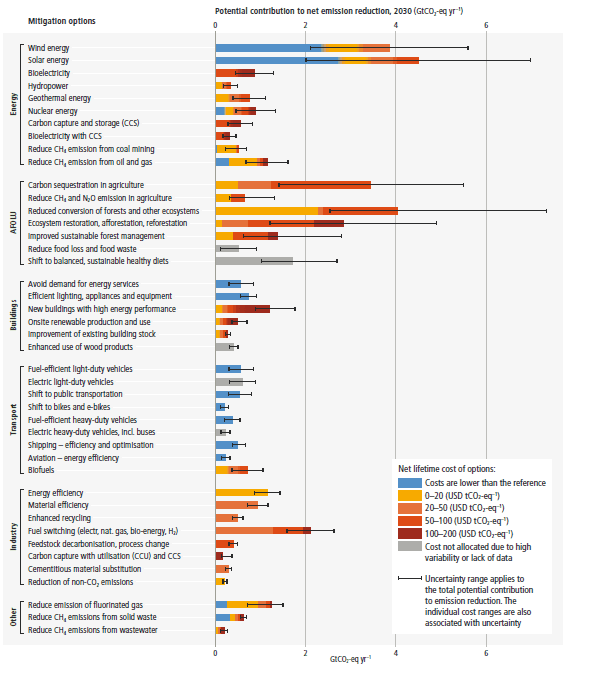
Recommended actions to cut greenhouse gas emissions in the near future:
Anti-science, inactivism, and unsupported conspiracy theories are not ok here.

founded 2 years ago
MODERATORS
 

As corporate net-zero pledges multiply, concerns about their credibility and potential for greenwashing are rising. This study is the first to develop a framework specifically tailored to assessing greenwashing in climate and net-zero pledges, combining disclosures, implementation plans, performance data, and lobbying activity, and to apply it at scale to more than 4000 companies. Using data from CDP, InfluenceMap, and the Net Zero Tracker, this analysis offers the largest empirical assessment of its kind. We identify greenwashing risk across seven dimensions, including missing interim targets, Scope 3 exclusion, offset reliance, and misaligned lobbying. We find 96% of pledging companies exhibit at least one risk indicator, with Scope 3 gaps, poor planning, and offsets most common. Greenwashing risk indicators are only weakly correlated, although higher target ambition is modestly associated with fewer red flags on some dimensions, such as Scope 3 coverage and lobbying. Sectoral and regional patterns also emerge, with lobbying-related risks less prevalent among European firms than elsewhere. Our approach advances the evidence base and supports stronger standards and oversight for corporate climate accountability.

no comments (yet)
sorted by: hot top controversial new old
there doesn't seem to be anything here