this post was submitted on 29 May 2026
26 points (100.0% liked)

Motorcycles

3127 readers
46 users here now

Here we discuss everything related to riding, maintenance and gear.

Rules:

  1. Be respectful and inclusive.
  2. No harassment, hate speech, or trolling.
  3. Engage in constructive discussions.
  4. Share relevant content.
  5. No advertising or self promotion.

founded 3 years ago
 

Hello. I'm a new rider who recently purchased a ten year old bike. I have ZERO mechanical know how, but decided that I wanted to learn.

So far I managed to take both the front and rear wheels off to get the tires changed and I managed to change the oil. Since I am unskilled, it took a LOT of fumbling through these to get things going...including breaking some nuts (rear axle nut was stuck and I originally only had a 12 point socket) and bolts (overtorqued an oil filter cover bolt despite using a torque wrench) and buying replacement ones.

Since the bike is 10 years old, I know that all of the fluids need to be changed. I feel comfortable attempting the actual change for the brake fluid from my research EXCEPT I don't want to irreparably damage this area. The front brake works fine, but the sight glass is totally clouded and opaque, so I cannot visually check the condition or level of the fluid.

These are JIS screws and I have purchased replacement screws. Any advice here? Please consider my novice skill level lol.

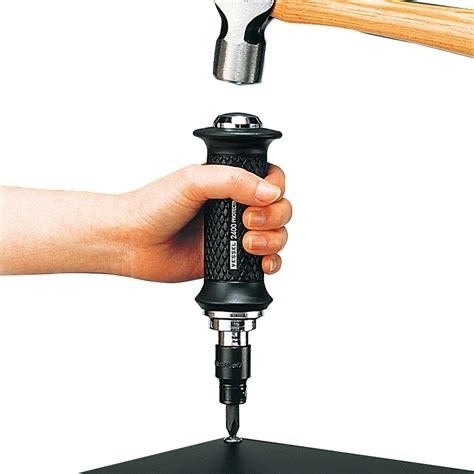
I bought some screw extractor bits but do not have an impact driver. I have some JIS screwdrivers, a hammer, a regular drill, penetrating oil, and replacement JIS screws.

Thanks!

top 23 comments
sorted by: hot top controversial new old
[–] dual_sport_dork@lemmy.world 18 points 2 days ago (2 children)

TL;DR: Just drill these out.

Don't waste your time with screw extractors, new screwdrivers, torches, or any of that.

This always happens with these Japanese style master cylinder covers. The reservoir body and cap are aluminum and the screws are plain steel. You can do the math there easily; you wind up with galvanic corrosion due to the dissimilar metals and they seize.

I don't know how many dozen of these I've had to do over the years. Maybe hundreds. Grab a drill bit just a touch larger than the shanks of the screws (which are typically 4mm) and just drill down right in the center of the screw head. Then the head of the screw will pop off. Stop there.

Once both screw heads are drilled off the cap will come off easily. Then you can unscrew the left over stumps of the screws (conveniently sticking out, thanks to the thickness of the cap) with your fingers. The screw head binding against the surface is what keeps tension on the threads. One the head is drilled off the threaded stumps will just be loose. Fortunately in this case, the reservoir cap is sealed (or ought to be...) and thus moisture can't get in to rust the threads; only the head.

Don't replace these with OEM screws. I mean, you can temporarily since you already have them and you're going to have to use something. But trust me on this, replace them with stainless steel metric M4x0.7 screws, 12 to 14mm length is usually about right, preferably with Allen heads. That way when you have to get in there next season you won't have to go through this whole song and dance again. With both screw heads drilled off the cap should come off easily. Teh

[–] Onomatopoeia@lemmy.cafe 3 points 1 day ago

I've had luck using the impact driver, but you really gotta have the feel of it to know how much force to use and whether it's going work (and not breaking the master cylinder.

But yea, it's a shit combo of aluminum and shit steel screws.

[–] autriyo@feddit.org 4 points 1 day ago

And go slow while doing this, you can't undrill a hole.

And you need the shanks to stick out of their holes to grab onto them.

[–] Onomatopoeia@lemmy.cafe 8 points 2 days ago* (last edited 2 days ago) (1 children)

Those are shitty screws on bikes, often soft pot metal or aluminum.

If you don't know how to do this already, those aren't the place to learn.

It's easy enough to fix, the problem is they love to seize into the aluminum master cylinder.

You could get lucky using an impact driver (type you use with a hammer), but you gotta go gently since the master cylinder is aluminum. I've had some luck doing this.

The full solution is to drill out the head so the cover will slide up, then using vice grips, unscrew the old screw hoping it doesn't take the master cylinder threads with it. Maybe/maybe not. An experienced person can feel it before it happens... Sometimes.

If it does strip the threads, you simply heli-coil it. Fortunately this is only a cover that needs to seal, not mounting anything to the bike.

Take it to a shop. Once they fix it, take it home, replace the screws with stainless versions, and add either blue loctite or never seize. (If you can find stainless versions that are Torx, even better).

Bikes have notoriously shitty screws and bolts. I've replaced many with stainless versions over the years. Fortunately structural bolts tend to be made from better steels, so I don't have to find specialty versions of those (stainless isn't good for structural stuff - it lacts ductility).

Everything gets either never seize or (blue) loctite - the dissimilar metals (aluminum and steel) love to gall.

As others have said, you may get lucky just tapping a screwdriver in. I've had that work too.

Either way, replace the screws with stainless afterwards. It's harder, so the head doesn't strip out as easily

[–] dingus@lemmy.world 1 points 1 day ago (1 children)

So what you're saying is that even if I drill the heads off, it is possible that the shank may be seized within the cylinder? Or am I misinterpreting? If this is possible, then I guess I might just be more comfortable letting a shop do it idk.

Every maintenance thing so far has sounded super easy but there is always some complication when a noob like me tries in practice lol. A lot of what people are telling me here sounds very easy, but yeah I've never done it before lol.

[–] Onomatopoeia@lemmy.cafe 1 points 1 day ago* (last edited 1 day ago)

Exactly.

Though I've been lucky they haven't seized that bad, it's just the worst-case.

Usually once the tension is released by drilling the heads off, you can get vice grips on them and a little tap with a little hammer on the vice grips will jar it loose (or they may just be loose already and it was just the head that got beat up by the previous dingus using a Phillips screwdriver instead of a japanese driver). You can use Phillips on Japanese screws, you just gotta really pay attention, and be nice to the screw, since the Philips doesn't fit perfectly.

This is what impact drivers (of all kinds) do - high torque loads but for only an instant. This has the benefit of not overloading the screw metal while being enough torque to generate a little twist against the seizing parts.

Also, if you drill the screws clean it all off very well before removing the lid, then tape over the reservoir once the lid is off.

[–] teft@piefed.social 7 points 2 days ago

Take a rubber band and place it over the screw and then try to back it out. That works more than 75% of the time. These look pretty stripped so this trick might not work.

try tapping your screwdriver into the screws with a hammer, or drilling out a shallow hole in the middle of the stripped screw before tapping in the screwdriver, then push down on the screw driver while slowly unscrewing it.

I've done the hammer tapping thing before and it worked so I would try that first. If it doesn't work, yeah, it might be time for a mechanic, they deal with stripped screws a lot and they can always bore out the entire thing and then secure it with a new bolt and nut from the other side.

[–] remotelove@lemmy.ca 5 points 2 days ago* (last edited 2 days ago)

A standard drill should work for the screw extractors, but that depends on what kind you bought, I suppose.

A last resort, and pending any other suggestions, you could drill off the heads of the screws, lift the cover off and then use a locking wrench to twist out the remaining "posts" of the screws that are left. This is a pain in the ass in its own right and you risk cracking or damaging the plastic cover.

Edit: Just wanted to add another risk to drilling the heads off. If the screws happen to be brittle, you also risk snapping off the bit of "post" that is left and leaving yourself with a screw that you can't extract easily. NGL, screw/bolt extraction can go wrong really fast if you don't take your time or are just unlucky.

On that note, I just thought of two different methods that are in the same family.. If the component allows for a little bit of force, you may be able to hammer a screwdriver into the head giving you just enough bite to turn the screw. (This will either break any corrosion or damage the threads of the screw.) Also, while it probably won't work for this particular case, cutting a new slot in the screw head (using a file or a Dremel tool) may work to use a flathead screwdriver to extract.

In all of the above solutions, the theme is the similar: Don't let the constraints of the original tool design interfere with brute force. You just need to either make the screw irrelevant (destroy it) or think of a creative way to turn the damn thing.

[–] dingus@lemmy.world 5 points 2 days ago
[–] seathru@quokk.au 4 points 2 days ago* (last edited 2 days ago) (1 children)

Take a 3/16ths drill bit to the screw heads until they come off. Then you can remove the cover, and there will be a little bit of the screw sticking up. You can grab that with pliers and spin the rest of it out. It's not as bad as it looks, I work on older powersports equipment and have to do this about once a week.

[–] dual_sport_dork@lemmy.world 1 points 1 day ago

An upvote here for the other cat who knows where it's at.

[–] Triumph@fedia.io 3 points 2 days ago (2 children)

Following up on everyone else's advice: if the threads in the cylinder get messed up, a new brake master is less hassle than trying to repair those with a helicoil, and probably not very expensive, too.

Edit: oh yeah, you don't want to take that to a shop. Lots of shops won't take something even just that old, and independents can be hit or miss on quality, since they know they don't have many competitors.

[–] CompactFlax@discuss.tchncs.de 5 points 2 days ago (1 children)

Probably least hassle.

Also, fuck JIS and Phillips head screws

[–] Triumph@fedia.io 2 points 2 days ago (1 children)
[–] Hawke@lemmy.world 2 points 1 day ago

Torx has entered the chat

[–] dingus@lemmy.world 1 points 1 day ago (1 children)

Well my main concern is that I don't want to fuck up the master cylinder lol. Looks like it's over a hundred USD and it'll be more hassle and things I don't know what I'm doing. It's actually why I had been leaning towards taking it to a shop (so I don't damage the cylinder) rather than myself. I don't even know if the screws themselves are seized or not.

[–] Triumph@fedia.io 1 points 1 day ago (1 children)

Year make model? I bet i can find one cheaper than $100. Changing a brake master is pretty easy: remove, replace, fill, bleed. I can walk you through it.

[–] dingus@lemmy.world 1 points 1 day ago (1 children)

It's a 2017 Honda Rebel 300 (non ABS). The part number seems to be 45510-K87-A01.

When googling, I do see some websites that sell it for cheaper, but idk how much I can trust these random sellers I have never heard of lol. More also that I don't want to keep being out for riding for so long! It took me several weeks to get parts together to get the tires replaced. I'm a new rider and want to be able to practice haha!

[–] Triumph@fedia.io 1 points 1 day ago

Okay, best I could do is get a used one off ebay for ~$50 and a rebuild kit for ~$30. If necessary, that's the route I'd go myself.

[–] LowtierComputer@lemmy.world 3 points 2 days ago

I would definitely go straight to an extractor, but be very careful. If you drill too far you'll be making a much bigger problem.

[–] M33@piefed.world 1 points 2 days ago

Please try an impact screwdriver before anything destructive.

Worst case scenario you already have a hammer …

[–] 0ops@piefed.zip 1 points 2 days ago

It might be worth trying to borrow an impact, they can be magic in situations like this. I distinctively remember struggling to remove some stripped out screws holding a set of bindings to a ski. I tried all the tricks, rubber band, tapping with a hammer, all to no avail. I was about ready to attempt drilling it out when a friend who saw me struggling walked up with his little impact driver. VCKCKRRRRRRRRCK. VCKCKCKRRRRRRRRCK. They came out like nothing