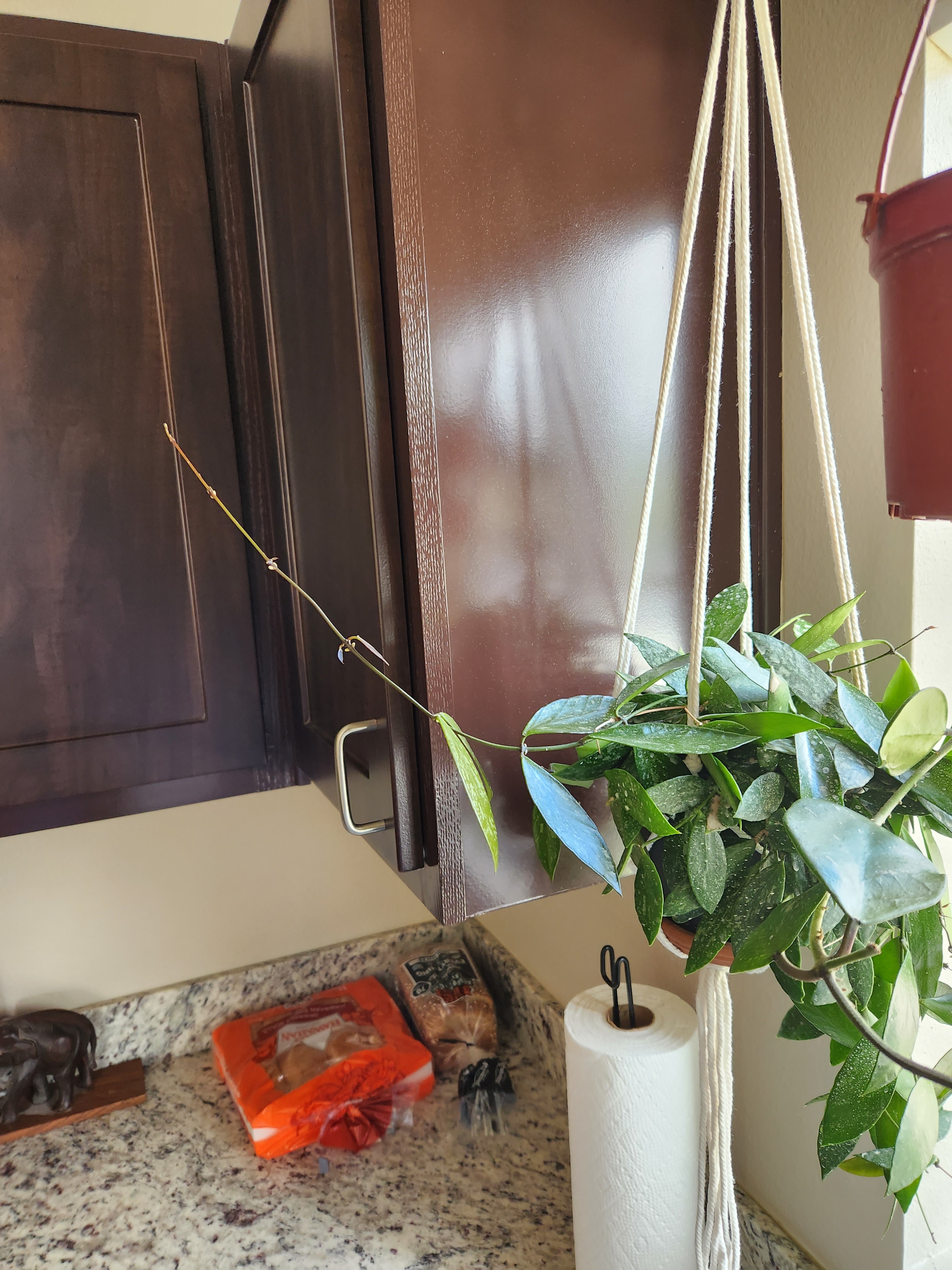
Interesting. I wish they sold this in Sweden. Best I can get is a product containing sulphur, but it's not very cheap.
Houseplants
Welcome to /c/houseplants @ Mander.xyz!
In between life, we garden.

About
We're a warm and informative space for plant enthusiasts to connect, learn, and flourish together. Dive into discussions on care, propagation, and styling, while embracing eco-friendly practices. Join us in nurturing growth and finding serenity through the extraordinary world of houseplants.
Need an ID on your green friends? Check out: !plantid@mander.xyz
Get involved in Citizen Science: Add your photo here to help build a database of plants across the entire planet. This database is used by non-profits, academia, and the sciences to promote biodiversity, learning and rewilding.
Rules
- Don't throw mud. Be kind and remember the human.
- Keep it rooted (on topic).
- No spam.

Resources
Recommendations
Health
Identification
- PlantNet.org (see also: !plantid@mander.xyz)
- Seek from iNaturalist
Light Information
- GrowLightMeter
- PlantLightDB
- HouseplantJournal (Scroll down.)
Databases
- Catalogue of Life
- Perenual.com
- The Garden.org Plants Database
- Useful Tropical Plants (Interactive Database Version)
- WorldFloraOnline
- USA-NPN
- Tom Clothier's Garden Walk and Talk
- Plants for a Future
- USDA Datasets
- Permapeople.org
- Temperature Climate Permaculture: Plant Index
- Natural Capital Plant Database
- Colorado Plant Database
- SEINet
- North American Ethnobotany Database
- BCSS Field No. Lookup (collection site IDs for cacti and succulents)
- U Michigan Native Plant Database for Michigan by Region
FOSS Tools
- Common House Plants API
- HappyPlants (Monitoring App)
- PlantGeek (Care Info App)
Similar Communities
DM us to add yours! :)
General
Gardening
- !balconygardening@slrpnk.net
- !gardening@mander.xyz
- !nativeplantgardening@mander.xyz
- !gardening@lemmy.ml
- !gardening@midwest.social
- !permaculture@lemmy.world
- !tropical_plants@mander.xyz
Species
Regional
Science
Sister Communities
Science and Research
Biology and Life Sciences
- !anthropology@mander.xyz
- !biodiversity@mander.xyz
- !palaeoecology@mander.xyz
- !palaeontology@mander.xyz
Plants & Gardening
Physical Sciences
Humanities and Social Sciences
Memes

You should be able to get elemental sulfur. Even if it's not labeled a horticultural product, so long as it's 100% sulfur you're good to go.
You might try diatomaceous earth. This is what I use for pests on my houseplants, and it works pretty well against anything with an exoskeleton. Cheap and available here in Germany.
Nice, is this a one time only application or would one need to repeat it every so many days/weeks?
It pretty much kills the mites dead on contact, so I did everything once I understood the problem and all new plants will be doused, but unless I see mites on anything in the future I might make it an every coupla years thing. A few of my friends and I have a theory that sulfur is an important micronutrient for Hoya as we see bursts of growth on even plants that didn't have mites.
Interesting! Thank you
I did all of my hoyas early last fall after realising the corking on my balaensis was mites, and had the same results. I've read that the treatment should be repeated every 5-7 days for at least 5 weeks, so I did that for 6 or 7 weeks. Seems like people have good results just doing it occasionally, though.
I think if you rinse you must repeat but leaving it on works too.
I do not have hoyas, but after nearly losing a few of my outdoor plants to an unholy mix of mildew/fungus and pests last year, I sprayed them all with sulphur this spring and the difference has been incredible. Plants I thought were goners are now thriving, moreso than before they were attacked in the first place.
Sulphur also saved a couple of my indoor plants from mites when nothing else was working.
I swear the stuff is magic.
It's weird, right? Cheap and effective.
For anyone considering using sulphur outdoors, I just want to add some tips to minimize impact on bees.
Although garden sulphur’s toxicity towards bees is officially classed as low, it can still hurt them up to a week from application. It can make them aggressive or kill them, and they can bring toxicity back to their colonies if affected.
Best practice is to apply when plants are not actively blooming, after 5pm, and when temps are below 55°F/13°C
Outstanding info that I wasn't aware of. We must do everything we can to protect out buzzy buddies.