There are more human slaves today than at any time in history.
wait what do you two think is happening
Voltage is like air or water pressure, and there is an ambient pressure in a system (like the atmospheric pressure) that we arbitrarily call zero. Negative () voltage would mean that there is enough voltage/pressure to force electrons to be emitted to ground (ie the ambient pressure) and positive () voltage would mean that electrons can be accepted by ground.
*) Negative and positive are a bit confusing because we originally assumed the force carrying particle was positive, but the electron turned out to be negative; there were some historical quirks as a consequence and some things are backwards from what you would anticipate, and sometimes I get them wrong.
It's a bit better today, I can actually see the sun as a dim red disc in the sky.
Do you have an example that supports your view? How does a system with thousands of votes a year survive the effects of voter inattention better than one that has one big one every four years?
Something that came to my mind as a possible such example is open-source software. But I think that only maps in an analogous way, not literally.
Typically you can add some of your own alignment that is inserted before your prompt. On ChatGPT, they call it "memories". I have found most agents are able to adopt a non-conversational mode when instructed, but sometimes you end up fighting with the platform alignment.
It's not just creepy, I think it's harmful, manipulative, and calculated. As social animals, we are extremely vulnerable to forming unconscious assumptions that we consciously know are bananas, particularity when our social machinery is engaged. For example, it's well known that even the developers of video games fall the illusion of moral agency and personhood of the characters in their own games. We are primed to be fooled and accept software agents as people, and I believe AI companies are actively and intentionally trying to exploit this psychological weakness.
You're not going to shoot your way out of this problem, Rambo III.
Not just poorly aimed, but also benighted.
I have similar suspicions. "Democracy" tends to mean, "governed by corporations and foreign oligarchs" over time. It is extremely vulnerable to outside influence and depends on its constituents' conscientiousness to protect it from that influence. The study of human psychology and manipulation (or just call it mind control) keeps leaping forward, but democratic structures aren't benefiting from the advances and the gap is widening. Democratic methods work great when everyone knows each other and respects the process, and they don't really work in the presence of bad actors.
You've read that in. You shared an opinion just now, but that doesn't mean you believe your opinion is important and matters on this issue. Keumars Afifi-Sabet (or more likely, their editor) thinks his opinion matters, or at least, is marketable.
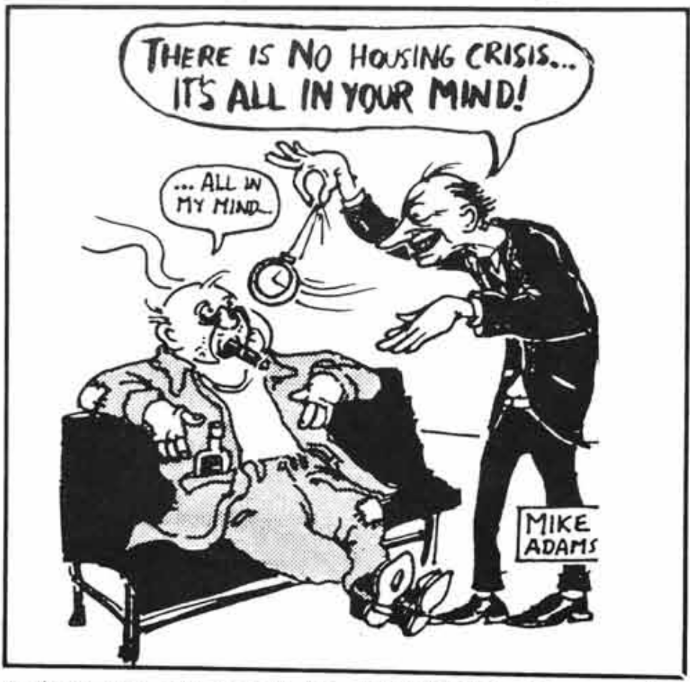
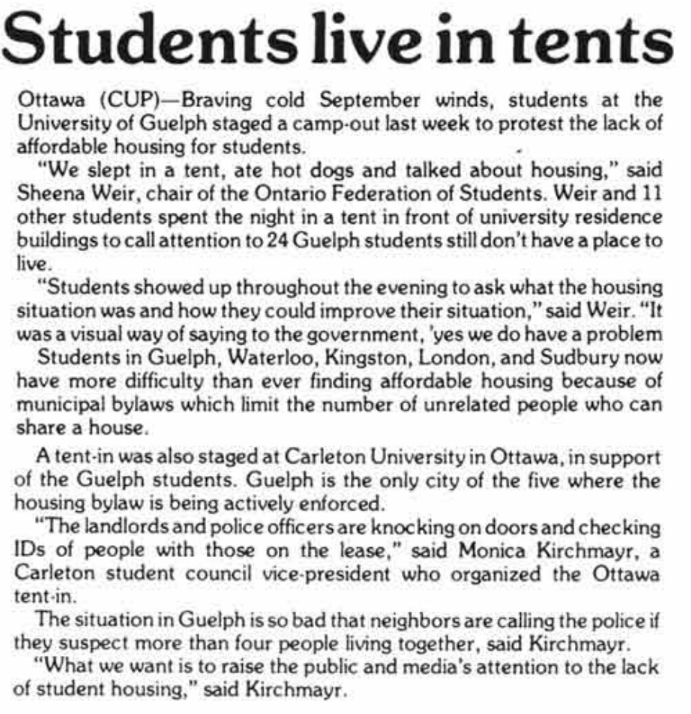
I really enjoy browsing these old student newspapers.


9
Humane Society asked to leave Hanover fair over papier mâché pig, human-sized cage | CBC News
(www.cbc.ca)
Humane Society asked to leave Hanover fair over papier mâché pig, human-sized cage
WHS says display was intended to spark conversation around gestation crates or 'sow stalls'
~Lauren Scott · CBC News · Posted: Aug 17, 2025 5:14 PM EDT | Last Updated: August 17~

Charlotte the papier mâché pig has been a part of the Winnipeg Humane Society's gestation crate display for decades, according to WHS animal advocacy lawyer Krista Boryskavich. (Winnipeg Humane Society)
Winnipeg Humane Society staff say they're disappointed that the organization was asked to leave the Hanover Ag Fair in Grunthal, Man., on Saturday, after setting up an animal welfare display that featured a papier mâché pig and a human-sized cage at the event on Saturday.
The humane society said the display was intended to raise awareness around gestation crates or "sow stalls" — metal, cage-like enclosures that are about two metres long and half a metre wide.
Krista Boryskavich, an animal advocacy lawyer with the Winnipeg Humane Society, says gestation crates are "barely larger than the animal itself," leaving little room for the animal to turn around.
The human-sized crate staff brought to the fair was intended to simulate that experience and spark conversation, she said.
"Pigs are very intelligent creatures, so this is a mental welfare issue, as well as a physical welfare issue," she said.
The humane society was asked to leave the fair about three and a half hours after setting up.
"We were promoting dialogue on some very important animal welfare issues and we're a little unsure as to why that was not acceptable," Boryskavich said.
"The dialogue is important and should have been allowed to continue."
The Hanover Ag Society, which runs the annual summer fair, said it gave vendor space to the humane society "under the assumption they would be promoting their pet adoption programs," in a statement posted to social media.
Boryskavich said the organization's vendor application did not mention adoptions.
The humane society has been bringing Charlotte the papier mâché pig and her cage to events across Manitoba for decades, Boryskavich said. As far as she's aware, this is the first time they've been asked to leave.
Earlier this summer, Charlotte went to the Winnipeg Fringe Festival and the Manitoba Sunflower Festival in Altona, Man. She has a few more market events planned until the end of August.
"We've had this crate in existence for decades now and the issue has not disappeared, these crates have not gone away," Boryskavich said.
According to the National Farmed Animal Care Council, gestation crates were supposed to be phased out by July 1, 2024, in favour of group pens. That deadline has been pushed back to 2029.
About half of Manitoba's pork producers still use gestation crates, Boryskavich said.
She said the humane society brought the display to Hanover because it was a good opportunity to meet directly with producers.
"We're not out to create controversy, but we do want to have that discussion and talk about ways that we can improve animal welfare in a meaningful way," Boryskavich said.
"This is not an urban-rural divide on values or issues. I think that compassion and empathy exists no matter whether you live in Winnipeg or whether you live in rural Manitoba," she said.
CBC News reached out to the Hanover Agricultural Fair but did not receive a response before publication.


view more: next ›
I don't see why someone would. You are obliged to do the minimum research yourself if you want to meaningfully participate in these discussions. You are arguing for your gut feeling as reality, and being belligerent with people who disagree. This is an incredibly common pattern and it indicates that everyone is better off just ignoring you.