lgsp

joined 2 years ago
[–] lgsp@feddit.it 10 points 5 days ago

i use it quite a lot. very useful also in-line translation: you select some text and the context menu offers translation directly without opening the full app.

[–] lgsp@feddit.it 6 points 1 week ago (4 children)

I think one from either Plato or Aristotle: they shaped the way of thinking of people afterwards, up to now

[–] lgsp@feddit.it 6 points 1 week ago (1 children)

This ☝️

but even more than ad, there is powerful marketing lock-in strategies: PCs come preinstalled with windows. Schools use and promote google stuff. Office is free and promted for university students, and same goes for Matlab and other scientific software

[–] lgsp@feddit.it 7 points 2 weeks ago

I really like Ritter choccolate, but I find the motto really funny: you can't get more German than describing your chocolate (something you eat) first as square, second as practical, and only third, and last, as good 😆

[–] lgsp@feddit.it 37 points 3 weeks ago (5 children)

Satellites are visible and move at some km per second. Pretty fast

Inside the atmosphere anything faster than some hundreds km/h get so much drag that they either are extremely small (bullets) or extremely powerful (planes, maglev trains)

[–] lgsp@feddit.it 9 points 1 month ago (2 children)

Peanuts with shell, salt-free. The fact that it takes a bit of effort to open the shell is a plus, because it slows the consumption. And apples too


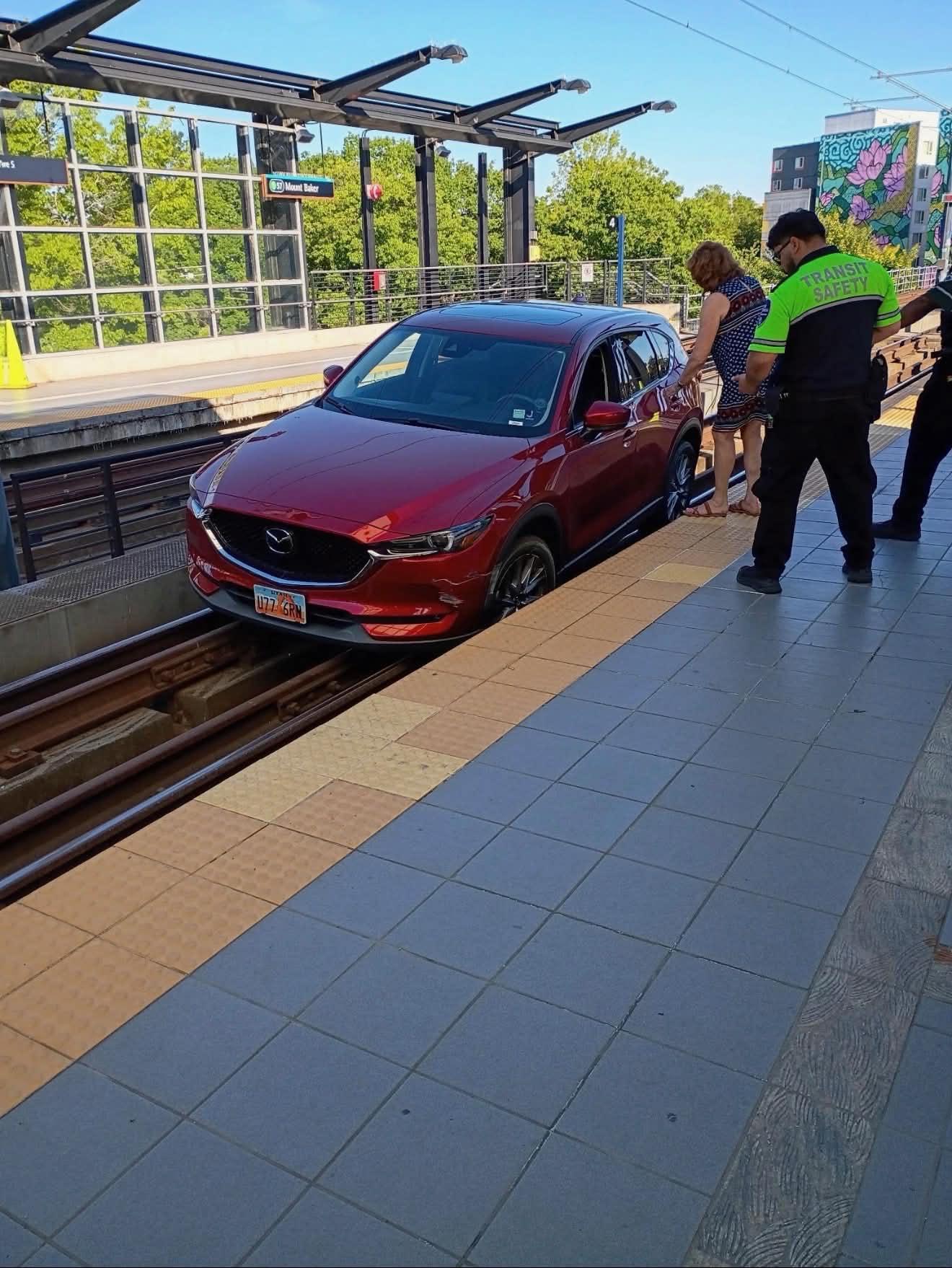
Somehow this car was able to break through the railway fence, hit the rails and jump on the platform.

And car brains say bicycles are dangerous...

Article (in Italian): https://www.milanotoday.it/cronaca/auto-stazione-cesano-boscone-binari.html

cross-posted from: https://feddit.it/post/25146908

158
submitted 1 month ago* (last edited 1 month ago) by lgsp@feddit.it to c/youcantparktheremate@feddit.uk
 

For context: a father teaching his 12 yo kid to drive. The kid pushed the gas pedal, couldn't stop, went through the railway fence, hit the rails and jumped on the platform. On Christmas day. Train traffic was interrupted for 4 hours

Article (in Italian): https://www.milanotoday.it/cronaca/auto-stazione-cesano-boscone-binari.html

[–] lgsp@feddit.it 9 points 1 month ago (2 children)

Just a tip: this app implements the same offline translator from Firefox, and it allows also

  • OCR detection and translator on picture
  • translation of selected text in any app

https://f-droid.org/packages/dev.davidv.translator/

[–] lgsp@feddit.it 5 points 2 months ago
[–] lgsp@feddit.it 10 points 2 months ago* (last edited 2 months ago) (1 children)

Ok, but the main point is in the second sentence. I mean: the advice to not run down the kerb is something I say to my daughter, and i think it's fine. The problem is where this comes from, the government who is shaking off responsibility for road safety by blaming vulnerable victims instead of working on the cause of danger (spoiler: cars, speed, drivers)

[–] lgsp@feddit.it 22 points 2 months ago (3 children)

Yes, because you accept that roads are dangerous because of cars.

But who is giving this warning? The same institution that allowed the roads to become unsafe in the first place, and should protect vulnerable users instead of blaming them. This makes it victim blaming.

Road is public space and it doesn't make sense that so much of it is unsafe for people not in a metal cage. Do you see which community we are in, by the way?

[–] lgsp@feddit.it 13 points 2 months ago

Almost like a horror movie

...Or a Mafia warning


This is the message of an old campaign for the #securityRoadway in #UK. It sounds ridiculous, if only the same message (maybe a bit watered down), was not used for road safety campaigns nowadays.

Pure victim blaming

crossposted from: https://poliversity.it/users/rivoluzioneurbanamobilita/statuses/115705207235775690

[–] lgsp@feddit.it 1 points 2 months ago (1 children)

Bello, ma ho trovato la graphic novel difficile, mentre il film et stato più piacevole...


I find this mini reader very interesting, maybe a bit too barebone.

  • 114 x 69 x 5.9mm (4.5″ x 2.7″ x 0.2″)
  • 220 pixels per inch
  • no front lighting
  • 650 mAh battery
  • ESP32 microprocessor: Wifi, bluetooth, usb-C port
 

TL;DR

I setup a local workflow that allows me to turn a webpage to an epub on my android phone and send it to my Kobo

Introduction

Since Mozilla killed Pocket, i have been looking for an alternative that didn't depend on decisions from any tech company, but only on myself.

I used the Pocket feature quite a lot, and, even if I appreciated the effort from Kobo to replace it with Instapaper, I didn't want to depend on someone else for something as simple as reading an article later on my eink device.

I considered Wallabag and Readeck, but, for both I had to depend on someone else server, or I had to self-host, and I didn't want to deal with the complexity.

I wanted an approach where I was in control, so all the steps needed to be based on FOSS software that I could at least understand.

The basic idea

I thought that what I needed is a 2 step approach, and I could solve both of them

  1. Turn a webpage into an epub
  2. Send the epub to my kobo

The explanation below is long, but, especuially following step 1-a and step 2-a is fairly easy and doesn't involve any modification or coding

Step 1: Turn a webpage into an epub

In the long search to do this I ended up finding 2 apporaches, on available "off the shelf" and one that involved much more coding.

Step 1-a: einkbro

i found out that there is a fantastic FOSS browser, EinkBro, that is designed for eink screen devices, but works very well for any Android device. It is slick, fast, configurable and well designed. It implements the readibility library from mozilla, which is great, and, more than anything else, can directly export webpages as epub files. You can configure the toolbar so that the "export to epub" icon is directly visible. The exported epub is nice, looks like the "readibility" version of the webpage (probably because it is...). So, when I want to save a article I share it from my browesr to einkbro, and, from there, I export it to epub.

Step 1-b: Termux + readiblity scrape + pandoc

For this one I went all-in the rabbit hole of total control... Or maybe I could have done worse. Anyway, here are the components:

  • Termux: a terminal emulator for android, that allows you to do almost whatev you can do in a terminal emulator on a full blown Linux machine
  • Readability scrape is a command line tool that scrpaes an url and returns a simplified version of it, using the readability library from Mozilla (as in the read-mode from Firefox)
  • Pandoc is a command line tool that can convert documentation from one format to another, like, in our case, html to epub

I won't go into the details , of how to install what. In case, just ask.

I setup termux so that, if i share a webpage to termux via Andorid share menu, it triggers the following script ~/bin/termux-url-opener (see this webpage to understand how termux handles shared URLs):

termux-toast "termux received $1" # toast message to war that the url was received

termux-chroot "~/scripts/webpage_to_epub.sh" $1 

note: for some reasons pandoc works as intended only if executed in chroot, so that's why the follwing script is launched as from the command termux-chroot in the snippet above

webpage_to_epub.sh

#!/bin/bash

# final desitnation of epub file
FINAL_DIR="~/storage/shared/Documents/epub_articles/"

# Check if the URL argument is provided
if [ "$#" -ne 1 ]; then
  echo "Usage: $0 <URL>"
  exit 1
fi

URL="$1"
JSON_OUTPUT=$(readability-scrape --json "$URL")

# Check if the readability command was successful
if [ $? -ne 0 ]; then
  echo "Error: Failed to scrape URL."
  exit 1
else
  echo "readibility scrape: SUCCESS!!"	
fi

# Extract title and content using jq
TITLE=$(echo "$JSON_OUTPUT" | jq -r '.title')
CONTENT=$(echo "$JSON_OUTPUT" | jq -r '.content')
AUTHOR=$(echo "$JSON_OUTPUT" | jq -r '.byline')
CONTENT_LENGTH=$(echo "$JSON_OUTPUT" | jq -r '.length')  # Length in characters

# Calculate reading times based on character length
# Convert characters to words (approximate)
WORDS=$(($CONTENT_LENGTH / 5))

# Calculate reading times based on two speeds (200 and 300 words per minute)
READING_TIME_LOW=$(($WORDS / 300))  # For 300 wpm
READING_TIME_HIGH=$(($WORDS / 200))  # For 200 wpm

# Format the output for reading time
if [ "$READING_TIME_LOW" -eq "$READING_TIME_HIGH" ]; then
  READING_TIME="${READING_TIME_LOW} minutes"
else
  READING_TIME="${READING_TIME_LOW} - ${READING_TIME_HIGH} minutes"
fi

# Output the estimated reading time
echo "Estimated reading time: $READING_TIME"

# Format the current date in ISO format (YYYY-MM-DD)
CURRENT_DATE=$(date +"%Y-%m-%d")

# Remove accent characters and sanitize the title to create a valid filename
SANITIZED_TITLE=$(echo "$TITLE" | iconv -f UTF-8 -t ASCII//TRANSLIT | tr -cd '[:alnum:]_ ')  # Convert to ASCII and keep alphanumeric characters
SANITIZED_TITLE="${SANITIZED_TITLE// /_}"  # Replace spaces with underscores

# Create the final filename with date prefix
EPUB_FILE="${CURRENT_DATE}_${SANITIZED_TITLE}.epub"

# Create a temporary HTML file
HTML_FILE=$(mktemp /tmp/readability_output.XXXXXX.html)

# Write the complete HTML output
cat <<EOT > "$HTML_FILE"
<html>
<head>
  <title>$TITLE</title>
</head>
<body>
  <h1>$TITLE</h1>
    <div>
    $READING_TIME | <a href="$URL">original link</a>
  </div>
  <hr />
  $CONTENT
</body>
</html>
EOT

# Create a temporary title file for metadata
TITLE_FILE=$(mktemp /tmp/title.XXXXXXXXX.txt)

# Write the Pandoc YAML metadata block
cat <<EOT > "$TITLE_FILE"
***
title: "$TITLE"
author: "$AUTHOR"
EOT

# Convert the HTML file to EPUB including the metadata
#pandoc "$TITLE_FILE" "$HTML_FILE" -o "$EPUB_FILE"
pandoc "$HTML_FILE" -o "$EPUB_FILE"

# Check if pandoc command was successful
if [ $? -eq 0 ]; then
  echo "EPUB generated: $EPUB_FILE"
  mv "$EPUB_FILE" ~/storage/shared/Documents/epub_articles
else
  echo "Error: Failed to generate EPUB."
fi

# Clean up temporary file
rm "$HTML_FILE"

read -p "Press [Enter] key to continue..."

I spent time to craft the script to produce an output that I like, but, honestly, it's not better than the one produced by einkbro in Step1-a. The advantage with the termux script is that it is a one click process. I share the link to termux, and the script generates the epub and saves to a folder that is setup in the next step to do the uplaod automatically

Step 2: send the epub to my kobo

Again also for step 2 i found 2 alternatives, one more "manual" and direct, and the second more automatic

Step 2-a: share to http

For this I use a simple app, share via http: I share the epub file via android share menu to this app. The app generates a mini web server at my local IP address (on the wifi, that can also be the one from android hotspot). I then use the kobo browser to the local address. The browser asks if you want to download the file. Once downloaded the file is added to the kobo ebooks.

By using Nickelmenu I added a shortcut to the kobomenu to start the browser, to make things faster.

This is the simplest solution, everything work locally, no third party involved

Step 2-b

As an alternative I setup a nextcloud sync.

  • On android I setup the folder where I save epubs as "automatic upload", so epub files are uploaded to a folder on my nextcloud as soon as I asve them
  • On kobo I setup nexcloud syncronization. There is more than one alternative, I used this one. Whenever I connect my kobo to wifi, the new epubs are downloaded to my kobo and added to the library. The only downside is that to delete an article, I have to delete form the nexcloud foder; if I delete it from my kobo, it gets re-added as soon as I connect the wifi

Conclusions

Maybe this looks too complex, but I learned a lot of stuff and had fun in the process. i find that pandoc is probably a bit too much for what it is needed here, in the end the epub content is a bundle of html and images, probably there is a better and slicker way to package them. If you have any suggestion to improve the workflow it is welcome :-)

What do you use these days?


Munich has some issues dealing with too many cars and illegal parking on the sidewalk is common.

The SPD mayor has the solution: change the law so that this rude habit becomes legal.

And what about pedestrians, people with wheelchair, strollers? I guess they'll have to adapt.

Fuck cars!


TL;DR I patti digitali sono un accordo informale tra genitori di un certo gruppo per limitare e regolare l'accesso a smartphone e relativi software, per smorzare i possibili effetti collaterali dovuti all'utilizzo durante la crescita.

Introduzione

Sono genitore da qualche anno, e, come credo tutti, sono preoccupato dall’effetto non ben studiato che ha l'utilizzo di smartphone, tablet etc su bimbi e adolescenti (ma anche sugli adulti, non per niente sono qui sul fediverso :-D ).

Il problema degli smartphone nella crescita

Nel caso ci fossero dubbi, è ormai dimostrato che ci sono dei problemi legati all'uso eccessivo e sregolato degli smartphone durante la crescita, con ricadute su rendimento scolastico e salute mentale. A questo link si trova un utile documento in cui il professor Gui (professore di Sociologia che studia il campo, e tra i promotori dei patti digitali) raccoglie un po' di letteratura su quanto studiato finora

La pressione sociale

Per chi è genitore, uno dei problemi principali è la pressione sociale a rendere disponibile a* propri* figl* smartphone e via dicendo, dovuta a quanto fanno i compagni di classe e gli amici. "Ce l'hanno tutti" è la classica scusa, e nessuno vuole vedere i propri pargoli esclusi socialmente. Qui si inserisce lo scopo principale dei patti digitali: un accordo informale tra genitori di una classe/scuola per un programma concordato su come rendere disponibili ai ragazzi i dispositivi e il loro utilizzo, in modo graduale e con criteri basati su studi scientifici.

Non serve che tutti i genitori facciano la stessa cosa, ma basta un gruppo anche minoritario che tenga duro per rendere tutto più semplice.

Inoltre i patti comprendono una serie di consigli e linee guida per tutta la famiglia, perché in fondo i genitori devono essere d'esempio. Io ho iniziato a non portare più in camera da letto lo smartphone, e a tavola tanto meno (almeno questa abitudine non l'avevamo già prima)

##Come funziona? Come dicevo. è un movimento che nasce dal basso. ci vuole un gruppo da cui parta l'iniziativa, ma il supporto della struttura è forte e fatto bene. Qui si spiega come procedere.

Un esempio

Riporto qui sotto il testo del patto che ho sottoscrtitto, quello di Segrate, ma sul sito li potete trovare tutti. Credo siano tutti uguali, da qualche parte c'è anche il template..


PATTO DIGITALE di Segrate

OGNI TECNOLOGIA HA IL SUO GIUSTO TEMPO!

  • CELL PERSONALE (senza internet): possibilmente non prima degli 11 anni
  • SMARTPHONE PERSONALE: non prima dei 14 anni
  • SOCIAL NETWORKS: non prima dei 14 anni, possibilmente dai 16

Le nostre REGOLE GENERALI: valide per tutte le fasce d’età!

  1. PROTEGGIAMO LE RELAZIONI i devices non mangiano con noi: mai a tavola guardiamo film e cartoni preferibilmente in TV (grandi schermi in luoghi comuni), anziché sui devices (schermi portatili in cameretta) le esperienze nel mondo fisico sono irrinunciabili
  2. PROTEGGIAMO IL SONNO i devices non dormono con noi: mai in camera da letto di notte Night Digital Detox: niente devices per 1-2 ore prima di andare a dormire
  3. PROTEGGIAMO L’ATTENZIONE disattiviamo le notifiche il più possibile
  4. PROTEGGIAMO DALLA DIPENDENZA usiamo il Parental Control sui devices usati dai nostri figli, per:
    • limitare i tempi di utilizzo
    • richiedere il permesso ai genitori per download e acquisti
    • filtrare i contenuti in linea con l’età, le leggi, il codice PEGI (nei videogiochi, indica l’età per cui sono adatti)
  5. PREPARIAMO I NOSTRI FIGLI ALL’AUTONOMIA DIGITALE
    • parliamo in casa dei danni provocati dai devices: deprivazione sociale, privazione del sonno, frammentazione dell’attenzione, dipendenza
    • parliamo in casa dei pericoli del web: privacy, sharenting, cyberbullismo, sexting, furti d’identità digitali, …
    • stabiliamo un Contratto Digitale di Famiglia, firmato da noi e dai nostri figli, con le regole
    • per l’uso dei devices e le eventuali sanzioni collegate intestiamo direttamente ai figli l’eventuale contratto telefonico utilizzato da loro: l’operatore è obbligato da AGCOM a filtrare i contenuti per i minori di 18 anni (NB: non copre la navigazione via wi-fi)

Con figli di 3-5 anni (materna)

  • Sottoscrivendo questo documento ci impegniamo a rispettare nella quotidianità le seguenti regole, sia in famiglia che in comunità: per un uso sano, responsabile e creativo dei devices (smartphone, tablet e computer)!
  • limitiamo il più possibile l’uso dei devices: i Pediatri italiani consigliano meno di 1h/giorno
  • prediligiamo attività alternative: lettura, musica, attività manuali, attività all’aperto, ...
  • in caso di eventuale uso di devices:
    • solo in compagnia di un adulto: non lasciamo i figli da soli con il device
    • usiamo il Parental Control
    • Night Digital Detox: niente devices per almeno 2 ore prima di andare a letto

Con figli di 6-10 anni (elementari)

  • facciamo usare i devices di casa il meno possibile, e comunque sempre con la supervisione di un adulto e non in un luogo appartato (cameretta)
  • rendiamo i devices di casa trasparenti: i genitori hanno possibilità di accesso a tutte le password e app + usiamo il Parental Control
  • no smartphone personale
  • no account sui social networks (neanche dai devices di casa o tramite i genitori)
  • Night Digital Detox: niente devices per almeno 1 ora prima di andare a letto

Con figli di 11-13 anni (medie)

  • no smartphone personale; eventualmente concediamo un cellulare senza internet
  • no account sui social networks (neanche dai devices di casa o tramite i genitori)
  • rendiamo i devices trasparenti: i figli possono usarli da soli, ma con un monitoraggio condiviso e periodico + i genitori hanno possibilità di accesso a tutte le password e app + usiamo il Parental Control
  • Night Digital Detox: niente devices per almeno 1 ora prima di andare a letto

Con figli di 11-13 anni (medie): per chi ha già dato loro lo smartphone

  • puliamo lo smartphone dei figli: no social networks (tiktok, instagram, …), no videogiochi, meno app possibili; idealmente lasciamo solo quelle strettamente legate alla scuola eventuali profili sulle app rimaste (es. Duolingo, …) sono ‘privati’, mai ‘pubblici’ rendiamo i devices trasparenti: con monitoraggio condiviso e periodico + i genitori hanno possibilità di accesso a tutte le password e app + usiamo il Parental Control
  • Night Digital Detox: niente devices per almeno 1 ora prima di andare a letto
  • seguiamo le altre regole generali: per proteggere le relazioni, il sonno, l’attenzione

Cosa ne pensate? Qualcun altro già li conosce, li ha sottoscritti?


I find this idea very innovative and exciting. It is being developed by Fedilab, and separates data from relay (a bit like AtProto does) to allow everyone to keep their data, even on a phone

Holos - a mobile ActivityPub server that runs on your phone. A relay server maintains your stable identity when you're offline. Switch between text, photos, videos, and articles from a single account. Currently in private development, sharing progress with the community.

The account following the development has just 3 posts (with some light technical details) at the time of writing, but the stuff should be published on Codeberg soon.

36
submitted 2 months ago* (last edited 2 months ago) by lgsp@feddit.it to c/bicycling@lemmy.world
 

Pictured above: a bike locked badly to a good quality rack. Just a wrench, and a thief takes the wheel and bike away.

In the photo below: my solution to properly lock a bike to bad, low rack made wrong (to “dish rack”, outside Decathlon 🤦). Instead of inserting the wheel, I put the bike across the structure, so I can easily lock wheel and frame.

cross-posted from: https://social.tchncs.de/users/lgsp/statuses/115587191253235659


While looking for posts with the #degoogle hastag with my mastodon account, I realized that mixed in the hastag timeline there were posts to the !degoogle@lemmy.ml community, but not containing the hastag itself in the text.

I tried to look around, but In wasn't able to find an explanation of how this is supposed to work: is it because of the name of the community that is the same of the hastag? Or is or because the hastag is "embedded" in the community itself?

Edit: for those interested, the explanation is in this comment -> https://lemmy.world/post/39083486/20606028


Found this article, I think it's am interesting comparison

My source: https://mastodon.nz/@leighelse/115572223821306554


This was epic.

Yesterday, World Day of Remembrance for Road Traffic Victims, Fratelli d’Italia (far right party at government, the party of Giorgia Meloni), had organized for Sunday afternoon a protest in the car against the policies on the mobility of Rome mayor. in particular against the cycle paths that “proliferate, remove parking, reduce the roadways and create much more pollution”.

The idea was to leave with cars in procession. The procession, however, was never held: the cars ready to participate were too many:

300 cars in the motorcade would mean paralyzing the entire city

So in wanting to protest against the albeit timid mobility policies to improve mobility, those of FdI managed in one fell swoop to:

  • collect 300 cars, too many because they would "paralyze the city", so no procession

  • have little support: 300 cars carry very few people. The procession became a garrison, the few people were all in front of a bus

  • show how "the freedom to choose" the car is not a freedom, but arrogance: a minority using cars is enough to live no room for everyone else

  • "the collapsing mobility" they talk about is actually caused by cars, considering that just 300 cars can "paralyze the entire city"

  • a subway train (but also a modern tram) would bring more people than those at the demonstration, without causing collapses

And there was no need for any cross-examination, they did everything themselves.

I think this will go down in the annals.

Photo of the garrison from the stage on a bus. In a parking lot, between two rows of parked cars, perhaps a hundred people can be seen listening.

(Part of the post is a translation from this toot, part is translated from the linked article, in Italian)

view more: next ›