You've been on the internet too long, as have we all.
rowinxavier
joined 3 years ago
ausclusive
Ftfy
Broadly speaking laws should centre around enabling people to make choices in an informed and safe manner.
If a product is not what it says it is then people can't mame that choice properly, so laws around quality control and labeling are a must.
Advertising often clouds decisions and frequently reaches audiences outside the target market, driving consumption by kids etc, so none of that please.
Tax should be significant on these items, but not high enough to leave illegal supply competitive or even cheap by comparison. Otherwise you get an increase in gang activity like we have had from raising our tobacco prices over the last 20 years.
Yes indeed, I wasn't sure about the architecture for the machine and when Apple started their own silicon, everything is happening both so fast and so slow, time is a flat circle.
Yes, Asahi is for Apple silicon, not Intel, I wasn't sure when they changed over from Intel to Arm.
That said, if you have a fully spare computer which is not something you rely on for anything then installing the OS directly can give you better performance. I don't know how powerful your main machine is but if it is significantly more powerful than the old machine a VM may be faster on that, it just depends on the performance of each machine.
Edit: I forgot to add, I used to work in IT doing support and I had Windows 7, Vista, XP, and NT all in VMs for supporting customers. I tried to get a reasonable Windows 98 image running but the hardware acceleration and comparability just wasn't good enough at the time to make it worth it. It was fun full screening Windows NT with everyone else using Windows 7, it looked so retro and it was lots of fun to tinker with.
A lot of people talk about Asahi Linux as a good distro for Apple hardware, I wouldn't know given I haven't tried Apple hardware for decades. That said, installing on the bare metal is great, but first I would recommend a virtual machine.
Using a VM you can try different distros, test different desktop environments, and generally mess around without risk to your data or the usability of your machine in the early stages of figuring Linux out. Once you have tried a few and found a workflow that works for you you can install as a dual boot or even ditch Mac OS entirely. I would personally try a few different desktop environments including KDE, Gnome, and XFCE, along with some of the more obscure ones like in ElementaryOS and so on. Linux is all about options and choice so try some things and learn what works for you.
Ultimately, don't take it too seriously. You don't need the right answer, there isn't one, just try some things and find what works for you. If it stops working you can always try something else later.
I still wear mine every day. I have a wonderful mask from an Australian company which is Marino wool and very comfortable. It has replaceable filters and a head strap so it doesn't pull on my ears. My clients have never seen my face and I have worked with some for more than 2 years. I do it mostly because I have some health issues that covid would not help, I work with immune compromised people, and my partner could really do well to not get sicker. I was wearing a mask in 2019 due to bushfires and I've not stopped since, I don't see myself stopping any time soon.
Yeah, sadly I have to agree, a fee won't do anything on its own. This would require a mix of features working together. Each makes botting a bit more painful and a bit less effective, but putting them all together makes it not worthwhile.
Also, we don't need to make a space perfect, just better than other places. You don't need to be faster than the bear to escape, just faster than the slowest member of your group.
Ooh, I really like that idea! You are putting money in as a sort of deposit, but after a period of time it has served its purpose and the money can be returned. If I have to be active for say 3 months and also a certain amount of activity to get my deposit returned then burning the account after would be a pain in the arse and I would not bother. Having an account in good standing could also be a soft filter. Users could only show content from validated users and thus filter out all the bot junk, but if they wanted their comments and posts to show up they would go through the process.
I hate to use the example, but one of the worst places on the internet actually found a solution for this a long time ago. $10. By having a small, but meaningful, fee for the account people couldn't have unlimited accounts and there was a cost to getting banned. If you are posting bot slop you will be banned quickly and lose your $10. If you are not being bot like and also not breaking tonnes of other rules many times then you will not be banned and can keep your account.
This works well enough most of the time. Getting a new account after your previous one has been banned can be done fairly quickly but that $10 adds up quickly and can fund the cost of reviewing and potentially banning bad actors. It doesn't solve the problem in full, but another thing you can add is region gating. In your profile you set where you are going to be dialling in from, including which VPN providers and so on. This means you have a fairly specific pattern of behaviour that is white listed in advance. Now if your account is compromised and starts logging in from other places it can be blocked quickly, and also potentially the login attempts can be blocked and a password reset process initiated.
Another option would be to require a invite only process and have those you invite reflect on you. For example, if someone invites a friend and that friend invites not accounts then both people are impacted. If someone invites 9 good people and 1 abused account their ratio is 0.9, if they drop below some value then they lose invite privileges. If you consistently invite crappy people or abusive bots you get banned, but if it happens only occasionally then you lose your invite rights for a while. Those parameters are all tunable but should help to get things operating more smoothly.
Also, having invite periods but closing invites most of the time can also kill off many bots. People using bots are lazy, they don't want to wait for months posting stuff and pretending to be a person to then use the accounts to post 3 junk things and then have the whole set banned. They want a large network of accounts they can throw away as needed. Make it slow, expensive, and consequential. Make botting 50 accounts cost $500 and also be a waste of time and the bots will stop coming.
It looks like a cool project. I wonder if anyone is working on higher PWM frequency for people who are PWM sensitive. Most ereaders with front lights use PWM at a fairly low frequency to control brightness and it can be very taxing on the eyes. Dimming using DC regulation is slightly more expensive but it should be fairly manageable with this kind of open hardware project.
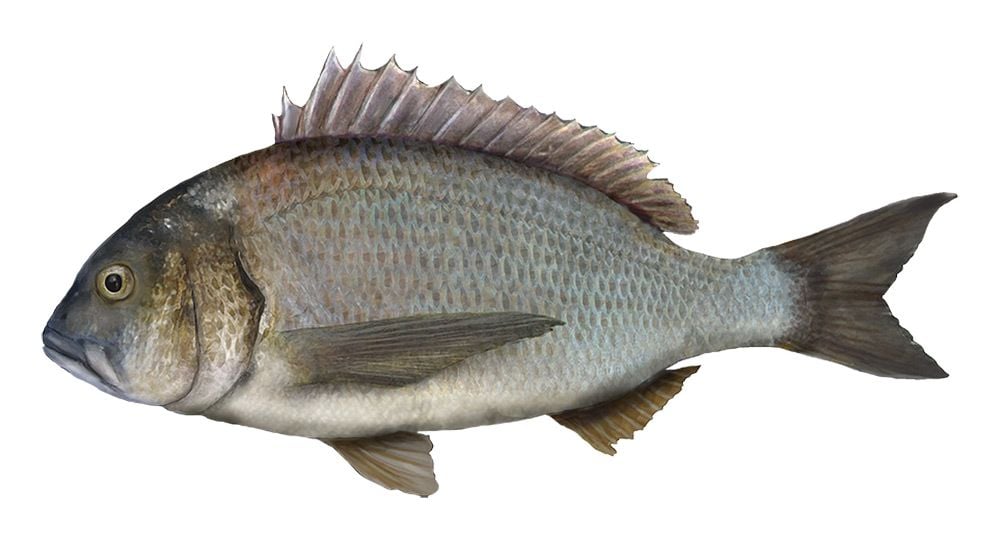
So we're doing breams now?
view more: next ›
First, great username, absolutely love it. Second, from what I understand the two share way more than not and are both functional, just with slightly different use cases. Two cool projects, two slightly different views, but not mutually exclusive.