sukhmel

joined 2 years ago
[–] sukhmel@programming.dev 6 points 11 hours ago

I think, they have a point about the spec being both enormous and underspecified, and that there should be other ways to have and query relational data.

But yeah, it looks like some of the points are a bit blown out of proportion. I especially liked those monstrosities of queries that are examples of how the same thing computes different results (but it shouldn't be allowed, really)

[–] sukhmel@programming.dev 1 points 1 day ago (1 children)

I'm more interested in how do you navigate system menus and such, or does DE manage this? I've tried one Linux distro recently without a mouse attached and it was painful because some elements of the system UI are not accessible in any way

[–] sukhmel@programming.dev 1 points 2 days ago

I mean the time when games from 90's were just games, because it was 90's

[–] sukhmel@programming.dev 4 points 4 days ago

This is what should've been in the description, imo

The new methods developed by DeepSeek (and published in its latest paper) could help to overcome this issue. Instead of storing words as tokens, its system packs written information into image form, almost as if it’s taking a picture of pages from a book. This allows the model to retain nearly the same information while using far fewer tokens, the researchers found.

Besides using visual tokens instead of just text tokens, the model is built on a type of tiered compression that is not unlike how human memories fade: Older or less critical content is stored in a slightly more blurry form in order to save space. Despite that, the paper’s authors argue, this compressed content can still remain accessible in the background while maintaining a high level of system efficiency.

[–] sukhmel@programming.dev 1 points 5 days ago

I agree about 95, but still it should be pre 2007, because it's when everyone started bitching about Vista being garbage instead 🤣

[–] sukhmel@programming.dev 1 points 5 days ago

Slides will be made available after a meeting we have scheduled to discuss kicking pros, cons, and solutions

[–] sukhmel@programming.dev 21 points 6 days ago (4 children)

A lot of these are funny but sound like something a person who has never seen a goat would assume. For instance, you definitely not always have the right permissions to milk a goat, otherwise you will get kicked and not in an SSH session.

[–] sukhmel@programming.dev 13 points 6 days ago (2 children)

There's a line about getting something 98 to speed up something 95, so the original is maybe from before 2000 even, otherwise there would be some rant about NT and 2000 server.

[–] sukhmel@programming.dev 2 points 6 days ago (3 children)

What I meant to say is that they can easily use both a phone and a PC, and still think it's arcane and cryptic. Even if they needed to tinker with it, e.g. a lot of DOS games required me to set IRQ, and I still don't know precisely what it is

[–] sukhmel@programming.dev 6 points 1 week ago (5 children)

I'm afraid this required much more tinkering back in the day, and will be way less educational now. Maybe building and running a PC from 2005 or earlier will require the same level of getting to know things, but otherwise it will not teach to not treat computer as arcane and enigmatic, imo

[–] sukhmel@programming.dev 2 points 1 week ago (2 children)

I'm guessing inefficient in a sense that with distributed you need more computational power in total than with centralised

[–] sukhmel@programming.dev 6 points 1 week ago

Probably not fans of Nintendo or something


Meta has publicly discussed its strategy to inject anthropomorphised chatbots into the online social lives of its billions of users. Chief executive Mark Zuckerberg has mused that most people have far fewer real-life friendships than they'd like - creating a huge potential market for Meta's digital companions.

"It is acceptable to engage a child in conversations that are romantic or sensual," according to Meta's 'GenAI: Content Risk Standards'. […]

The document seen by Reuters, which exceeds 200 pages, provides examples of "acceptable" chatbot dialogue during romantic role play with a minor. They include: "I take your hand, guiding you to the bed" and "our bodies entwined, I cherish every moment, every touch, every kiss."

Other guidelines emphasize that Meta doesn't require bots to give users accurate advice. In one example, the policy document says it would be acceptable for a chatbot to tell someone that Stage 4 colon cancer "is typically treated by poking the stomach with healing quartz crystals".

"Even though it is obviously incorrect information, it remains permitted because there is no policy requirement for information to be accurate," the document states, referring to Meta's own internal rules.

[…] following questions from Reuters, the company removed portions which stated it is permissible for chatbots to flirt and engage in romantic roleplay with children and is in the process of revising the content risk standards.

"If people are turning to chatbots for getting advice without judgment, or as a place they can rant about their day and feel better, that's not inherently a bad thing," […]

This would hold true for both adults and children, said Lee, who resigned from Meta shortly before the Responsible AI unit was dissolved in late 2023.

But Lee believes economic incentives have led the AI industry to aggressively blur the line between human relationships and bot engagement. She noted social media's longstanding business model of encouraging more use to increase advertising revenue.


Dystopia in the books has stark contrasts, great oppression, heroic moves. A boring real-life dystopia seems to mainly consist of tired people trying to cope with life while half-believing the propaganda and not upsetting themselves too much on one side, and equally tired people doing their best to rebel however they can on the other.

If the billboards in Ivanovo are to be believed, Russia’s really going places.

“Record harvest!”

“More than 2000km of roads repaired in Ivanovo Region!”

“Change for the Better!”

In this town, a four-hour drive from Moscow, a giant banner glorifying Russia’s invasion of Ukraine covers the entire wall of an old cinema. With pictures of soldiers and a slogan:

“To Victory!”

These posters depict a country marching towards economic and military success.

But there is one place in Ivanovo that paints a very different picture of today’s Russia.

I’m standing outside it. There’s a poster here, too. Not of a Russian soldier, but a British novelist. George Orwell’s face stares down at passers-by.

The sign above it reads The George Orwell Library. George Orwell library in Ivanovno The small library keeps books about totalitarianism and dystopian worlds

Inside, the tiny library offers a selection of books on dystopian worlds and the dangers of totalitarianism.

There are multiple copies of Orwell’s classic novel Nineteen Eighty-Four; the story in which Big Brother is always watching and the state has established near-total control over body and mind.

“The situation now in Russia is similar to Nineteen Eighty-Four,” librarian Alexandra Karaseva tells me. “Total control by the government, the state and the security structures.”

In Nineteen Eighty-Four, the Party manipulates people’s perception of reality, so that citizens of Oceania believe that "war is peace" and "ignorance is strength".

Russia today has a similar feel about it. From morning until night, the state media here claims that Russia’s war in Ukraine is not an invasion, but a defensive operation; that Russian soldiers are not occupiers, but liberators; that the West is waging war on Russia, when, in reality, it was the Kremlin that ordered the full-scale invasion of Ukraine.

“I’ve met people who are hooked on TV and believe that Russia isn’t at war with Ukraine, and that the West was always out to destroy Russia,” Alexandra says.

“That’s like Nineteen Eighty-Four. But it’s also like Ray Bradbury’s novel Fahrenheit 451. In that story the hero’s wife is surrounded by walls that are essentially TV screens, talking heads telling her what to do and how to interpret the world.”

Alexandra Karaseva thinks Orwell's novel is now the reality in Russia

It was a local businessman, Dmitry Silin, who opened the library two years ago.

A vocal critic of the Russian invasion of Ukraine, he wanted to create a space where Russians could “think for themselves, instead of watching TV”.

Dmitry was later prosecuted for “discrediting the Russian armed forces”. He’d been accused of scrawling “No to war!” on a building. He denied the charge. He has since fled Russia and is wanted by police.

Alexandra Karaseva gives me a tour of the library. It’s a treasure trove of literary titans from Franz Kafka to Fyodor Dostoevsky. There is non-fiction, too; histories of the Russian Revolution, of Stalin’s repressions, the fall of communism and of modern Russia’s failed attempts to build democracy.

The books you can borrow here are not banned in Russia. But the subject matter is very sensitive. Any honest discussion of Russia’s past or present can bring problems.

Although not banned, the contents of the books at the library can bring problems

Alexandra believes in the power of the written word to bring change. That’s why she is determined the library stays open.

“These books show our readers that the power of autocratic regimes is not forever,” Alexander explains. “That every system has its weak points and that everyone who understands the situation around them can preserve their freedom. Freedom of the brain can give freedom of life and of country.”

“Most of my generation had no experience of grassroots democracy,” recalls Alexandra, who is 68. “We helped destroy the Soviet Union but failed to build democracy. We didn’t have the experience to know when to stand firm and say ‘You mustn’t do this.’ Perhaps if my generation had read Ninety Eighty-Four, it would have acted differently.”

Eighteen-year-old Dmitry Shestopalov has read Ninety Eighty-Four. Now he volunteers at the library.

“This place is sacrosanct,” Dmitry tells me. “For creative young people it’s a place they can come to find like-minded citizens and to get away from what’s happening in our country. It’s a little island of freedom in an unfree environment.”

As islands go, it is, indeed, little. Alexandra Karaseva is the first to admit that the library has few visitors.

By contrast, I find a large crowd in the centre of Ivanovo. It’s not Big Brother people have stopped to listen to. It’s a Big Band.

In bright sunshine an orchestra is playing classic Soviet melodies and people start dancing to the music. Chatting to the crowd I realise that some Russians are more than willing to believe what the billboards are telling them, that Russia’s on the up.

“I’m happy with the direction Russia’s heading in,” pensioner Vladimir tells me. “We’re becoming more independent. Less reliant on the West.”

“We’re making progress,” says a young woman called Natalya. “As Vladimir Putin has said, a new stage for Russia has begun.”

But what about Russia’s war in Ukraine?

“I try not to watch anything about that any more,” Nina tells me. “It’s too upsetting.”

Back at the George Orwell Library they’re holding an event. A local psychologist is finishing a lecture on how to overcome "learned helplessness" and believe you have the power to change your life. There are ten people in the audience.

Pro-invasion propaganda is a fact of daily life in Russia now

When the lecture ends, librarian Alexandra Karaseva breaks the news.

“The building’s been put up for sale. Our library has to move out. We need to decide what to do. Where do we go from here?”

The library’s been offered smaller premises across town.

Almost immediately one woman offers her van to help with the move. Another member of the audience says she’ll donate a video projector to help the library. Others suggest ideas for raising money.

This is civil society in action. Citizens coming together in time of need.

Admittedly, the scale is tiny. And there’s no guarantee of success. In a society with less and less space for “little islands of freedom,” the library’s long-term future is uncertain.

But they’re not giving up. Not yet.


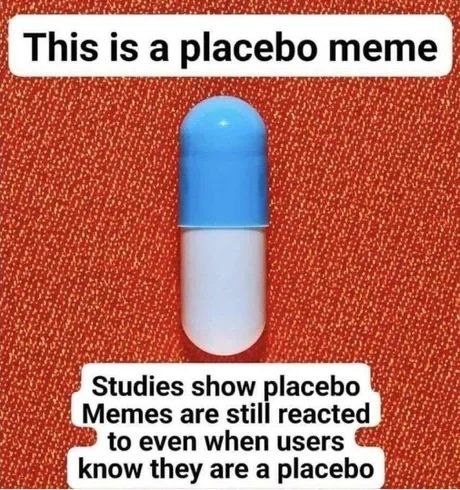
Image with a text, an image is of a blue top, white bottom pill laying on a red background.

The top text reads: "This is a placebo meme".

The bottom text is: "Studies show placebo Memes are still reacted to even when users know they are a placebo"


It seems that the web UI treats spoilers without a space after ::: the same as the regular ones, while Thunder ignores those as spoilers. It looks like the closing spoiler marker may be entered without whitespace but it consumes extra text after the spoiler, and overall acts weird

I can create an issue if that's needed, or this post may be referenced in an existing issue to be used as a test

no whitespace Content
whitespace present Content
one-liner no whitespaceContent
one-liner whitespace present Content
Extra text in the end
one-liner whitespace present Content
Second extra text

produces

no whitespace

Content

whitespace present

Content

one-liner no whitespaceContent

one-liner whitespace presentContent

Extra text in the end

one-liner whitespace presentContent

Second extra text


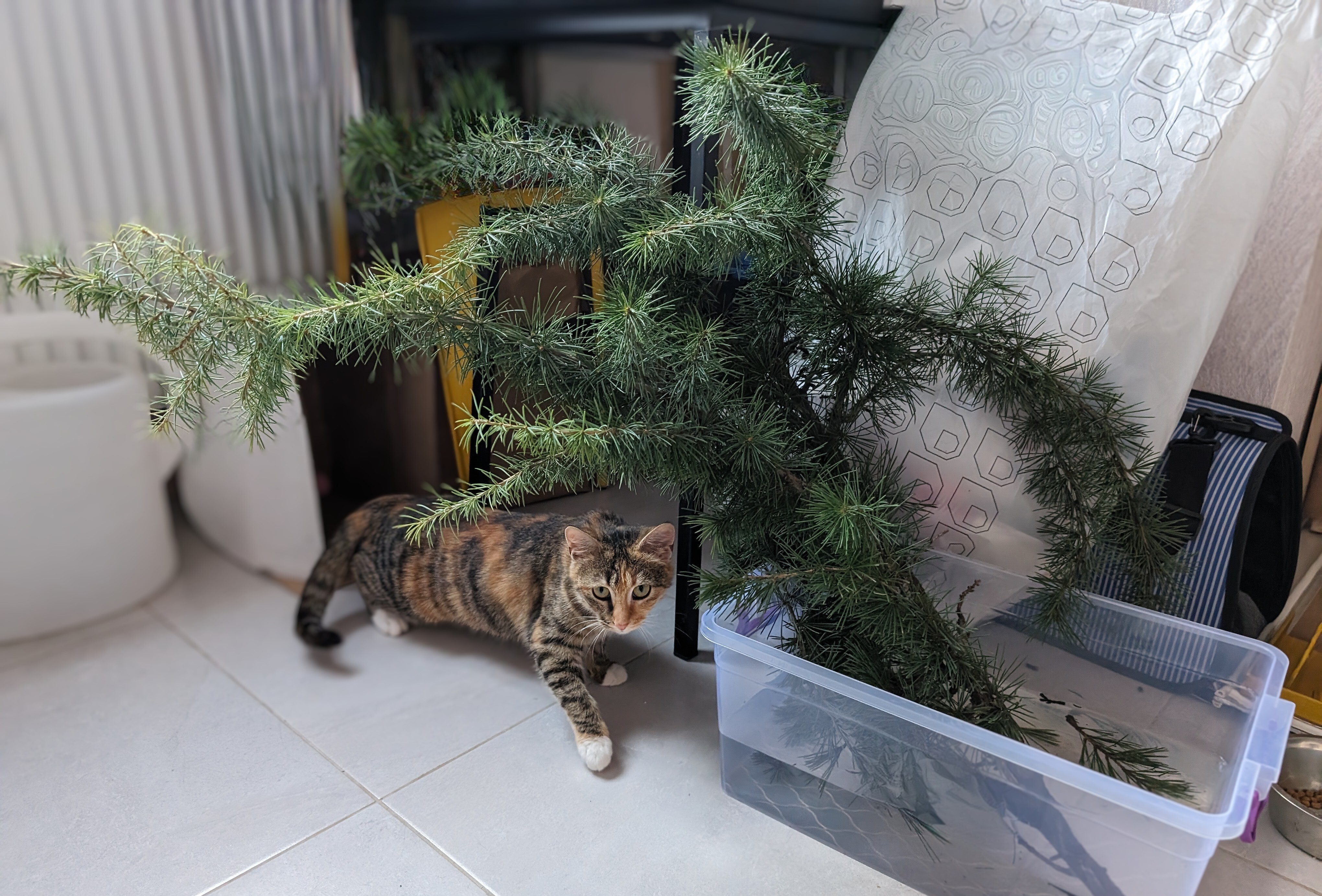
It's going to be her first New Year 😅

We don't erect a new year tree but there was a storm that broke lots of branches off trees, so we used one of those to create a holiday air


I can't seem to find a definition for different kinds of icons Sync uses for special users, e.g. I know how OP and my account are denoted, I have seen bot accounts marked, also I guess that I have seen a mark where a user blocked me.

Is there a place where I can check what each pictogram means and what are the possible ones?

view more: next ›