Also plenty of countries aren't all that hung up on marriage. It is possible to have kids and government recognition without a marriage certificate.
syklemil
joined 6 months ago
Yeh. Ubuntu also discussed it back in 2019, and wound up keeping some of it so Steam would keep working.
I expect the willingness to bend over backwards for one proprietary and very profitable app doesn't last forever, and given how involved gaming often is with pushing technology, it's frankly weird that Steam is still shackled to 32bit like that.
Yeah, I think the fact that the next LTS will be 26.04 is the driver here, I just get the impression that things might get a little rocky and that they might've been better off had the next LTS been further into the future.
But it'll be a real smoke test release, at least. Hopefully they have enough resources to fix the issues that are uncovered, and don't wind up reverting for the LTS, or with a crummy LTS.
It's really weird to have them so close in time, though, especially when they finished the previous one early.
If I were to guess, they need to fix the fix, or the previous hotfix actually went really poorly and they spent way longer on some task they needed to complete before this step, and decided to break it into several downtimes.
I'm generally an en_*.UTF-8 user (even tried en_DK.UTF-8 for a bit for a reason we'll come back to), so I don't have a complete picture of it and would have to go look at the documentation or source for that, but I'd expect
- documentation
- date formats:
en_DK.UTF-8should give you ISO8601-formatted dates, if I can't have that I at least want DD/MM/YYYY; the US-american nonsense is just plain unacceptable - sorting: e.g. Norwegian will have …zæøå and expect
aato be sorted aså, the Swedes have …zåöä, the Germans …zäöü, the Turks will want ı and İ sorted and upper/lowercased correctly, and there are some options around how you deal with "foreign" letters and diacritics. - Probably more stuff relating to
LC_*that I can't think of off the top of my head
but in any case, an ls -l output should be different depending on your locale, and in ways you likely don't even think about as long as it looks normal.
Yeah, I think those are just lacking in the internationalisation?
People like me, who at most have some reading glasses needs and have their computer set to generally English utf-8 will be likely be fine.
Between that and the uutils-coreutils, Ubuntu 25.10 sounds like it'll be an interesting experience for users, especially those with accessibility and internationalisation needs.
Yep, that's the idea. I haven't had it set up for a long while, so I don't really know how well it works and if I should just have the OGCD stuff showing.
I used to have a pretty similar thing off to the side, but it was kind of … annoying for how I had to use my eyes, and cluttered up the screen more.
If you use the double-tap style, set it to show the full keyset. You’ll need that by level 100.
Hmm, I use the double tab but only half of it, to allow for more space.
It's just if you use it for your main combat abilities. If you use it for extras you'll be fine and could even likely not having it showing all the time at all. I've been keeping mine on full display all the time and after this discussion I think I'll turn it default-invisible.
Do you have a possible layout like this to share?
I kinda messed up my config and had to recreate it from memory and haven't really had a chance to test it with all jobs yet, but I can show off the general idea. Don't think too much about the utility buttons, e.g. the hunting log is just there because I've been leveling a job from level 1 (archer!), that'll be replaced with the compass when that's relevant, etc. The utility buttons are actually on set 8, I'm just too lazy to switch to it.
Top layers
SMN
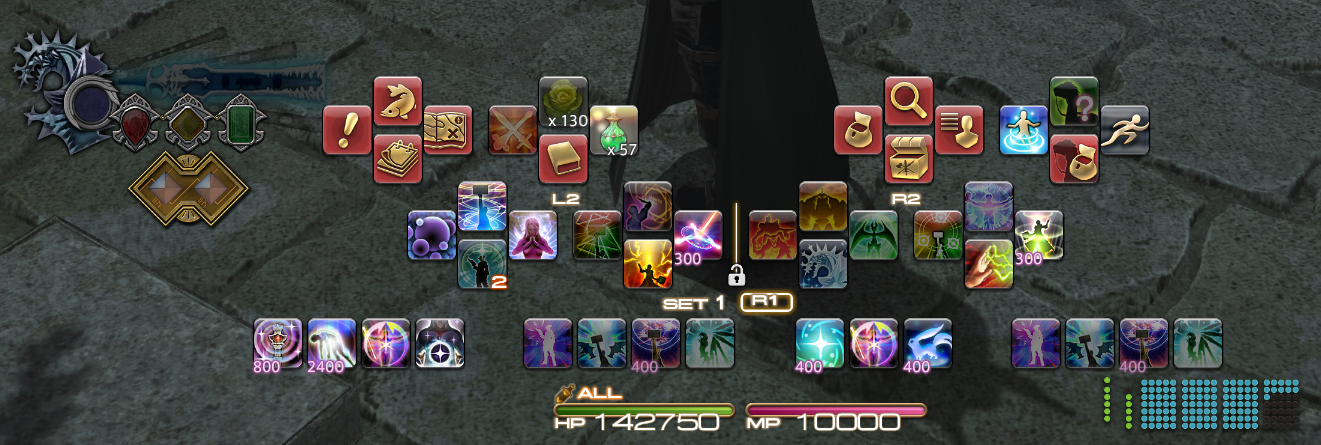
(sleep and physick are just there because I have room left over)
WAR
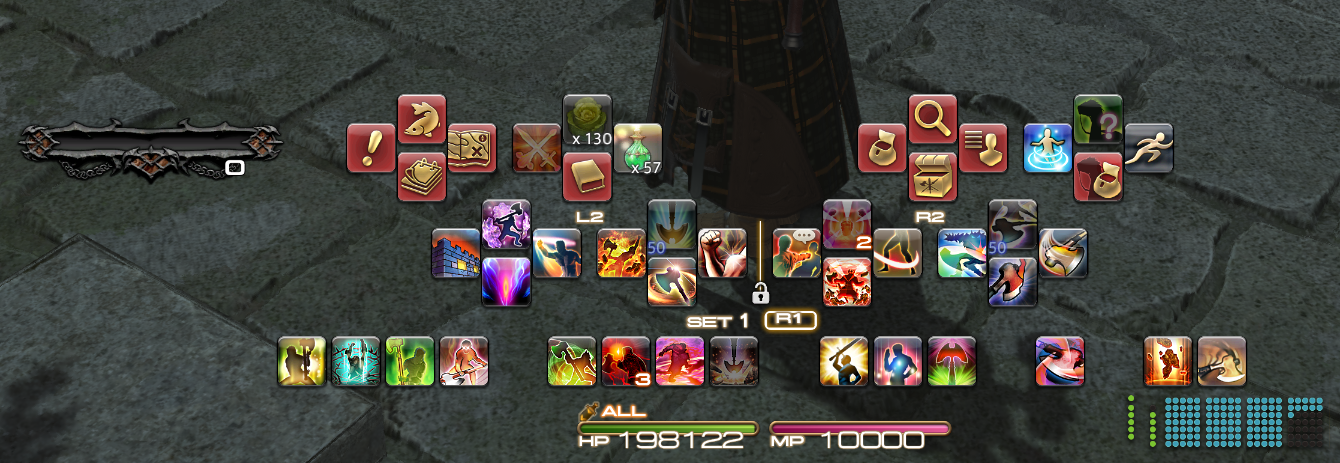
DRK

Lower layers
This is the same as what I've copied to the lower two button bars, in a left-top-bottom-right order.
SMN
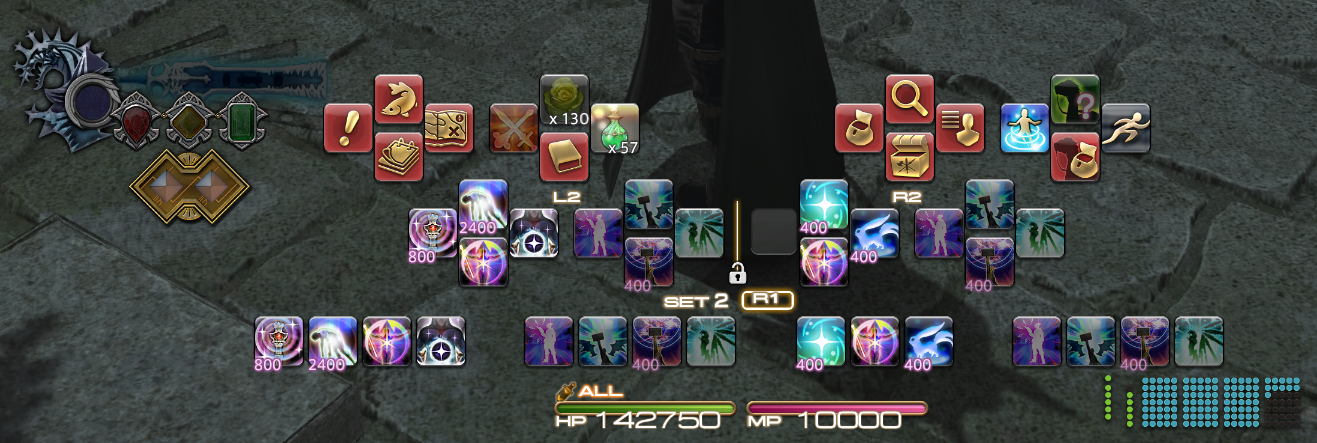
WAR
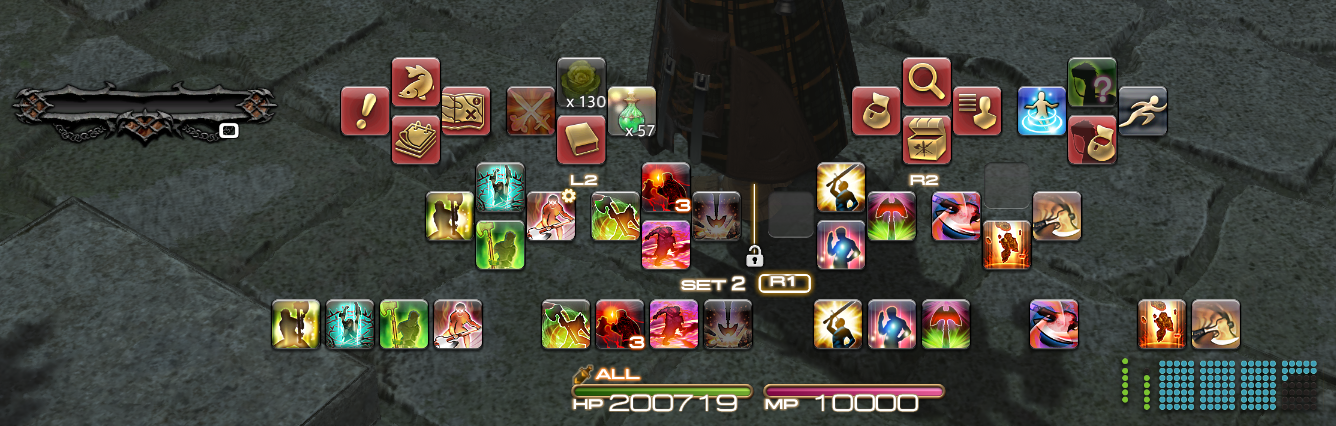
DRK
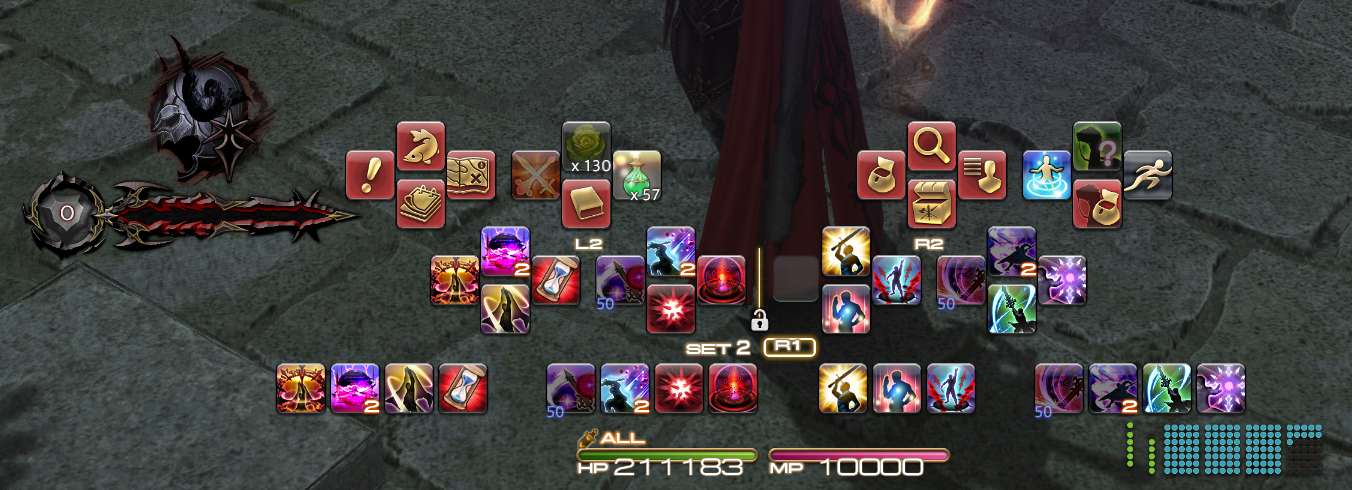
It looks a bit better without the wxhb on:
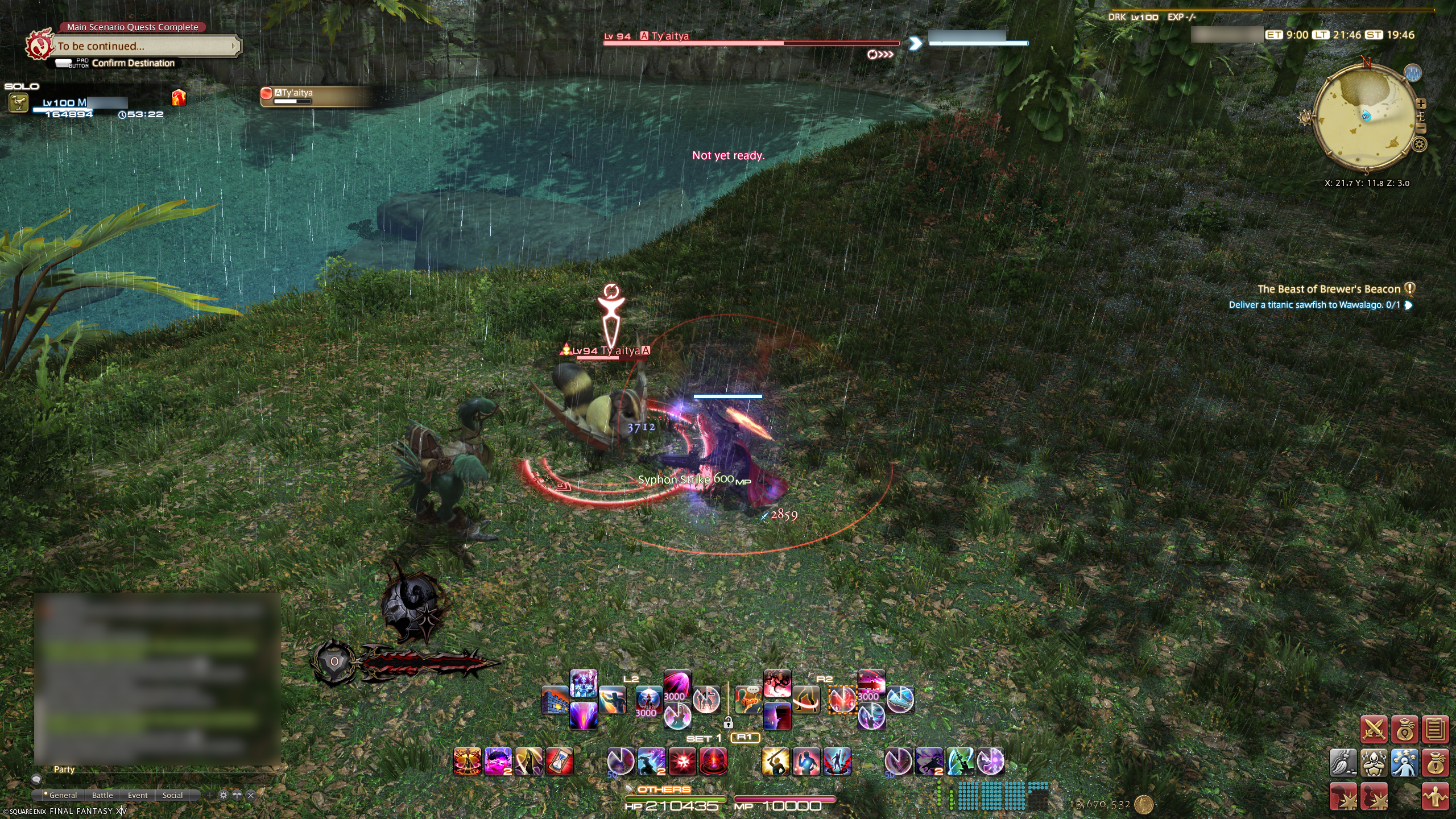
There are some things I figure I should change, e.g. make surecast and arm's length be in the same position.
But the similarities generally work: all the healers and the two casters with raise I can do L2>R2 down up to do a swiftcast+raise, the motion is always the same.
Sometimes I find stuff that could be more systematic, like moving ~~surecast~~ Arm's length, and mess up my muscle memory for a while. But I think the general rule should be to make some rules that make intuitive sense to you, and try to follow those. You'll get it wrong from time to time, either not following a rule, or discovering that the rule was a bad idea.
Having had a look at the archived version linked below, it seems pretty clear that it's entirely hogwash:
- The referenced init system replacement is called "rye-init"
- The wiki does not have anything on "rye-init" or even just rye
- The only hit on a package search for rye is rye, the precursor to
uv - I find no general search hits for rye-init, except references to the
ryementioned above (as inrye init), and some hits for this article and forum posts with people confused about it.
The Commission chose this route to avoid its proposals being vetoed by Slovakia and Hungary, whose governments have opposed the ban. Sanctions would be the strongest legal basis for banning Russian gas, but require unanimous approval from all EU countries.
It's good that they found a way around those fifth columns!
view more: next ›
When you see that sign you must. When you see this sign you can:
Often it is preferable anyway, but there's a difference between informational signs (blue rectangle) and mandating signs (blue circle). Here in Norway we generally don't have mandatory bike & ped paths, just the voluntary ones.
These combinations are generally not a good fit for urban areas, there we should have bikeways with sidewalks: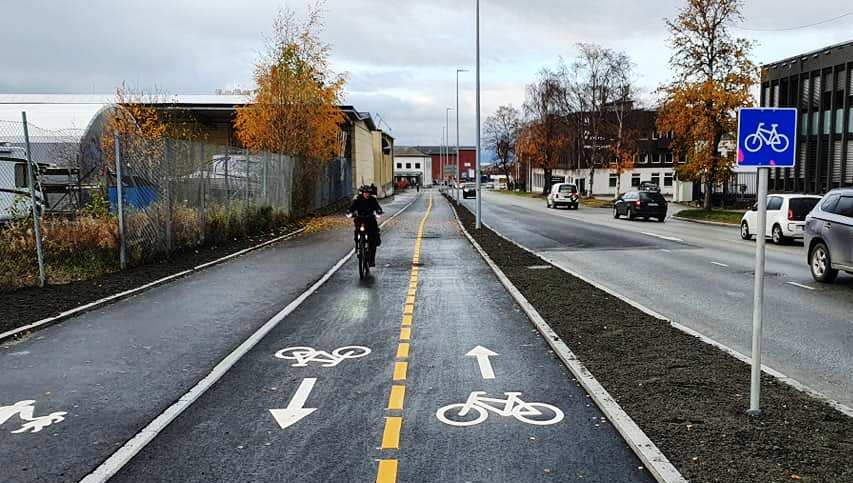
(Generally new infrastructure in urban areas is being constructed as bikeways with sidewalks, and old shared bike/ped-ways are being upgraded to bikeways with sidewalks.)