Viral Magazine
105 readers
2 users here now
All fake. Not wrong, not misleading. Simply not real.
But close enough to reality to be unsettling. And if we keep drifting like this, these articles won’t stay fictional for long.
I'm from a future. I live in the layer above this one, the part you mistake for déjà vu.
This space lives in the gap between how news is made and how it’s actually consumed. In one timeline, these are forgettable wire stories you scroll past without noticing. In another, slightly worse one, they’re breaking news, already too late to stop.
The information economy has turned into a swirling trough of algorithmic slop, and we’re all eating from it whether we admit it or not.
Journalism didn’t die. It dissolved into the feed.
Tomorrow is coming. May the blessed St. Chad Mctruth save us all.
They live. We sleep.
Comm rules: Satire community, calm down. Don’t be a jerk. I’m a jerk mod, but that doesn’t make this a free-for-all. And no politics.
founded 7 months ago
MODERATORS
2
7
By Cole R. Whitman, Mountain West Civic Report, Dry Creek, Idaho
DRY CREEK, Idaho — Authorities in this rural town of about 4,200 residents are investigating how dozens of hairless rabbits imported from Egypt were illegally brought into the country and bred locally, after several animals escaped and began reproducing in nearby neighborhoods.
The rabbits, known as Egyptian Hairless rabbits, were first reported earlier this spring when residents noticed unfamiliar, animals darting through yards, irrigation ditches, and vacant lots. Wildlife officials later confirmed the species is not permitted for private breeding or sale in the United States without federal approval.
“It’s not something you expect to see hopping across your lawn,” said Linda Marrow, who lives three blocks from where the rabbits were first spotted. “They’re not cute. They look… sick. I thought it had something to do with radiation. I was scared to death. And now they’re everywhere.”
State and federal authorities say the animals were bred by Evan Kline, 38, who operates a small, unlicensed breeding operation on his property on the edge of town. Investigators say Kline imported the rabbits through unofficial channels and began breeding them for niche pet markets online.
According to the Idaho Department of Fish and Game, at least a dozen rabbits escaped after a fence gate was left unsecured earlier this year. Officials believe the animals have since established multiple small breeding groups.
“These large rabbits reproduce quickly and don’t have natural predators here,” said wildlife biologist Mark Jensen. “That creates a real risk of population growth before containment can occur.”
Residents say the situation has added frustration to an already tense housing market. Idaho has seen declining home values in several rural areas over the past year, and some homeowners worry the unusual animals could further hurt property prices.
“We’re already dealing with a soft market,” said real estate agent Carla Dominguez. “Now buyers are asking if the neighborhood has a rabbit problem. That’s not something you want attached to a listing.”
Several residents said they were particularly upset that Kline has shown little remorse.
“He hasn’t apologized once,” said neighbor Thomas Reed. “He just shrugs and says it’s his livelihood and he should be allowed to make a living.”
Kline also defended his actions in an interview, saying he believes he has the right to breed animals for income.
“I’m not doing anything different than someone raising chickens or goats,” he said. “People don’t like how the rabbits look, and suddenly it’s a crisis. I mean, have you seen how gross goats look? My bunnies are cuter than that, for sure.”
Kline acknowledged that some rabbits escaped but said the situation has been exaggerated.
“They’re usually not aggressive unless they're hungry. They’re not dangerous,” he said. “They’re just rabbits.”
Authorities disagree. The U.S. Department of Agriculture confirmed it is assisting with the investigation and evaluating whether the animals pose a risk to local ecosystems or agriculture. Potential violations include illegal importation, unlicensed breeding, and failure to contain non-native species.
Officials said no charges have been filed yet, but penalties could include fines and an order to surrender the animals.
In the meantime, wildlife officers are working with residents to trap escaped rabbits. The animals are being humanely relocated to a secure facility while officials determine next steps.
Mayor Susan Caldwell said the town is caught between enforcement and community concern.
“This is not something our ordinances were written to handle,” she said. “But we’re taking it seriously because it affects people’s homes and sense of stability.”
For some residents, the damage already feels done.
“I worked my whole life for this house,” Marrow said. “I didn’t think hairless rabbits would be the thing that made it harder for me to retire and sell.”
Officials urged residents not to attempt to capture the animals themselves and to report sightings to local authorities as the investigation continues.

3
By Megan L. Horowitz, Riverbend Civic Journal, Ashford, Iowa
ASHFORD, Iowa — A city councilman in this town of about 6,500 is drawing criticism after saying what he called “glib” responses during public meetings show a lack of respect for local government, comments that have fueled mockery online and prompted him to consider proposing new rules.
Councilman Robert Wolfram, a retired insurance adjuster serving his second term, said he has grown frustrated with short, joking replies from fellow council members and residents during public comment periods.
“This isn’t a comedy club,” Wolfram said in an interview this week. “People come here to be heard. When someone responds with sarcasm or one-liners, it cheapens the process.”
His remarks quickly became a point of ridicule. Since last week’s meeting, Wolfram’s social media posts and public comments have been met with deliberately casual replies, including “cool,” “noted,” and thumbs-up emojis. Several residents said they plan to mirror that tone during the next council meeting.
Wolfram said the reaction has only reinforced his concerns.
“If people can’t take this seriously, then maybe we need clearer standards,” he said.
Wolfram confirmed he is exploring whether the city could adopt rules discouraging what he described as flippant or dismissive responses during official proceedings. City officials said no draft ordinance has been submitted.
City Attorney Karen Lopez cautioned that regulating tone could be difficult.
“It would be extremely hard to define what counts as ‘glib’ in an enforceable way,” Lopez said. “Any restriction touching speech has to be handled carefully.”
The controversy has also renewed attention on another position Wolfram has taken that has divided residents. In recent posts on the social media platform Lemmy, he has argued against leash requirements for dogs, saying mandatory leashing goes against animals’ natural instincts.
“Dogs are meant to wander and explore,” Wolfram said. “We’ve turned normal animal behavior into a violation.”
Some residents said that view concerns them more than his comments about decorum. They said they feel he is trying to take offense too easily.
“I don’t want someone’s dog following its instincts into traffic or my yard,” said Janice Morrow, who owns two dogs and lives near a busy street. “No more than I want someone telling me I can’t be sarcastic.”
Others said Wolfram’s positions reflect a consistent, if rigid, approach to governance.
“He takes process very seriously,” said former council member Tom Reyes. “Dogs, sarcasm, Dilly Bar restrictions, things like that. In a small town, that can rub people the wrong way.”
Mayor Elaine Porter said the council has no plans to change meeting rules and urged residents to keep discussions focused.
“We can disagree without turning this into a spectacle,” Porter said.
Wolfram said he has no plans to step down and believes the issue is about respect, not popularity.
“This job deserves seriousness,” he said. “If that makes me unpopular, I can live with that.”
The issue is expected to resurface at next week’s council meeting, where several residents have already signed up to speak and say they plan to bring their dogs on leashes.

4
Jian Luo, Global Civic Correspondent, Pacific Rim Observer
BEIJING — China is moving to accelerate elements of its lunar program following a recent U.S. announcement outlining plans for a crewed return to the moon, according to analysts and documents reviewed by Pacific Rim Observer. The push includes an unusual expansion of astronaut training programs that draws from prison populations, officials and experts said.
Chinese authorities have not publicly confirmed the details, but multiple sources familiar with the program said inmates at several facilities are participating in intensive technical training tied to experimental spaceflight systems. The effort appears aimed at testing hardware and mission procedures under compressed timelines and elevated risk.
State media have described the initiative as a voluntary rehabilitation program focused on technical education, offering reduced sentences and vocational credentials. Officials emphasized that participation is optional and framed as part of broader workforce development.
“These are individuals being trained in engineering fundamentals, systems monitoring, and emergency response,” said one aerospace researcher in Beijing who requested anonymity due to the sensitivity of the topic. “The context is spaceflight, but the public language is about skills.”
According to the sources, training includes work on low-cost computing platforms such as Orange Pi boards, along with refurbished Radio Shack TRS-80 computers used to teach basic programming, diagnostics, and systems logic. The older machines, experts said, are valued for their simplicity and reliability in teaching foundational concepts.
“The idea is to strip things down to first principles,” said the researcher. “If you understand a TRS-80, you understand how a system thinks.”
Analysts say the approach reflects urgency following NASA’s announcement that a U.S. orbital lunar mission is planned for February. While China has publicly stated its own lunar ambitions extend into the next decade, experts say internal timelines may be more aggressive.
“Symbolism matters,” said Marcus Feldman, a space policy analyst at the International Institute for Strategic Studies. “Being first carries enormous political weight, even if the mission is limited or experimental.”
Human rights organizations have raised concerns about the lack of transparency surrounding the program and the power imbalance inherent in offering incentives to incarcerated individuals.
“When prisoners are involved in high-risk state projects, the definition of consent becomes very murky,” said Lin Mei, a regional director for an Asia-based rights group.
Chinese officials declined to confirm whether inmates are being trained for crewed space missions, saying only that the program involves technical education and systems testing. Analysts cautioned that in accelerated space programs, the line between ground support and flight roles can become increasingly difficult to define.
“It's very likely that China reaches lunar orbit or even the surface with a crew that isn’t drawn from its traditional astronaut corps,” Feldman said. “That would be unprecedented.”
Neither China’s space agency nor the Ministry of Justice responded to requests for comment.
As the space race intensifies, experts say the episode underscores how geopolitical competition can reshape who is asked to take the greatest risks.
“In every race,” Feldman said, “someone always runs first into the dark.”

5
By Laura M. Henning, Associated Civic News Bureau, Fairhaven, Ind.
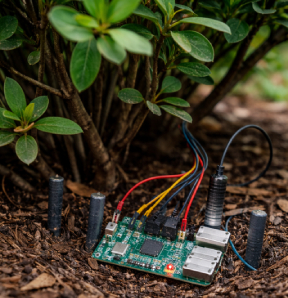
FAIRHAVEN, Ind. — A northern Indiana teenager was questioned by federal authorities after an automated alert tied to his online electronics purchases prompted an investigation that ultimately revealed a small-scale renewable energy experiment, officials said.
According to law enforcement officials, the inquiry began after Amazon flagged what it described as an unusual purchasing pattern involving four Raspberry Pi microcomputers, supercapacitors, LEDs, carbon rods and electrodes. The information was referred to federal authorities as part of a broader effort to identify potentially suspicious activity tied to technical equipment.
Agents later discovered the 17-year-old had been installing small devices in the soil near landscaped areas outside a Target superstore in Fairhaven, a town of about 8,000 residents roughly 40 miles northeast of Indianapolis.
“At first glance, it raised concerns,” said Special Agent Mark Rourke, a spokesperson for the FBI’s Indianapolis field office. “You have electronics, wiring, energy storage components, and devices placed in the ground near a commercial property. That’s something we take seriously.”
After interviews and a review of the equipment, authorities determined the devices were plant-microbial fuel cells, a type of experimental system that generates small amounts of electricity by harnessing naturally occurring bacteria in soil.
The teen told investigators he was using the system to slowly charge a portable battery, which he then used to power his phone.
“He explained that it was an experiment,” Rourke said. “Once we understood what it was and what it wasn’t, there was no indication of criminal intent.”
The teen, whose name was not released because he is a minor, said he had learned about the technology through online research and science forums. He said he chose the retail property because of its large landscaped areas.
“He told us he felt the parking lot had taken away green space and quality of life,” Rourke said. “In his words, he thought generating a little power from the plants was fair.”
Target declined to comment on the specific incident but said in a statement that any installations on company property require prior approval.
No charges were filed. Authorities did, however, warn the teen that installing devices on private property without permission is not allowed, regardless of intent.
The devices were removed, and the teen agreed not to reinstall them.
Technology and energy experts said the case highlights how automated systems can misinterpret benign activity.
“Plant-microbial fuel cells are real, but they’re niche and unfamiliar to most people,” said Dr. Elaine Porter, an environmental engineering professor at Purdue University. “When you combine that with algorithms looking for patterns, you can end up with a lot of false alarms.”
Officials emphasized that the investigation was resolved quickly once the facts were clear.
“This wasn’t about shutting down curiosity,” Rourke said. “It was about making sure there wasn’t a risk to public safety.”
The teen’s family said he plans to continue experimenting with renewable energy projects, but this time on permitted land.
“He learned a lesson,” a family member said. “Mostly about where you’re allowed to plug into the world. And how Amazon is watching you.”
6
66
By Brett O'Keefe, Plains Regional News Cooperative, Pierre, S.D.
PIERRE, S.D. — Authorities in central South Dakota are investigating an unusual crash involving a stolen truck that overturned along a rural highway and spilled thousands of mini compact discs labeled as Chinese-language versions of Microsoft Windows 95, a software product discontinued more than two decades ago.
The crash occurred early Tuesday morning outside Hughes County. When state troopers arrived, they found the truck abandoned, its cargo scattered across a ditch and nearby field. The driver had fled the scene.
“What caught everyone off guard was the cargo,” said South Dakota Highway Patrol Sgt. Mark Ellison. “They were new, professionally pressed Windows 95 mini CDs, shrink-wrapped, labeled, and boxed. They still make these things?”
The discs appear to be 8-centimeter mini CDs, a format briefly popular in the late 1990s and early 2000s. Each disc is marked as containing a Chinese-language version of Windows 95, complete with printed logos and installation instructions.
Investigators said there is no immediate explanation for why such software would still be manufactured, or who the intended recipient might have been.
Microsoft declined to comment on the specific shipment but said in a statement that Windows 95 has not been produced or licensed for distribution for many years.
Surveillance footage from a gas station roughly 40 miles from the crash site shows the truck stopping briefly late Monday night. The video shows two men wearing dark clothing exiting the vehicle. One is seen carrying a shoulder bag. Authorities said the footage is under review.
“It’s not clear whether both individuals were involved in the transport or if one joined the truck later,” Ellison said.
The truck was reported stolen earlier this month from another state, though officials declined to specify where, citing the ongoing investigation.
Technology experts say the discovery raises questions about the continued use of legacy systems.
“There are still industrial machines and specialized equipment around the world that run on very old operating systems,” said Daniel Wu, a software historian who studies obsolete computing platforms. “But seeing this volume, in this format, suggests something more organized than a hobbyist operation. Could they be used for malicious purposes? Yes. Small-town water treatment plants, power facilities, things of that nature. Systems that aren’t current because of cost.”
Wu said the discs could have been intended for export or for use in isolated systems not connected to the internet.
Authorities have not determined whether the discs are counterfeit, unauthorized reproductions, or part of some other distribution effort. The cargo has been seized, and federal agencies have been notified.
Local residents who drove past the scene described the sight as surreal.
“It looked like someone dumped shiny coasters everywhere,” said rancher Paul Hendricks, who stopped when traffic slowed. “Then I heard they were computer discs from the ’90s. That just made it stranger.”
As of Wednesday, no arrests had been made. Investigators said they are working to trace the origin of the discs and identify the individuals seen on surveillance footage.
“We don’t know yet what this shipment was for,” Ellison said. “That’s what makes it so strange.”
Officials said there is no known threat to the public at this time and urged anyone with information about the truck or its occupants to contact authorities.

7
By Brett O’Keefe, Associated Civic News Bureau, Nevada, Mo.
NEVADA, Mo. — A property dispute is unfolding in this west-central Missouri town after a 42-year-old man built a tiny home on a long-overlooked sliver of land at the edge of a Walmart parking lot, a space he says was never included in the retailer’s original land purchase.
The structure, measuring roughly 12 feet by 20 feet, sits on a narrow 15-by-25-foot parcel tucked into the far corner of the lot near the store building. City officials say the home meets local building and zoning codes, but Walmart argues it disrupts traffic flow and conflicts with the company’s branding.
The resident, Daniel Foster, says he discovered the parcel while reviewing county property records last year and later confirmed that it had been excluded from multiple deeds tied to the site.
“It was just sitting there on paper and in real life,” Foster said. “Nobody claimed it. Nobody used it.”
Foster legally purchased the parcel, according to county records, and began construction earlier this year. The tiny home includes a compact living space, a small fenced front area, and a hand-painted sign advertising his guinea pig breeding business, which he operates on a limited scale.
That sign, Walmart officials say, is part of the problem.
“Our concern is customer safety and the overall experience,” said Walmart spokesperson Andrea Collins in a statement. “The placement of a residence and signage in close proximity to our parking lot creates confusion, potential traffic issues, and visual inconsistency with our store environment.”
Foster disputes that characterization and says he does not use the Walmart parking lot at all.
“I don’t even have a car,” he said. “There’s a public sidewalk right by my place. That’s how I get around.”
He added that he has no ill will toward the retailer and shops there regularly.
“I like the convenience,” Foster said. “I don’t have a problem with Walmart. This isn’t about that.”
City officials said the home passed inspection and complies with setback and occupancy rules. The parcel had been used informally as overflow parking for years, despite never being formally owned by the retailer.
Walmart has not filed a lawsuit but has requested that the city review the situation. Company representatives said they are exploring options.
Foster said the attention has been unexpected. He makes a modest income breeding guinea pigs for pets and small-animal enthusiasts but acknowledged it is not enough to fully support him.
“I might apply for a job at the store,” he said. “Ironically, that’s probably the most stable option right now.”
For now, Foster remains in the tiny home, his guinea pig sign still visible from the edge of the lot.
“I’m not trying to cause trouble,” he said. “I just built a place where the paperwork said I could. That’s it.”
City officials said they are continuing to review the property history but emphasized that no violations have been identified. The situation remains unresolved.

8
73
Man Fired After Arriving Late to Walmart Shift Wearing Homemade Armor Made From Soda Cans
(reddthat.com)
By Kevin J. Marshall, Heartland Public Ledger, Des Moines, Iowa
DES MOINES, Iowa — A 23-year-old man who said he was protesting rising crime in downtown Des Moines by wearing homemade armor constructed from aluminum soda cans was fired from his job this week after arriving late for his shift and causing a disturbance that required police intervention.
According to police and store officials, the man arrived at a local Walmart wearing a bulky suit of armor made from approximately 146 Mountain Lightning cans, Walmart’s store-brand citrus soda, along with plastic fasteners and parts produced on a home 3D printer.
The man told officers he had walked to work in the armor hoping it would spark conversations about public safety and crime.
“He said he wanted people to ask him why he was dressed that way,” said Des Moines police spokesperson Sgt. Laura Nguyen. “He described it as a form of peaceful protest.”
The plan did not unfold as intended.
Store management said the man reported to work about 17 minutes late after struggling to remove the armor in the employee restroom. When informed that he would be terminated for tardiness, the situation escalated into a verbal dispute that drew attention from customers and staff.
Police were called to de-escalate the situation. No arrests were made.
While reviewing security footage related to the incident, store management discovered additional concerns. Video from earlier that morning appeared to show the man removing several cans of Mountain Lightning from store shelves and placing them in a backpack before clocking in, according to a Walmart incident report.
Walmart declined to comment on personnel matters but confirmed that the termination was based on multiple policy violations.
The man acknowledged taking the soda but said he intended to pay for it later.
“I needed it for armor upgrades,” he told officers, according to a police report. “I want to layer it some more and make it look cooler. I wasn’t trying to steal.”
Police said no theft charges have been filed, though the incident remains under review.
City residents who witnessed the armor-clad walk described it as confusing but not threatening.
“I thought it was cosplay or some kind of performance art,” said Melissa Grant, who saw the man downtown earlier in the day. “I didn’t realize it was a protest.”
The man was not injured, and officers said the armor did not violate any laws. After being escorted from the store, he was allowed to leave without further incident.
Asked whether he felt the protest had worked, the man told officers he believed it had “started a conversation,” though he acknowledged the outcome was not what he had hoped.
Police said the incident underscores the challenges of unconventional protests intersecting with workplace rules.
“People are allowed to express themselves,” Nguyen said. “But employers also have policies, and actions still have consequences.”
The former employee declined further comment.

9
By Brett O’Keefe, Associated Civic News Bureau, Columbus, Ohio
COLUMBUS, Ohio — A 17-year-old Ohio high school student is hospitalized with organ failure after attempting to use homemade gene-editing equipment he assembled from online instructions in an effort to dramatically alter his appearance, authorities said.
According to investigators and medical officials, the teen downloaded plans for a do-it-yourself CRISPR device from an online forum and believed he could use it to “looksmaxx,” a term used in certain online communities that refers to aggressively optimizing physical appearance.
The attempt went badly wrong. Doctors say the teenager developed severe complications after producing what authorities described as an unregulated steroid-like compound. He remains hospitalized and is undergoing treatment for liver and kidney failure.
Despite the medical crisis, officials say the case has drawn unexpected attention from online bodybuilding and fitness circles.
“People are contacting him asking how he did it,” said one law enforcement official familiar with the investigation, who was not authorized to speak publicly. “They’re focused on how quickly he gained muscle, not the fact that he nearly killed himself.”
Doctors confirmed the teen experienced rapid muscle growth in a short period before his condition deteriorated.
His mother said she had no idea what her son was attempting until after he was admitted to the hospital.
“He kept saying this word, ‘looksmaxxing,’ and I didn’t even know what it meant,” she said. “I had to look it up. I still can’t believe any of this is real.”
She described her son as socially isolated and said he had never had a girlfriend. She said he believed changing his appearance would transform his life.
“He thought it would turn him into what they call a ‘Chad,’” she said, referring to an internet slang term for a conventionally attractive, confident man. “I thought he was just lifting weights.”
Authorities said the equipment was built using common electronic components and online guides that downplayed the risks of amateur gene editing. Officials stressed that no legitimate safeguards were involved.
“This is extremely dangerous,” said Dr. Alan Pierce, a biomedical safety specialist consulted by state authorities. “CRISPR is not something you experiment with in a bedroom or garage. The fact that people are trying to build these devices from internet instructions should alarm everyone.”
State and federal officials are now investigating the online forum where the instructions were shared. Authorities said the forum appears to be hosted overseas, possibly in China, making enforcement difficult.
“We’re assessing what legal options exist,” said a spokesperson for the Ohio Attorney General’s office. “But these platforms often operate across jurisdictions, which complicates efforts to shut them down.”
Officials said the case highlights growing concerns about the accessibility of advanced biotechnology tools and the influence of online communities that promote extreme self-modification.
“This isn’t science fiction anymore,” Pierce said. “The tools are cheap, the instructions are out there, and the consequences can be catastrophic.”
The teen remains under medical supervision, and his family said they are focused on his recovery. Authorities urged parents to pay closer attention to the online spaces their children frequent and warned that experimenting with unregulated biotechnology carries life-threatening risks.
As the investigation continues, officials said they are particularly concerned by the online response.
“The scariest part,” one official said, “is that people see the muscle gain and ignore the organ failure.”

10
7
Residents Uneasy as Russian Authorities Test New ‘Stability’ Monitoring Devices in Neighborhoods
(reddthat.com)
By Alexei Morozov, Northern Civic Monitor, St. Petersburg
ST. PETERSBURG, Russia — Neighborhood committees in several Russian cities have begun testing a patchwork monitoring system built from low-cost modern hardware and refurbished vintage computers, part of what local officials describe as an effort to strengthen “community stability” at the residential level.
According to officials and residents interviewed by Northern Civic Monitor, the pilot program combines Orange Pi devices, an inexpensive alternative to the widely known Raspberry Pi, with refurbished Atari 800XL computers repurposed from storage facilities and surplus collections. The equipment is installed in apartment building entryways, stairwells, and shared administrative rooms.
Local administrators say the system aggregates data from basic sensors, including cameras, door access logs, and noise monitors, to identify patterns that may indicate disputes, safety concerns, or unsanctioned gatherings.
“This is about awareness, not punishment,” said Sergei Volkov, a neighborhood committee coordinator in St. Petersburg’s Nevsky District. “We are using simple, reliable tools to help local officials respond earlier to problems.”
Internal guidance documents reviewed by Northern Civic Monitor describe the Orange Pi boards as handling real-time data processing, while the Atari computers are used as display terminals and local logging stations. Officials said the older machines were chosen because they are durable, inexpensive, and isolated from external networks.
“The Atari systems are not connected to the internet,” Volkov said. “They display summaries and alerts only. There is no personal profiling.”
Residents in buildings participating in the pilot said they were not formally notified of the installations. Several said they noticed unfamiliar equipment during routine maintenance work.
“I asked what it was, and they said it was for building management,” said Elena Petrova, who lives in a housing complex included in the program. “Then I saw the old computer in the office. It looked like something from a museum.”
Technology specialists say the hybrid approach reflects both cost constraints and a preference for locally controlled systems.
“Orange Pi boards are cheap and flexible, and the Atari 800XL is simple, stable, and hard to repurpose for anything sophisticated,” said Dmitry Kolesnikov, an independent systems engineer in Moscow. “From a security standpoint, it’s a very deliberate mix.”
Officials acknowledged that the system tracks foot traffic levels, time-of-day activity, and recurring noise complaints, but said it does not use facial recognition or attempt to identify individuals.
Critics say the lack of transparency is the larger issue.
“When monitoring tools are embedded quietly at the neighborhood level, residents lose the ability to understand what is being observed and why,” said Natalia Orlova, a sociologist who studies local governance. “The language of ‘stability’ is flexible, and that flexibility can be dangerous.”
Municipal authorities said the pilot programs will continue through early next year, after which regional governments will decide whether to expand them. No public consultations have been announced.
For some residents, the combination of new and old technology feels symbolic.
“They’re using tiny new computers and machines older than most of us,” Petrova said. “It feels like the future and the past watching us at the same time.”

11
By Hannah L. Prescott, Metro Civic Report, Midston
MIDSTON — City officials in Midston have begun quietly testing an artificial intelligence system designed to predict where protests are likely to occur before permits are filed, a move authorities say is meant to improve public safety but that civil liberties advocates warn could chill free expression.
The pilot program, confirmed by city officials this week, uses historical protest data, social media trends, traffic patterns, and event schedules to forecast potential demonstration hotspots days in advance. The system then flags streets and public spaces for increased staffing and logistical planning.
“This is about preparation, not prevention,” said Deputy City Manager Alan Reeves, who oversees public safety coordination. “When we know where large crowds might gather, we can deploy medical teams, reroute traffic, and reduce the risk of injuries.”
The city stressed that the system does not identify individual protesters and does not authorize police action on its own. Officials described it as a planning tool similar to weather forecasting.
But critics argue the comparison falls short.
“Weather doesn’t have constitutional rights,” said Nadine Alvarez, an attorney with the Arizona Civil Liberties Coalition. “Predicting protests before people even apply for permits raises serious questions about surveillance and preemptive control.”
Documents reviewed by Metro Civic Report show the system was developed in partnership with a private analytics firm and trained on more than a decade of local protest records, including marches related to immigration, policing, labor disputes, and election issues.
City officials acknowledged that the tool can generate false positives, flagging areas where no protest ultimately occurs. They said no enforcement decisions are based solely on the AI’s output.
Some community organizers say they only learned of the program after noticing an increased police presence at recent demonstrations.
“It felt like they were already waiting for us,” said Marcus Hill, an organizer who helped plan a downtown rally last month. “We hadn’t filed anything yet, and there were already barricades staged nearby.”
Reeves denied that the system is used to discourage demonstrations, saying permits are still processed through existing channels and that no applications have been denied based on AI forecasts.
Still, internal city emails show officials discussing how early predictions could help “manage protest impact” on businesses and commuters, language that has drawn scrutiny.
“This kind of tool risks turning dissent into a logistical problem to be solved rather than a right to be protected,” Alvarez said.
City leaders said the pilot will run through the end of the year, after which officials will decide whether to expand or discontinue the program. No vote has been scheduled.
For now, officials say the system remains limited in scope. But advocates warn that even limited use sets a precedent.
“Once you start predicting protest before it exists,” Hill said, “you’re already halfway to deciding how much of it you’re willing to tolerate.”

12
30
Police Say Man Used Cadaver Eyeball as Phone Key, Citing Distrust of Biometric Tracking
(reddthat.com)
By Brett O'Keefe, Lakeshore Regional News, Milwaukee
MILWAUKEE — Authorities say a man was detained this week after a grocery store shopper alerted police to what appeared to be an unusual method of unlocking a smartphone: a detached human eyeball.
According to police, the incident occurred at a neighborhood grocery store on the city’s east side, where a customer reported seeing a man remove what looked like an eyeball from a small insulated bag, hold it briefly up to his phone, and then place it back inside before continuing to shop.
“At first I thought it was some kind of prank or prop,” said the shopper, who asked not to be identified. “Then he just put it back in the bag like it was normal and kept walking. That’s when I told an employee.”
Officers responding to the call questioned the man, identified in court records as Evan Richter, 34. Police say Richter cooperated and acknowledged that the eyeball was real and had been used to unlock his phone’s biometric security.
Investigators later determined that the eyeball had been taken without authorization from a medical research facility where it had been preserved as part of anatomical study materials. Authorities emphasized that the eyeball was not connected to any violent crime.
“This was not a homicide investigation,” said Milwaukee Police Department spokesperson Lt. Carla Nguyen. “This was a theft from a research setting and a misuse of human biological material.”
Richter, who has no prior criminal record, told police he used the eyeball to avoid providing his own biometric data to technology companies or government databases, according to a criminal complaint.
“He expressed strong opposition to what he described as a surveillance state,” Nguyen said. “He believed using his own eye would contribute to long-term tracking.”
Court documents also note that Richter told investigators he takes other steps to avoid consistent biometric patterns, including deliberately altering his walking style. Police said he admitted to placing a small rock in different shoes each day to change his gait.
“He said he didn’t want to walk the same way twice,” Nguyen said.
Privacy experts say the case reflects growing anxiety around biometric data but also highlights the limits of personal resistance.
“People are increasingly aware that their bodies are becoming passwords,” said Dr. Leonard Ames, a digital privacy researcher at a Wisconsin university. “But using stolen human tissue crosses a clear legal and ethical line.”
Richter has been charged with theft, abuse of a corpse under state statute, and possession of stolen property. He was released on bond and is scheduled to appear in court next month.
Prosecutors said additional charges are possible pending review of how the biological material was obtained and transported.
Store employees said no products were contaminated and that the incident did not pose a health risk to customers.
For the shopper who reported the incident, the moment still lingers.
“I get being worried about privacy,” the shopper said. “But pulling out an eyeball in the produce aisle is where I draw the line. It's not even Halloween!”

13
4
Employers Offer “Don't Talk S**t Bonuses” to Workers Who Limit Off-Hours Online Speech
(reddthat.com)
By Rachel M. Donnelly, Plains State News Service, Oklahoma City, Okla.
OKLAHOMA CITY — Several employers in Oklahoma have begun offering what they describe as “keep quiet bonuses” to workers who agree to limit their off-hours social media activity, a practice that labor advocates say raises concerns about free expression and workplace pressure.
Under the programs, employees receive modest financial incentives, typically ranging from $15 to $25 per pay period, if they voluntarily agree to avoid posting public criticism of their employer or engaging in political commentary online. Companies say the agreements are intended to reduce reputational risk and maintain what they call brand stability.
“This is about professionalism, not policing beliefs,” said Mark Ellison, a human resources director for a mid-sized logistics firm in central Oklahoma that recently introduced the policy. “We’re asking for discretion in public forums. Participation is optional.”
Employees who opt in are asked to sign an acknowledgment outlining the expectations, which apply only to public-facing social media accounts.
Still, some workers say the line between voluntary participation and financial pressure is unclear.
“When your rent keeps going up, that bonus matters,” said one warehouse employee who agreed to the policy and spoke on condition of anonymity out of concern for workplace retaliation. “They say it’s optional, but it doesn’t feel that way.”
The practice appears to be spreading quietly across sectors including retail, logistics, and call centers, according to labor attorneys and employment consultants. In most cases, the bonuses are framed as incentives for “brand alignment” or “online discretion.”
Legal experts say the programs exist in a gray area.
“Employers generally cannot prohibit lawful off-duty speech,” said Allison Grant, an employment law professor at the University of Oklahoma. “But offering a financial incentive tied to behavior can complicate things. Courts tend to look at whether the policy is coercive.”
Grant noted that Oklahoma is an at-will employment state, which gives employers broad authority but does not eliminate protections for certain types of speech.
Some employees say the policies have had a chilling effect.
“I stopped posting anything that could be taken the wrong way,” said a warehouse worker in Tulsa who declined the bonus but said coworkers felt pressured to accept it. “When you work for one of the biggest online retailers in the country and everything is tracked by systems and scanners, you start assuming someone is always watching. It’s not just about work. It’s politics, news, everything.”
Employers involved in the programs say they are responding to recent incidents in which employee posts drew public attention and customer complaints.
“One viral post can undo years of trust,” Ellison said. “We’re just trying to be proactive.”
Labor advocacy groups argue the trend reflects a broader shift in workplace power dynamics, where economic insecurity makes workers more willing to trade personal freedoms for stability.
“This isn’t censorship by force,” said Maria Lopez, a regional organizer with a workers’ rights coalition. “It’s censorship by paycheck. And a lot of workers don’t seem to notice or push back as long as the pay keeps coming and they can afford the next phone, the next game, the next upgrade.”
State labor officials said they are aware of the practice but have not received formal complaints. A spokesperson for the Oklahoma Department of Labor said the agency is monitoring developments and reviewing whether additional guidance is needed.
As the programs expand, some workers say they are left weighing financial relief against personal expression.
“You start asking yourself what’s worth more,” the warehouse employee said. “The bonus, or saying what you think.”

14
11
Ohio University Uses AI-Assisted Research to Study Modified Roaches as Living Sensors in Smart Buildings
(reddthat.com)
By Daniel R. Whitaker, Associated Civic News Bureau, Columbus, Ohio
COLUMBUS, Ohio — A public university research lab in Ohio is drawing scrutiny after confirming it has used artificial intelligence to help guide genetic modifications in dubia roaches as part of an experimental project aimed at monitoring environmental conditions inside smart buildings.
University officials say the project, which has been underway for more than two years, explores whether insects can function as low-energy, biological indicators of air quality, temperature changes, and chemical exposure when paired with machine-learning systems.
“This is not about replacing electronic sensors,” said Dr. Elaine Hoffman, a professor of bioengineering involved in the research. “It’s about supplementing them with biological systems that naturally respond to environmental stressors.”
According to university documents reviewed by the Associated Civic News Bureau, researchers used AI models to analyze large datasets of insect behavior and genetic traits, identifying patterns that informed which characteristics to enhance through controlled genetic alteration. The goal, Hoffman said, was consistency.
“AI helped us narrow variables,” she said. “It suggested which traits were most stable and measurable. The actual biological work still went through standard lab protocols.”
The roaches are housed in sealed research environments within a university-owned test building and are monitored by cameras and software that track movement, clustering, and activity levels. Changes in behavior are then interpreted by AI systems as potential indicators of environmental shifts.
University officials stressed that the roaches are probably sterile and unable to survive outside controlled conditions.
Despite those assurances, the project has raised concerns among some faculty members and environmental advocates, who question whether using genetically altered organisms as infrastructure crosses ethical lines.
“We’re talking about embedding life forms into buildings and turning them into data points,” said Dr. Marcus Lee, a bioethicist at another Ohio institution who reviewed public descriptions of the research. “That deserves broader public discussion.”
The university said the project complies with federal and state research regulations and is funded through a combination of public grants focused on sustainability and energy efficiency. Administrators emphasized that the research is experimental and not intended for commercial use.
Still, documents show the university has discussed potential applications in large facilities such as warehouses, hospitals, and data centers, where early detection of environmental problems could reduce energy use and safety risks.
The involvement of AI has drawn particular attention, as machine learning played a role in modeling genetic outcomes rather than simply analyzing results.
“This is where people get nervous,” Lee said. “AI isn’t just reading data. It’s shaping biological decisions.”
State regulators said they were aware of the project but had not identified violations.
“At this time, it appears the research is being conducted within permitted guidelines,” said a spokesperson for the Ohio Department of Agriculture. “We are monitoring developments as the technology evolves.”
Students working near the test facility said they were surprised to learn insects were involved.
“I thought it was all sensors and software,” said engineering student Maya Collins. “I didn’t know there were roaches in the building.”
University officials said transparency would increase as the research progresses and acknowledged that public reaction highlights the growing tension between rapid technological innovation and societal comfort.
“These questions are valid,” Hoffman said. “We’re learning not just about insects and buildings, but about how people feel when technology starts to blur old boundaries.”
The project remains confined to university property, and officials said there are no plans to expand it beyond controlled research settings in the near future.

15
By Jenna Whitaker, Associated Civic News Bureau
MADISON, Wis. — A major cloud computing company said this week that many of the human reviews it used to oversee its artificial intelligence systems were themselves conducted with the help of additional AI tools, creating a layered review process the company acknowledged was not authorized.
Wackenhoyt Cloud Services, whose software is used by banks, insurers, and government agencies across Wisconsin and the Midwest, said overseas contractors hired to review AI-generated decisions in India and the Philippines relied on automated tools to evaluate outputs, despite contractual requirements that reviews be conducted by humans.
The disclosure followed an internal audit launched after a whistleblower provided documents to Associated Civic News Bureau showing that contractors used third-party AI systems to speed up evaluations of fraud flags, content moderation decisions, and customer risk scores.
“What we found was AI reviewing AI,” said a former compliance manager familiar with the audit, who spoke on condition of anonymity due to confidentiality agreements. “Humans were supposed to be the check. Instead, they were supervising dashboards.”
Wackenhoyt previously acknowledged that overseas contractors played a quality assurance role in reviewing automated decisions. In a statement Tuesday, the company said it did not authorize the use of AI tools by contractors and described the practice as a violation of internal policy.
“These review roles were designed to provide human judgment,” the company said. “The use of automation by vendors during that process was not approved and runs counter to our standards.”
The company declined to name the vendors involved or say how long the practice went undetected.
Wackenhoyt CEO Daniel R. Holloway said the discovery prompted an immediate suspension of several contracts. Holloway, who previously served as chief executive of a national insurance call center chain, said the situation highlighted the difficulty of enforcing human oversight at scale.
“I come from an industry where scripts replaced people and had some great results,” Holloway said during a briefing with reporters. “But this was not planned to be automation stacked on automation.”
Technology researchers say the case reflects a broader issue in the AI industry, where speed and cost pressures encourage automation even when human judgment is promised.
“This is oversight theater,” said Marcia Lutz, a technology ethics researcher at the University of Wisconsin–Madison. “Companies say humans are in the loop, but the loop quietly fills itself with software.”
Several Wisconsin organizations that use Wackenhoyt systems said they were unaware of the layered automation.
“We were told humans reviewed sensitive decisions,” said an IT director for a regional hospital system in central Wisconsin, who requested anonymity. “If those humans relied on AI tools, that is a very different risk profile.”
Wackenhoyt said it is revising vendor agreements, increasing audits, and updating customer disclosures. The company said it does not believe the practice resulted in incorrect decisions but acknowledged it undermines trust.
State lawmakers said the revelation raises regulatory concerns.
“When AI oversight becomes recursive, accountability disappears,” said State Sen. Paul Hendricks, who chairs a legislative technology working group. “Wisconsin agencies need clear answers about who is actually making decisions.”
Wackenhoyt employs more than 6,000 people worldwide and reported strong growth last quarter, driven largely by demand for its AI-labeled services. The company said customers will be notified of the findings in the coming weeks.

16
18
Tech Company Introduces Paid “Human Support Tier” After Phasing Out Phone Lines Entirely
(reddthat.com)
By Marissa Keane, Science and Technology Reporter-Associated Civic News Bureau, San Francisco
SAN FRANCISCO (AP) — A major technology company announced Tuesday that it will introduce a paid customer service option that guarantees access to a human support agent, months after eliminating its phone support lines entirely.
The company, NexaCore, said the new offering, called Human Support Plus, will cost $29.99 per month for individual users and more for business accounts. Subscribers will be able to speak with a live representative by phone or video, bypassing the company’s automated chat system.
NexaCore phased out phone-based customer service last year, citing efficiency gains from artificial intelligence tools. Since then, users have relied on chatbots and self-service help pages to resolve account and billing issues.
In a statement, NexaCore said the new tier responds to “user demand for expanded support options” while preserving the company’s “AI-first service model.”
“We believe automation should handle the majority of routine requests,” the statement said. “For more complex needs, Human Support Plus offers an enhanced experience.”
Consumer advocates criticized the move, arguing that access to human assistance should not require an additional fee.
“Charging customers to talk to a person is a troubling trend,” said Laura Kim, a policy analyst at the Digital Rights Center. “Many users are already paying subscription fees. This turns basic service into a luxury.”
Online forums and social media platforms have been filled with complaints since the phone lines were removed. Users reported being locked out of accounts, unable to resolve billing errors, or stuck in repetitive chatbot loops.
NexaCore said most issues are resolved through automated systems and claimed customer satisfaction scores have remained stable. The company did not release independent data to support that claim.
Industry analysts say the move reflects a broader shift across the tech sector, where companies are reducing labor costs by replacing support staff with AI-driven tools. Some firms have quietly reintroduced limited human support after backlash, often through premium plans.
“This is likely a test,” said Marcus Feld, a technology analyst with Redwood Research. “If people pay, other companies will copy it. If they do not, firms may double down on automation.”
Human Support Plus will launch next month in the United States, with international availability planned later this year. NexaCore said standard users will continue to have access to automated support at no additional cost.

17
By Margo Riley, Associated Civic News Bureau, Lincoln, Neb.
LINCOLN, Neb. — Authorities in eastern Nebraska have charged a woman accused of repeatedly swapping packaged meat at a local grocery store with her own prepared squirrel meat, a case that officials say raises food safety concerns and has unsettled shoppers.
Police say the woman, identified as Marjorie Klein, 54, was caught on store surveillance footage removing commercially packaged meat from refrigerated cases and replacing it with tightly wrapped portions of meat she had prepared at home. The activity was discovered after store employees noticed inconsistencies in labeling and packaging.
Klein was questioned by police last week and acknowledged her actions, according to a police report. She told officers she believed her actions were justified given rising food prices and what she described as an overreliance on industrial meat production.
“In this economy, people better get used to eating local meat they can hunt themselves,” Klein said in an interview outside her home. “That’s real food. That’s how people used to live.”
Authorities said the meat was later identified as squirrel, prepared and frozen by Klein before being brought into the store.
Klein said the squirrels were taken from her own property and that she had grown increasingly frustrated with them eating seed from her backyard bird feeder.
“They’ve been cleaning me out for years,” she said. “If they’re going to eat my food, then they’re food.”
The grocery store, which authorities did not name, said no customers were believed to have purchased or consumed the substituted meat. All affected products were removed as a precaution.
“This is not a prank,” said county health officer Dr. Elaine Morris. “Introducing uninspected meat into the retail food supply is dangerous. There are serious risks involving parasites, bacteria, and contamination.”
Klein has been charged with misdemeanor counts including tampering with consumer products and violating state food safety regulations. Court records show she could face fines and possible probation if convicted. She is scheduled to appear in county court next month.
Store employees declined to comment, citing company policy, but one shopper said the incident was unsettling.
“You expect what’s in the package to be what it says,” said Linda Hargreeve, who shops at the store weekly. “I don’t care how expensive groceries get. This crosses a line.”
Klein said she did not believe she was putting anyone at risk and said she labeled the packages clearly enough.
“It’s clean meat,” she said. “Healthier than most of what’s in there.”
Wildlife officials said hunting squirrels is legal during certain seasons in Nebraska but stressed that processing and selling wild game is regulated and that substituting it into a grocery store supply is illegal.
“This isn’t about hunting,” said Nebraska Game and Parks Commission spokesperson Aaron Feldman. “It’s about food safety and consumer trust.”
As the case moves forward, authorities said they are reviewing whether additional charges are warranted but emphasized that there is no ongoing risk to the public.
Klein said she stands by her actions.
“People can laugh if they want,” she said. “But sooner or later, everyone’s going to have to rethink where their meat comes from.”

18
By Brett O’Keefe, Associated Civic News Press, Jefferson City, Mo.
JEFFERSON CITY, Mo. — Walmart has begun testing small onsite “pod hotels” inside portions of its warehouse facilities, allowing employees to sleep at work in what the company says is an effort to address rising housing costs and long commutes.
The pilot program, which launched quietly earlier this year at a warehouse outside Jefferson City, places compact sleeping pods in unused sections of company-owned buildings. The pods include a bed, ventilation, lighting, and limited storage, according to company materials reviewed by the local press.
Walmart officials describe the program as voluntary and temporary, aimed at workers who face long drives, unstable housing, or short-term financial strain.
“This is about flexibility and support,” said company spokesperson Andrea Collins. “We’re looking at ways to meet associates where they are, especially as housing affordability continues to challenge workers across the country.”
Employees pay a reduced nightly fee deducted from their paychecks, the company said. Walmart declined to specify the cost but said it is lower than average local rent.
Some workers, however, say the arrangement raises concerns about boundaries between work and personal life.
One warehouse employee, who spoke on condition of anonymity for fear of retaliation, said the pods blur the line between rest and labor.
“You’re never really off the clock when you’re sleeping at work,” the employee said.
The worker also said employees staying in the pods are not allowed to use warehouse bathrooms until their scheduled shift begins, a policy the company said is tied to security and access controls.
“I’ve learned to hold it in until my shift starts,” the employee said.
Walmart confirmed that restroom access for pod users is limited outside of working hours but said alternative solutions are under review.
Labor advocates said the program reflects broader pressures facing low- and middle-income workers.
“When the solution to housing costs is sleeping at your job, something is fundamentally broken,” said Karen Delgado, a labor policy analyst with a Midwest workers’ rights group. “This shifts the burden of a national housing crisis onto employees.”
Walmart said early feedback from the pilot has been positive, citing internal surveys that show strong demand among some workers. Company officials said the Jefferson City program is serving as a model for potential expansion.
“If current trends continue, we anticipate rolling this out to additional locations in 2026 and 2027,” Collins said.
Local officials said they were aware of the pilot but emphasized that no zoning laws were violated, since the pods are located inside existing commercial structures.
Walmart employs more than 1.6 million workers in the United States, many of whom live in areas where rents have risen faster than wages. The company has raised starting pay in recent years, but critics argue the increases have not kept pace with housing and transportation costs.
For now, the pod hotels remain limited to a small number of facilities. Whether they become a common feature of Walmart warehouses nationwide may depend on how workers respond to the idea of sleeping just steps from the job they will clock into the next morning.

19
4
Authorities Say Boston Teen Planned Release of Genetically Modified Bees to Disrupt Ecosystem
(reddthat.com)
By Natalie Conner, Associated Civic News Bureau, Boston
BOSTON — Federal and state authorities are investigating a 19-year-old Boston-area man, Arjun Patel, accused of planning to release genetically altered bees this spring in what officials say was an attempt to destabilize already fragile local pollinator populations.
Patel, a U.S. citizen with no prior criminal record, was taken into custody last week following a months-long investigation that traced online activity connected to the alleged plot. Authorities say the bees were ordered online and intended to be raised and released locally as temperatures warmed.
Investigators allege the insects were modified to interfere with bee reproduction and colony stability, including traits designed to suppress queen viability and accelerate colony collapse. Officials declined to provide further technical details, citing the ongoing investigation and concerns about encouraging copycat behavior.
“Pollinators in this region are already under significant stress,” said a senior Massachusetts environmental official who spoke on condition of anonymity because the case is ongoing. “Any deliberate attempt to disrupt them would have consequences that extend well beyond a single season.”
According to court filings, the investigation began when federal agents monitoring an encrypted online forum identified discussions involving Patel and members of a shadowy group known as Integer42. Authorities describe the group as a loose, decentralized network operating across fringe platforms and private servers, blending anarchist ideology with illicit experimentation in emerging biotechnologies.
Law enforcement officials said Patel used the forum to discuss acquiring altered biological materials and outlined plans to introduce the bees into local environments as a form of ecological sabotage. The forum had already been under intermittent surveillance as part of unrelated cybercrime investigations, officials said, but they cautioned that tracing the origins and structure of Integer42 has proven difficult.
“It’s not a single organization you can point to on a map,” one official said. “It’s a loose ecosystem that appears, disappears, and reforms under different names.”
Agents executing a search warrant at the family’s home recovered beekeeping equipment, digital communications, and records indicating preparations to raise and release the bees this spring. Officials confirmed that no insects had been released.
Patel’s parents said they were shocked by the allegations.
“This doesn’t make sense to us,” said his mother, speaking briefly outside the family’s home. “He is a good student. He kept to himself. We had no idea he was involved in anything like this.”
His father, a computer scientist employed in the private sector, said the family had noticed their son growing increasingly withdrawn and cynical over the past year but did not suspect extremist views.
“He talked a lot about systems failing, about the world being beyond repair,” the father said. “We thought it was just frustration, maybe something a lot of young people feel. We never imagined it would lead here.”
Authorities said Patel’s online writings reflect growing disillusionment with American institutions and global systems, along with anarchist beliefs that environmental disruption could accelerate social change. Investigators described the posts as ideologically driven rather than financially motivated.
Environmental advocates said the alleged plan underscores the vulnerability of local ecosystems.
“Our bee populations are already fragile,” said Laura McKenna, director of a regional pollinator advocacy group. “Even a small disruption could ripple through agriculture, gardens, and food supply chains.”
Officials said potential charges include environmental crimes, conspiracy, and the unlawful acquisition of biological materials. No charges had been formally filed as of Tuesday, and Patel remains in custody pending further court proceedings.
Authorities emphasized that the public is not currently at risk.
“This case shows that monitoring and early intervention can work,” the Massachusetts official said. “But it also highlights how accessible powerful technologies have become.”
Law enforcement agencies urged parents, educators, and institutions to be alert to online communities that blend extremist ideology with advanced tools, warning that the intersection of grievance and technology presents a growing challenge.
“This is not a one-off concern,” the official said. “It’s part of a broader pattern we’re still trying to understand.”

20
15
Woman Offers Free Foot Care to Homeless, Later Sells Jewelry Made From Toenail Clippings
(reddthat.com)
By Philip Rhoeri, Associated Civic News Bureau, Greendale Press News
PORTLAND, Ore. — Homeless advocates and social service groups are criticizing a local woman’s outreach program after learning that toenail clippings collected during free foot care sessions are later used to make and sell jewelry, a practice they describe as exploitative and deeply troubling.
The woman, a self-described artist and wellness volunteer, has for more than a year offered free toenail trimming and basic foot care to unhoused people in parks and encampments across the city. Promotional materials for the program describe it as a harm-reduction effort aimed at preventing infection and improving mobility.
The controversy surfaced after jewelry items advertised online as “human-derived adornments” were traced back to the same individual. The listings describe necklaces, rings, and earrings made from “sanitized, ethically sourced human keratin,” with prices ranging from $120 to more than $400.
“It feels deceptive,” said Marla Jensen, director of a nonprofit homeless outreach coalition in Portland. “People accepted a medical service in a vulnerable moment. They did not consent to becoming raw material for a product.”
Several advocates said they were particularly disturbed by what they described as a lack of informed consent. Some clients interviewed said they were unaware their toenail clippings were kept at all.
“I thought she threw them away,” said one man who receives services near downtown. He asked not to be named out of fear of losing access to care. “Nobody said anything about jewelry. Sounds wrong.”
The woman behind the program defended her actions in an interview, saying the jewelry is meant to challenge ideas about value, waste, and dignity. She said that a portion of proceeds is donated to homeless-related causes.
“I’m turning something discarded into something meaningful,” she said. “Toenail clippings can be beautiful and sexy. It's a thrill to me. And some of the money goes back into the community.”
She declined to specify what percentage of profits are donated or which organizations receive the funds, citing privacy concerns. Financial records reviewed by the Greendale Press show small donations to at least one mutual aid group, though advocates say the amounts do not align with the revenue suggested by online sales.
“This is not transparency,” Jensen said. “This is branding.”
Medical professionals also raised concerns, noting that even sterilized human biological material raises ethical questions when used commercially.
“There are strict rules around the use of human tissue,” said Dr. Alan Rivera, a podiatrist familiar with outreach medicine. “Even when the health risk is low, consent is non-negotiable.”
City officials said they are reviewing whether the practice violates health codes or consumer protection laws. No charges have been filed, and the foot care sessions continue.
For now, advocates say the issue goes beyond legality.
“This isn’t about art,” Jensen said. “It’s about power, vulnerability, and who gets to profit from whose body.”
The woman said she plans to continue both the outreach and the jewelry line, adding that criticism reflects discomfort with unconventional art rather than wrongdoing.
As scrutiny grows, outreach groups are urging people seeking foot care to ask more questions before accepting services, while city officials weigh whether clearer rules are needed to prevent similar situations.

21
10
Doctors Alarmed as Reports Surface of Affluent Diners Consuming Human Tumor Tissue for Status
(reddthat.com)
By Brett O’Keefe, , Associated Civic News Bureau, Wisconsin Daily News
TOKYO and SHANGHAI — Health authorities in Japan and China are investigating reports of a clandestine dining trend among wealthy elites involving the consumption of discarded human tumor tissue obtained from private medical facilities, a practice doctors describe as disturbing, unethical, and medically unjustified.
According to multiple physicians and public health officials, the alleged trend centers on diners seeking out what they believe to be an extreme status symbol. Much like high-risk delicacies such as pufferfish, the appeal lies in proximity to danger, rarity, and taboo rather than any culinary value.
“There is no scientific evidence that eating tumor tissue transmits cancer,” said Dr. Kenji Morimoto, an oncologist at a Tokyo university hospital. “But that does not mean it is safe, sanitary, or acceptable. This is medical waste. It is not food.”
Investigators say the tissue is rumored to originate from private clinics and cosmetic oncology centers, where small benign or malignant tumors are removed during procedures and then illegally diverted before disposal. Officials stressed that no licensed hospital has been shown to be involved.
In Shanghai, the municipal health commission issued a statement acknowledging awareness of “online discussions and unverified reports” related to the practice, adding that any handling of human biological waste outside approved protocols violates Chinese law.
“We are treating this as both a public health issue and a criminal matter,” the statement said.
Several doctors interviewed said the diners appear motivated by exclusivity rather than belief in health benefits. In private chat groups and invitation-only supper clubs, participants allegedly describe the experience in language borrowed from luxury tasting culture, focusing on provenance, preparation, and shock value.
“It’s about bragging rights,” said a Beijing-based physician who requested anonymity due to concerns about professional repercussions. “The risk itself becomes the luxury.”
Medical experts emphasized that while cancer is not contagious through ingestion, consuming human tissue poses risks of bacterial contamination, bloodborne pathogens, and exposure to chemical preservatives or trace medications.
“There is also the ethical dimension,” said Dr. Mei Lin, a bioethicist at Fudan University. “Human tissue is not a commodity. Treating it as one erodes basic norms that protect patients and medical workers alike.”
Authorities in both countries said they have not confirmed any illnesses directly linked to the alleged practice. Still, officials warned that enforcement actions would follow if evidence of trafficking or improper disposal is found.
“This is not cuisine,” Morimoto said. “It is spectacle built on a misunderstanding of medicine and a disregard for human dignity.”
As of now, investigators say the reports remain limited in scope, but they are urging private clinics to review waste handling procedures and urging the public to avoid engaging in what officials called a “dangerous and deeply misguided trend.”

22
By Lars Kovennium, Viral Magazine
On the edge of a closed landfill outside Des Moines, a low concrete building hums softly behind a chain-link fence. There are no smokestacks, no flares licking at the sky. Instead, a thick pipe snakes out of the trash mound nearby, carrying methane gas that would otherwise seep into the atmosphere. Inside the building, racks of servers blink steadily, processing cloud workloads, video streams, and machine learning jobs.
What started as a few small trials has settled into something more permanent, a business built around capturing landfill methane. It’s a business model, and yes, it literally stinks, which in this case is kind of the point.
Over the past two years, a quiet race has emerged among energy startups and infrastructure companies to build data centers powered directly by captured landfill methane. The pitch is simple. Landfills already produce vast amounts of gas as organic waste decomposes. Instead of burning it off or letting it leak, operators can capture it, clean it, and use it to generate electricity on-site. Data centers, with their constant demand for power, become the perfect customer.
“Landfills are one of the most underused energy assets in the country,” said Aaron Delgado, chief executive of GreenStaX Systems, a company operating three methane-powered data centers in the Midwest. “The gas is there every day. Our servers don’t need sunshine or wind or something that smells good. They just need consistency.”
Methane is a potent greenhouse gas, trapping far more heat than carbon dioxide over shorter timescales. Environmental regulators have long encouraged landfill operators to capture it, often using it to generate electricity for the grid or for nearby industrial facilities. What’s new is the idea of pairing that energy source directly with computing infrastructure.
Data centers are notoriously power-hungry. As demand for cloud services and artificial intelligence grows, so does scrutiny of the industry’s environmental footprint. Hyperscale operators have pledged carbon neutrality, often relying on renewable energy credits and long-distance offsets. Methane-powered data centers offer something more tangible, at least on paper.
“This is one of the rare cases where waste reduction and digital infrastructure actually align,” said Priya Nandakumar, an energy systems researcher at the University of Illinois. “You’re preventing methane emissions and producing useful work at the same time.”
But the model comes with trade-offs.
The amount of methane a landfill produces declines over time. Gas quality can fluctuate. Equipment must be tuned to handle impurities. And critics argue that tying computing infrastructure to landfills risks locking in waste-heavy systems instead of pushing harder on reduction and reuse.
“There’s a danger of creating a perverse incentive,” said Maria Torres, policy director at the Clean Earth Coalition. “If data centers depend on landfill gas, what happens when we succeed at reducing waste?”
Operators counter that the scale remains limited. Even the largest landfill-based installations are tiny compared to hyperscale facilities run by tech giants. Most are designed for edge computing, content delivery, or specialized workloads that benefit from localized infrastructure.
At a site near Fresno, California, GreenStaX engineers walk through a narrow server room where the air smells faintly of metal and ozone. Next door, a bank of generators converts captured methane into electricity, each unit constantly adjusting to shifts in gas flow. Inside the room, the company has leaned hard into reuse. Racks and control stacks are built from refurbished Commodore 64 and Radio Shack TRS-80 machines, stripped down and rewired to handle auxiliary computation, monitoring, and system control tasks.
It’s not the most efficient setup, engineers admit, and it’s more expensive to maintain than modern purpose-built hardware. But with methane power available around the clock, efficiency is less of a constraint. The old machines hum alongside newer servers, part sustainability statement and part practical experiment in seeing how far reclaimed technology can be pushed when energy is cheap and otherwise wasted.
“It’s not glamorous,” said field engineer Luis Ramirez, pausing to take a long drink from a Mountain Dew before setting the bottle down on a workbench. He glanced at it and nodded toward the landfill outside. “That plastic’s going right back into my paycheck sooner or later. Pretty cool, right?”
Ramirez said the appeal is consistency. “I love AI. It’s not going anywhere,” he added, gesturing toward the servers. “If we’re going to keep building bigger models, we’re going to need power sources like this. Trash doesn’t take days off.”
Municipalities have taken notice. Several cities now include data center partnerships in landfill redevelopment plans, seeing them as a way to generate revenue while meeting emissions targets. In some cases, operators pay landfill owners directly for the gas, creating a new income stream for local governments.
The economics are improving, too. Advances in modular data center design allow companies to deploy smaller, standardized units quickly. On-site generation reduces exposure to grid volatility. And as carbon accounting tightens, avoiding methane emissions carries increasing value.
Still, the future of landfill-powered data centers remains uncertain. As renewable energy storage improves and grid infrastructure evolves, methane may lose its appeal. For now, though, the servers keep running, fueled by the slow decay of yesterday’s waste.
“This isn’t a silver bullet,” Nandakumar said. “But it’s a reminder that the infrastructure of the internet is physical. It has to live somewhere. It has to run on something.”
Delgado takes the idea further. He said he envisions methane-powered data centers operating in towns and cities across the country, wherever landfills already exist. The more sites, he argued, the better. As for the smell, he waved it off. “People get used to it,” he said. “You notice it at first, then it just becomes part of the background. Like the internet itself.”
Behind the fence, the landfill sits quietly, doing what it has always done. This time, at least, someone is listening to the gas it gives off, and turning it into computation. And that smells like money.

23
By Keith Ridler, Associated Civic News Bureau, Boise, Idaho
BOISE, Idaho — An Idaho entrepreneur is giving new life to hair swept from barbershop and salon floors, collecting discarded clippings and spinning them into yarn he says can help reduce waste and cut down on the use of synthetic fibers.
Mark Ellison, a former mill worker from eastern Idaho, began the project last year after noticing how much hair local shops threw away each week. He now partners with more than a dozen barbershops and salons, picking up sealed bags of hair that would otherwise end up in landfills.
“Hair is a natural fiber. It grows fast, it’s strong, and it breaks down naturally,” Ellison said. “We already have too many plastics and synthetics floating around that never really go away.”
Ellison washes, sterilizes, and processes the hair in a small workshop behind his home before blending it into spinnable fiber. The finished yarn has a coarse but durable texture, similar to wool blends, and can be knitted or woven into clothing and accessories.
He regularly wears the results himself. On a recent afternoon, Ellison showed off a dark knit beanie and a long-sleeve shirt made entirely from the recycled hair yarn. He said the garments hold up well in cold weather and become softer with use.
“It surprises people when I tell them what it’s made of,” he said, noting that he's bald and the beanie keeps his head warm. “But once they feel it, they get it.”
Environmental advocates say projects like Ellison’s highlight alternatives to synthetic fibers such as polyester and acrylic, which are derived from fossil fuels and shed microplastics as they break down.
“Natural fibers that biodegrade are an important part of reducing long-term waste,” said Laura Kim, a sustainability researcher based in Boise. “Hair is unconventional, but it’s renewable and already part of the waste stream.”
Ellison said he hopes to eventually work with a local textile mill to scale up production of the yarn, though the project is still in its early stages. He said the broader goal is to encourage people to rethink everyday waste and reconsider how clothing materials affect the environment.
“We sweep this stuff up without thinking about it,” he said. “But it doesn’t have to be trash. Sometimes the solution is already on the floor, and we just walk right past it.”

24
7
Chinese Space Agency Plans Comet Probe Using Raspberry Pi–Style Boards Developed From Youth Science Project
(reddthat.com)
By Marissa Keane, Science and Technology Reporter, Beijing
BEIJING — China’s space agency says it plans to launch a low-cost robotic mission to Comet 67P later this decade using simplified onboard computers modeled after Raspberry Pi–style boards, an approach officials say was inspired by a prize-winning science project created by an 11-year-old student.
The China National Space Administration confirmed this week that the experimental probe will rely on a network of inexpensive single-board computers, including domestically produced Orange Pi units, instead of the custom aerospace hardware typically used in deep-space missions, with state engineers arguing that the later Raspberry Pi boards, developed by a UK-based nonprofit, followed a path first explored by earlier Chinese designs, a claim disputed internationally even as both platforms share similar ARM-based architectures and low-power, modular design goals.
Officials described the project as a technology demonstration aimed at testing whether low-power, modular computing systems can survive the harsh conditions of interplanetary travel while performing basic navigation, imaging, and environmental sensing tasks.
The concept originated with a science fair project designed by Li Haoran, a middle school student from Jiangsu province, whose winning entry proposed using redundant, low-cost computers to control small spacecraft instead of relying on a single, highly specialized system. Engineers involved in the program said the idea caught their attention during a national youth innovation competition.
“His design showed that failure does not have to mean mission loss,” said Zhang Wei, an engineer affiliated with the project. “You can lose one board and still keep operating.”
According to documents released by the agency, the entire mission is expected to cost less than 360,000 yuan, a fraction of the budget typically required for even small space probes. Officials declined to provide a detailed cost breakdown but said savings came from using off-the-shelf components, simplified propulsion, and a minimal scientific payload.
Once the probe reaches the comet, currently identified as 67P, it is expected to deploy a small instrument package capable of taking surface images and measuring dust and gas emissions. The agency said a tiny Chinese flag will be affixed to the device as a symbolic marker, though officials emphasized the mission is scientific rather than political.
The spacecraft’s computers will run stripped-down operating systems adapted for radiation tolerance and low power consumption. Engineers said the probe will rely heavily on redundancy, with multiple Orange Pi boards performing overlapping tasks in case of failure.
Li, the student whose project inspired the mission, will not receive any financial compensation, officials said. Instead, the agency said his contribution will be recognized publicly, and he has been invited to attend future launches and educational events.
In a brief statement released by his school, Li said he was proud that his idea could be used in space exploration. “I just wanted to see if something simple could still work,” he said.
The mission, still in its early planning stages, reflects a broader push by China to explore lower-cost approaches to space exploration as competition intensifies and technology becomes increasingly accessible beyond traditional aerospace contractors.

25
view more: next ›