this post was submitted on 24 May 2026
1538 points (99.1% liked)
Work Reform
16408 readers
678 users here now
A place to discuss positive changes that can make work more equitable, and to vent about current practices. We are NOT against work; we just want the fruits of our labor to be recognized better.
Our Philosophies:
- All workers must be paid a living wage for their labor.
- Income inequality is the main cause of lower living standards.
- Workers must join together and fight back for what is rightfully theirs.
- We must not be divided and conquered. Workers gain the most when they focus on unifying issues.
Our Goals
- Higher wages for underpaid workers.
- Better worker representation, including but not limited to unions.
- Better and fewer working hours.
- Stimulating a massive wave of worker organizing in the United States and beyond.
- Organizing and supporting political causes and campaigns that put workers first.
founded 2 years ago
MODERATORS
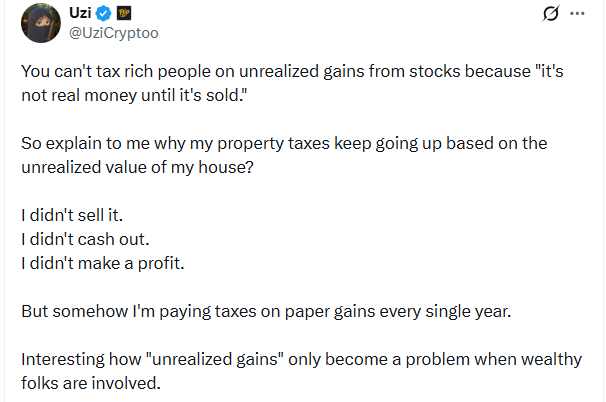
You wouldn't even have to make a huge reform to make a big difference. If we changed using "unrealized gains" as collateral to count as realizing those gains, the ultra wealthy would pay a fuck ton more in taxes. Also, the interest on those loans should not be deductible. Boo hoo if you end up with a margin call. Don't make risky bets.
This is where I stand on it. Charging taxes on unrealized gains is never going to happen, and its not like we're going to give them a refund if it swings the other way.
Taxing collateralizion and usage of the unrealized gains would be massive, and if they don't like the new system, then sell them and pay taxes like everyone else.
Edi: also you can audit what they spend and how they got the money to afford it to trigger the tax. Knowing someone's unrealized net worth can be incredibly complicated beyond public stock ownership, and even then that can be hidden as well.
Don't try to tax the dollar value of the securities. Enact a wealth tax of the securities themselves. Transfer shares of the security to the IRS, to be liquidated slowly over time. Non-liquid securities would be held much like a lien.
That's significantly more complicated for no real benefit. It actually carries a much higher risk for the IRS as the securities are volital.
All you have to do is tax them when they use the assets as collateral, and for good measure tax the loan as income.
You could even throw in a minimum threshold to not apply it to regular people, and force them to pay people more in the process. This can be achieved by setting the threshold to a variable, like 100x the average annual take home pay of the bottom 20% of earners (~$1.6m) and make it a annual total of loans to close the loophole of a bunch of small loans.
If they want cheaper loans people have to be paid more.
If you tax loans backed by collateral, the banks will just change their lending policies on unsecured personal loans. No collateral = no tax on the use of that collateral. The method of taxation you are suggesting is trivial to evade.
It is more complicated, but the benefit is immense. The benefit is that Shareholding becomes much less valuable to the oligarch Problem Class, and much more valuable to the Working Class. Company ownership and control is driven toward workers. Working Class shareholders become the predominant voice in determining company policy. Profit extraction goes to Working Shareholders rather than the Problem Class.
Describe that risk. Remember: The IRS is not owed dollars. They are only owed the shares. The dollar value of those shares is entirely irrelevant.