this post was submitted on 24 May 2026
1560 points (99.1% liked)
Work Reform
16408 readers
536 users here now
A place to discuss positive changes that can make work more equitable, and to vent about current practices. We are NOT against work; we just want the fruits of our labor to be recognized better.
Our Philosophies:
- All workers must be paid a living wage for their labor.
- Income inequality is the main cause of lower living standards.
- Workers must join together and fight back for what is rightfully theirs.
- We must not be divided and conquered. Workers gain the most when they focus on unifying issues.
Our Goals
- Higher wages for underpaid workers.
- Better worker representation, including but not limited to unions.
- Better and fewer working hours.
- Stimulating a massive wave of worker organizing in the United States and beyond.
- Organizing and supporting political causes and campaigns that put workers first.
founded 2 years ago
MODERATORS
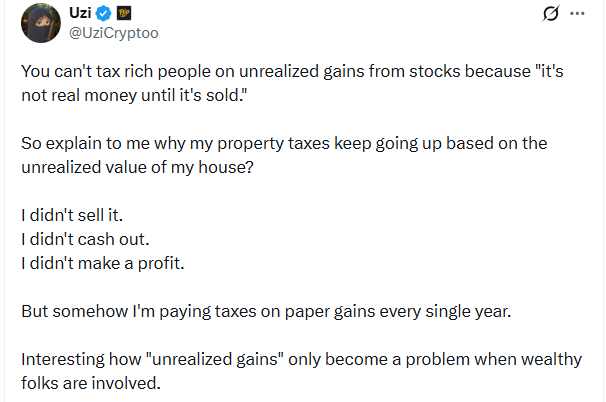
Myth.
You can transfer the stocks themselves to the IRS, and leave the IRS with the responsibility for liquidating them. We can require the IRS to look at the total traded volume of any issue they acquire, and prohibit them from selling more than 1% of that volume in the same time period. Liquidated shares will comprise no more than 1%; those shares will not significantly affect the market value of the issue.
"Stock" is what the ownership interest is distributed among multiple people. When two people equally build a business together, they each hold a "share" of that business's "stock". Banning "stocks" means banning every type of joint ownership, which is every type of business except "sole proprietorship" and "government enterprise". Banning stocks is only feasible in a completely centralized economy.
Banning Bonds and Loans is even less feasible, and results in even more absurdities. Taken to extremes, your Amazon driver would have to collect payment at time of delivery, not at time of order. Payment before delivery could be considered a type of loan. Likewise, a business's order to a vendor for supplies would have to be paid at time of delivery. Any other time would be considered a "loan" one way or another.