
this post was submitted on 13 Jun 2026
213 points (100.0% liked)

Traditional Art

7081 readers
235 users here now

This is a community dedicated to showcasing all types of traditional medium art.

Traditional means a physical medium. This includes acrylic, pastel, encaustic, gouache, oil and watercolor paintings; Ink illustrations; Pencil and charcoal sketches; Etchings; Lithographs; Wood prints; pottery; ceramics; metal, Wire and paper sculptures; Tapestry; Weaving; Quilting; Wood carvings, Armor Crafting and more.

It EXCLUDES digital art: anything made with Photoshop, Clip Studio Paint, Krita, Blender, GIMP or other art programs, or AI art.


RULES

1- Do not post Digital or AI art.

2- NSFW content is allowed but it must be tagged.

3 - Extreme NSFW content like gore, graphic imagery, fetishistic works and straight up porn is not allowed.

3- [Change as of 4/12/2026] Posts may be art images, or articles about traditional art. Article posts MUST be tagged [ARTICLE].

4 - The post title should contain the title of the artwork or the name of the artist or ideally both if available. If there is further information about the artwork you want to convey, do it in the body of the post or in the comments.

5 - You can post your own art but keep in mind not to spam. An [OC] tag in the title of your post is recommended.

6 - Avoid extraneous objects and post only the art.

7 - Be civil to other community members.

8 - Keep on the topic of art in the comments. Extreme tangents or arguments will be removed.

founded 3 years ago
MODERATORS
 

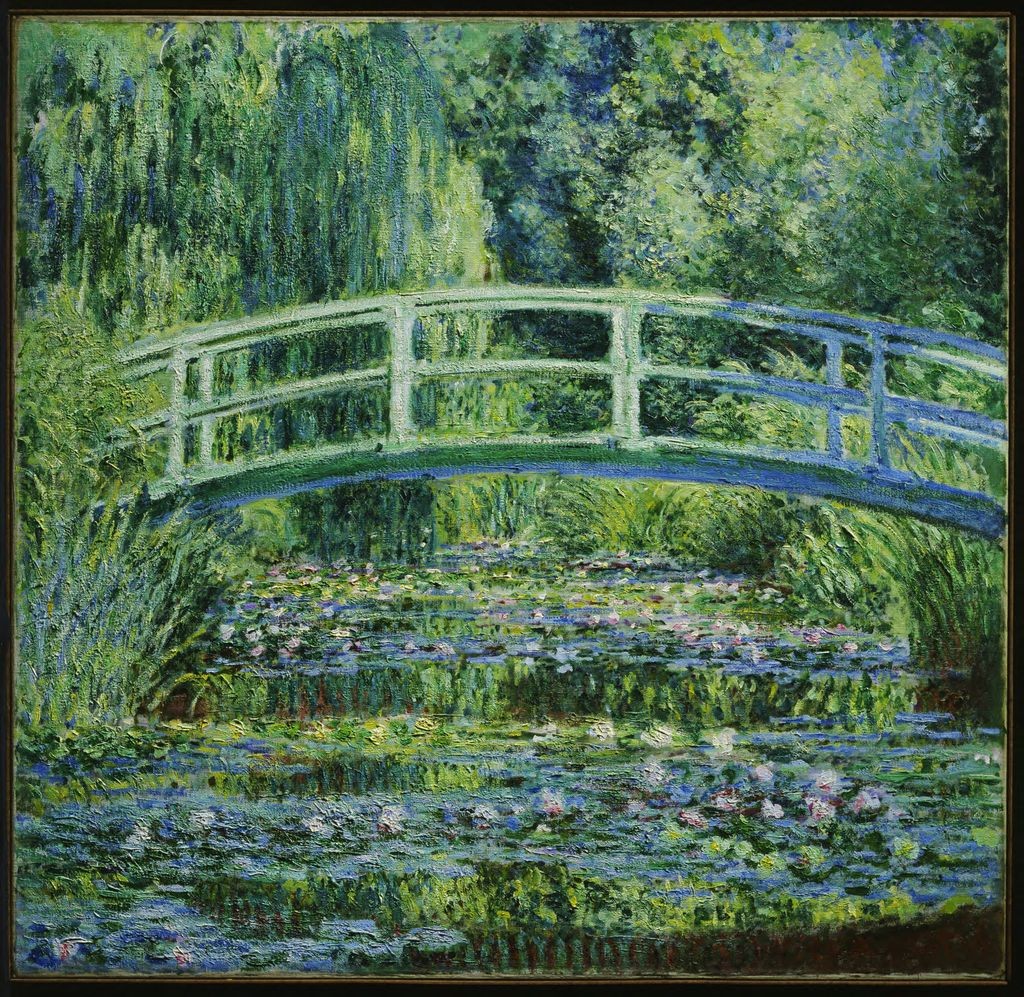
Artist: Claude Monet

Year: 1899

Medium: Oil on canvas

Water Lilies and Japanese Bridge represents two of Monet’s greatest achievements: his gardens at Giverny and the paintings they inspired. Monet moved to Giverny in 1883 and immediately began to develop the property. For him, the gardens were both a passion and a second artistic medium. His Asian garden was not part of the original estate; it was located on an adjacent property with a small brook, which he purchased and enlarged into a pond for a water garden in 1893. He transformed the site into an inspired vision of cool greens and calm, reflective waters, enhanced by exotic plants such as bamboo, ginkgo, and Japanese fruit trees and a Japanese footbridge. It was not until 1899, however, that he began a series of views of the site, of which this is one. A careful craftsman who reworked his canvases multiple times, Monet was committed to painting directly from nature as much as possible and for as long as he had the correct conditions; thus, he could work on as many as eight or more canvases a day, devoting as little as an hour or less to each. In this case, he set up his easel at the edge of the water-lily pond and worked on several paintings of the subject as part of a single process. Monet’s gardens and paintings show the same fascination with the effects of time and weather on the landscape. Both are brilliant expressions of his unique visual sensitivity and emotional response to nature. At Giverny, he literally shaped nature for his brush, cultivating vistas to paint.
Source

Image Source

you are viewing a single comment's thread
view the rest of the comments
[–] Sylvartas@lemmy.dbzer0.com 4 points 1 week ago

That was his whole thing for a few years near the end of his life