Coming from this article (HN comments):
https://news.cornell.edu/stories/2025/12/ozempic-changing-foods-americans-buy
Ozempic is changing the foods Americans buy
Within six months of starting a GLP-1 medication, households reduce grocery spending by an average of 5.3%. Among higher-income households, the drop is even steeper, at more than 8%. Spending at fast-food restaurants, coffee shops and other limited-service eateries falls by about 8%.
That seems huge to me. There's lots of memes about bad food practices in the US and there's a lot of truth to it. In 10 years, will there be a stereotype of Americans as skinny people that don't eat much?
I don't have a link but I've seen that companies are pushing back on this, like researching how to make drinks that counteract GLP-1 drugs. Will Big Pharma or Big Sugar win out?


Do you know if there's something like this chart, but for food instead of supplements?
https://informationisbeautiful.net/visualizations/snake-oil-scientific-evidence-for-nutritional-supplements-vizsweet/
I've seen that seed oils are bad. I've also seen people that say all oil is bad, and (without having looked into this at all), it seems like the "all oil is bad" people are probably overreacting and it's something more specific like seed oils or something like that (though what specifically about them is bad?). It'd be nice to see a chart like above with handy links to scientific papers.
While looking this up btw, I found that Scientific American just published something today about seed oils:
https://www.scientificamerican.com/podcast/episode/are-seed-oils-bad-for-you-debunking-a-viral-social-media-myth/
Right so the coffee heart disease link makes huge assumptions - i.e. that everyone is in the same metabolic context (i.e. standard western diet). From my reading there is a reasonable probability that for someone eating the standard western diet, small doses of coffee have a cardiovascular benefit... but someone with a healthy metabolism (ketogenic metabolism) wouldn't see any of those same benefits (low cardio vascular disk to begin with). Whenever you see this type of "good for you" advice, you need to ask
The question shouldn't be "why seed oils are bad" (they are), but rather "Why replace saturated fat with something that didn't exist until 115 years ago?". We don't know for certain why seed oils are bad, the best theory I've seen to explain it is that plant sterols are close enough to animal sterols that they go throughout the body to the cholesterol sites, but then interfere with cholesterol signaling (i.e. https://hackertalks.com/post/4924264)
Here are some papers to get you started on why seed oils arnt great for you:
https://hackertalks.com/post/6200879 paper - https://faseb.onlinelibrary.wiley.com/doi/abs/10.1096/fasebj.27.1_supplement.127.4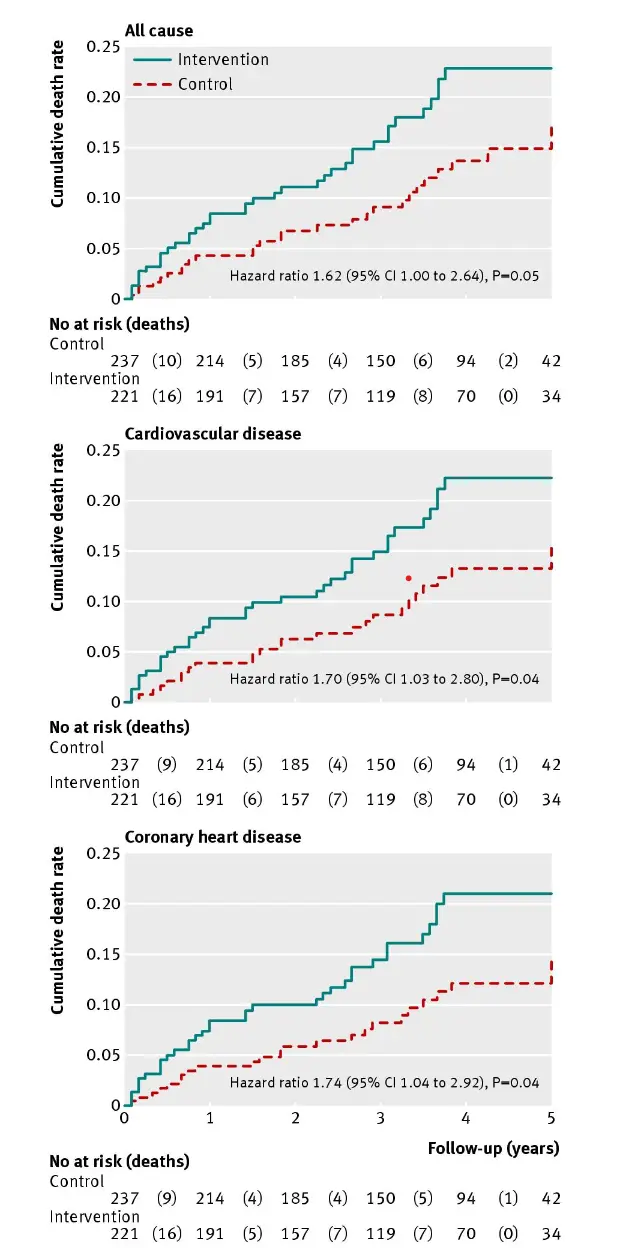
charts showing seed oils increased all cause mortality
https://hackertalks.com/post/6054186 - https://doi.org/10.1136/bmj.i1246
https://hackertalks.com/post/11881867 - http://dx.doi.org/10.3389/fnut.2021.748847
This doesn't cite any sources... it's just a dude giving their opinion.
Diet doctor has a great medical staff and writes extremely well cited reviews the literature and doesn't say anything that they can't support, so for the full seed oil story please read: https://www.dietdoctor.com/low-carb/vegetable-oils#conclusion
TLDR: "If your goals include eating less processed food — as ours do — the best course may be to avoid these newcomers and return to traditional dietary fat sources. Get your fats from whole foods, including avocados, oily fish, nuts, seeds, olive oil, traditional oils, butter, coconut oil and meats."
If someone is struggling with metabolic health and is thinking about taking the drugs I think carbohydrates are the most effective leaver they can pull, seed oils will help - but not nearly as much.