this post was submitted on 07 Feb 2026
127 points (97.7% liked)

Climate

8263 readers
248 users here now

Discussion of climate, how it is changing, activism around that, the politics, and the energy systems change we need in order to stabilize things.

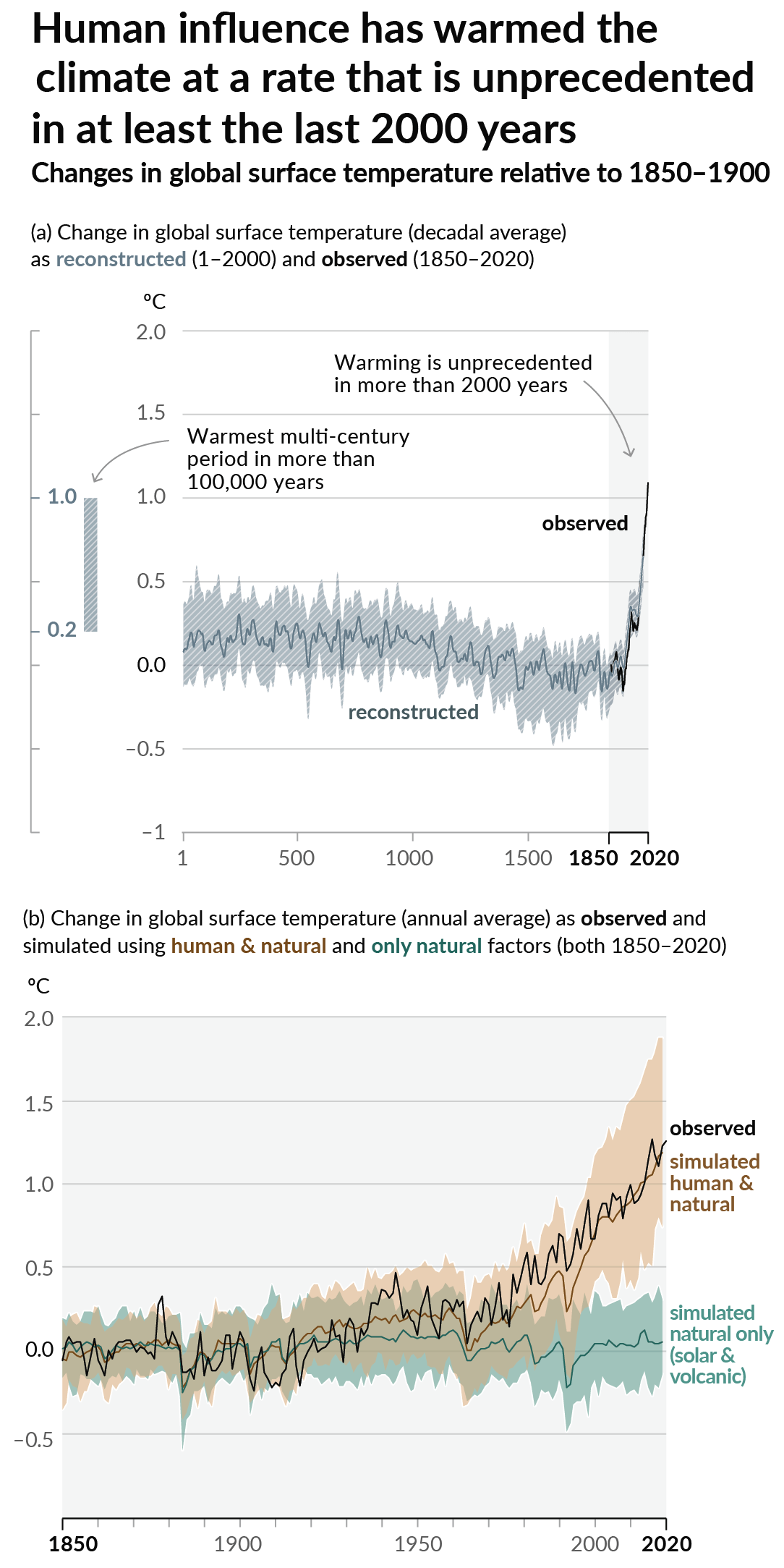
As a starting point, the burning of fossil fuels, and to a lesser extent deforestation and release of methane are responsible for the warming in recent decades: Graph of temperature as observed with significant warming, and simulated without added greenhouse gases and other anthropogentic changes, which shows no significant warming
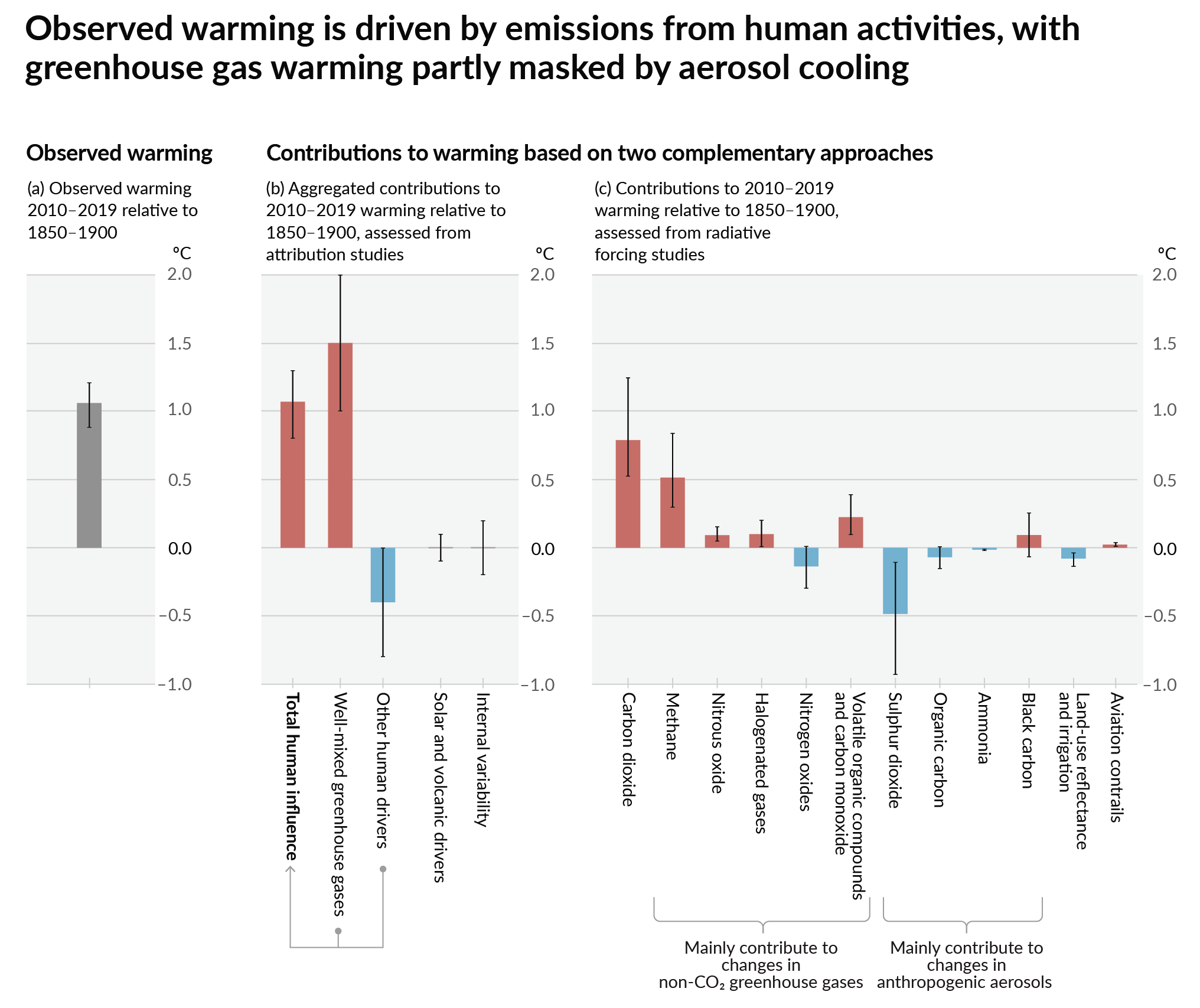
How much each change to the atmosphere has warmed the world: IPCC AR6 Figure 2 - Thee bar charts: first chart: how much each gas has warmed the world.  About 1C of total warming.  Second chart:  about 1.5C of total warming from well-mixed greenhouse gases, offset by 0.4C of cooling from aerosols and negligible influence from changes to solar output, volcanoes, and internal variability.  Third chart: about 1.25C of warming from CO2, 0.5C from methane, and a bunch more in small quantities from other gases.  About 0.5C of cooling with large error bars from SO2.
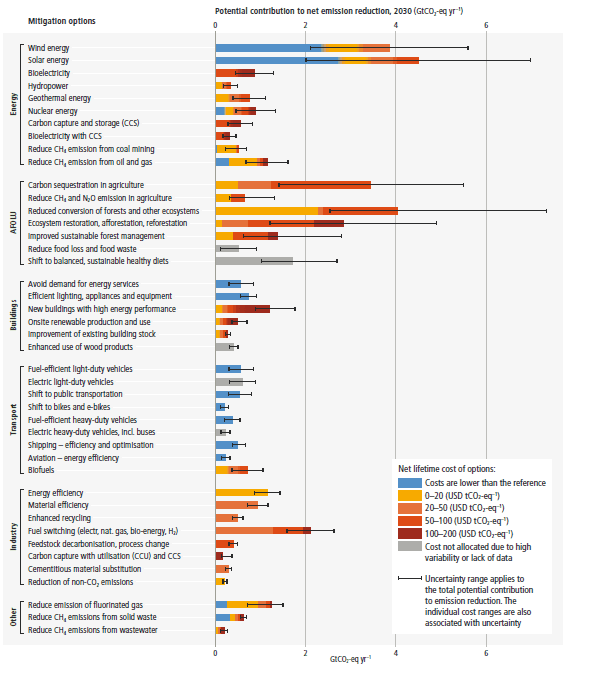
Recommended actions to cut greenhouse gas emissions in the near future:
Anti-science, inactivism, and unsupported conspiracy theories are not ok here.

founded 2 years ago
MODERATORS
you are viewing a single comment's thread
view the rest of the comments
[–] MachineFab812@discuss.tchncs.de 8 points 1 day ago* (last edited 1 day ago)

A lot of vague, even seemingly-intentionally-obscured links here, many of which don't fully support claims or mention crucial aspects of the issue that this Analytics Consultancy glosses or ignores. Crucially:

...yeah, replacement won't be enough, and with global warming pushing the ideal climes for various crops(particularly, nutritious staples) further away from the equator, people stuck closer to the equator need every locally-doable option they can get.

The single biggest failure the Western World keeps hitting with this is how to turn a profit, or how to get past the point on the Bell-curve where it goes from expiriment or novelty to recouping start-up investment costs. Lots of stigma in Western Markets to overcome.

EDIT: sorry all, I had thought I saw "Science Daily" in there and some other filler sites that annoy me to no-end, but still, these are mostly opinion-pieces and editorials.

References

Methods and Supporting Data

Bang, A., & Courchamp, F. (2021). Industrial rearing of edible insects could be a major source of new biological invasions. Ecology Letters, 24(3), 393-397. Link to source: https://doi.org/10.1111/ele.13646

https://onlinelibrary.wiley.com/doi/epdf/10.1111/ele.13646

Biteau, C., Bry-Chevalier, T., Crummett, D., Ryba, R., & St. Jules, M. (2025a). Bugs in the system: The logic of insect farming research is flawed by unfounded assumptions. npj Sustainable Agriculture, 3(1), 9. Link to source: https://doi.org/10.1038/s44264-024-00042-0

https://www.nature.com/articles/s44264-024-00042-0

Biteau, C., Bry‐Chevalier, T., Crummett, D., Loewy, K., Ryba, R., & St. Jules, M. (2025b). Have the environmental benefits of insect farming been overstated? A critical review. Biological Reviews. Link to source: https://doi.org/10.1111/brv.70076

https://onlinelibrary.wiley.com/doi/10.1111/brv.70076

Biteau, C., Bry-Chevalier, T., Crummett, D., Ryba, R., & St. Jules, M. (2024). Is turning food waste into insect feed an uphill climb? A review of persistent challenges. Sustainable Production and Consumption, 49, 492-501. Link to source: https://doi.org/10.1016/j.spc.2024.06.031

https://www.sciencedirect.com/science/article/pii/S235255092400191X?via=ihub

Bosch, G., & Swanson, K. S. (2021). Effect of using insects as feed on animals: pet dogs and cats. Journal of Insects as Food and Feed, 7(5), 795-806. Link to source: https://doi.org/10.3920/JIFF2020.0084

https://brill.com/view/journals/jiff/7/5/article-p795_20.xml

Faes, N. (2022). AgriTech: Insects as feed. Bryan, Garnier & Co. https://medias.bryangarnier.com/marketing/pdf/Alternative_Proteins_July_Final.pdf

Ffoulkes, C., Illman, H., O’Connor, R., Lemon, F., Behrendt, K., Wynn, S., Wright, P., Godber, O., Ramsden, M., Adams, J. & Metcalfe, P. (2021). Development of a roadmap to scale up insect protein production in the UK for use in animal feed. WWF & ADAS. Link to source: https://www.wwf.org.uk/sites/default/files/2021-06/the_future_of_feed_technical_report.pdf

Guiné, R. P., Correia, P., Coelho, C., & Costa, C. A. (2021). The role of edible insects to mitigate challenges for sustainability. Open Agriculture, 6(1), 24-36. Link to source: https://www.degruyterbrill.com/document/doi/10.1515/opag-2020-0206/html?lang=en&srsltid=AfmBOooE_SOQUs-NtWG_pv1Xx7uwZeR-Aobg04eNkxVymX7Of1FcaT0I

Halloran, A., Hanboonsong, Y., Roos, N., & Bruun, S. (2017). Life cycle assessment of cricket farming in north-eastern Thailand. Journal of Cleaner Production, 156, 83-94. Link to source: https://doi.org/10.1016/j.jclepro.2017.04.017

https://www.sciencedirect.com/science/article/abs/pii/S0959652617307163?via=ihub

Javourez, U., Tiruta-Barna, L., Pizzol, M., & Hamelin, L. (2025). Environmental mitigation potential of waste-to-nutrition pathways. Nature Sustainability, 8, 1-10. Link to source: https://doi.org/10.1038/s41893-025-01521-z

https://www.nature.com/articles/s41893-025-01521-z

Kampmeier, G. E., & Irwin, M. E. (2009). Commercialization of insects and their products. In Encyclopedia of insects (pp. 220-227). Academic Press. Link to source: https://doi.org/10.1016/B978-0-12-374144-8.00068-0

https://www.sciencedirect.com/science/chapter/edited-volume/abs/pii/B9780123741448000680?via=ihub

Lange, K. W., & Nakamura, Y. (2023). Potential contribution of edible insects to sustainable consumption and production. Frontiers in Sustainability, 4, 1112950. Link to source: https://doi.org/10.3389/frsus.2023.1112950

https://www.frontiersin.org/journals/sustainability/articles/10.3389/frsus.2023.1112950/full

Leipertz, M., Hogeveen, H., & Saatkamp, H. W. (2024). Economic supply chain modelling of industrial insect production in the Netherlands. Journal of Insects as Food and Feed, 10(8), 1361-1385. Link to source: https://doi.org/10.1163/23524588-00001036

https://brill.com/view/journals/jiff/10/8/article-p1361_5.xml

Malila, Y., Owolabi, I. O., Chotanaphuti, T., Sakdibhornssup, N., Elliott, C. T., Visessanguan, W., Karoonuthaisiri, N., & Petchkongkaew, A. (2024). Current challenges of alternative proteins as future foods. npj Science of Food, 8(1), 53. Link to source: https://doi.org/10.1038/s41538-024-00291-w

https://www.nature.com/articles/s41538-024-00291-w

Poore, J., & Nemecek, T. (2018). Reducing food’s environmental impacts through producers and consumers. Science, 360(6392), 987-992. Link to source: https://doi.org/10.1126/science.aaq0216

https://www.science.org/doi/10.1126/science.aaq0216

Rowe, A. (2020, June 29). Insects raised for food and feed: Global scale, practices, and policy. Effective Altruism Forum. Link to source: https://forum.effectivealtruism.org/posts/ruFmR5oBgqLgTcp2b/insects-raised-for-food-and-feed-global-scale-practices-and

Schiemer, C., Halloran, A. M. S., Jespersen, K., & Kaukua, P. (2018). Marketing Insects: Superfood or Solution-Food? In A. Halloran, R. Flore, P. Vantomme, & N. Roos (Eds.), Edible insects in sustainable food systems (pp. 213-236). Springer. Link to source: https://doi.org/10.1007/978-3-319-74011-9_14

https://link.springer.com/chapter/10.1007/978-3-319-74011-9_14

Shine, L. (2020). From foe to food: Entomophagy and the adoption of edible insects (Doctoral dissertation, Concordia University). Link to source: https://spectrum.library.concordia.ca/id/eprint/987721/1/Shine_PhD_S2021.pdf

Suckling, J., Druckman, A., Moore, C. D., & Driscoll, D. (2020). The environmental impact of rearing crickets for live pet food in the UK, and implications of a transition to a hybrid business model combining production for live pet food with production for human consumption. The International Journal of Life Cycle Assessment, 25(9), 1693-1709. Link to source: https://doi.org/10.1007/s11367-020-01778-w

https://link.springer.com/article/10.1007/s11367-020-01778-w

van Huis, A. (2013). Edible insects: Future prospects for food and feed security. Food and Agriculture Organization of the United Nations. Link to source: https://www.fao.org/4/i3253e/i3253e.pdf

van Huis, A. (2022). Edible insects: Challenges and prospects. Entomological Research, 52(4), 161-177. Link to source: https://doi.org/10.1111/1748-5967.12582

https://onlinelibrary.wiley.com/doi/10.1111/1748-5967.12582