238
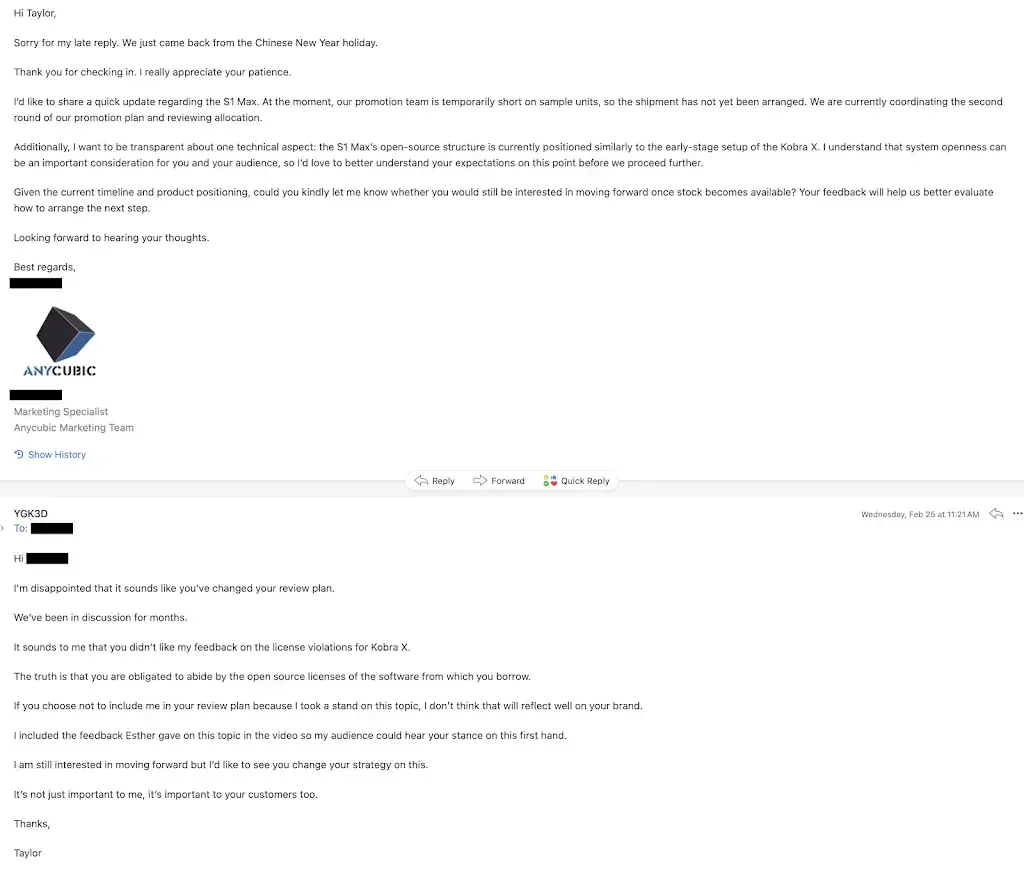
3D Printer Reviewers: Being honest in this industry will put you out of a job.
(media.piefed.social)
cross-posted from: https://piefed.social/c/opensource/p/1823177/3d-printer-reviewers-being-honest-in-this-industry-will-put-you-out-of-a-job
This is the emails between the YouTuber YGK3D and Anycubic, it seems like they won't send 3D printers to reviewers who mention their GPL3 license violations. > > tl;dr Anycubic uses open-source software for their firmware, but doesn't make it public as per license agreement, and they don't seem to be friendly to anyone who calls this out. > > More info: https://www.youtube.com/post/UgkxIMpZTkXqFo0H6pDwhZpdYqMYvLhPvWA5?lc=UgxA-4LYvwrnonXuXsZ4AaABAg >
This comment is more about FOSS than about 3D printing, but if you're interested in GPL violations, you should know about the court case SFC v. Vizio. If it goes the way the SFC is pushing (and the courts have made a surprising amount of noises suggesting they're broadly sympathetic to SFC's arguments), ordinary end users will have a lot more leverage to push companies to honor the terms of the GPL and provide source code as required by the GPL. Every manufacturer of smart TVs, smartphones, game consoles -- hell even robot vacuum cleaners, cars, and sex toys -- if they include GPL'd code in those TVs, they're required to provide source code to users on demand. As it is now, companies can (and do) flagrantly violate the "source code provision" requirement in the GPL. But this case could change that.