It is a reasonable, most rational choice for normal people now. You do not need to be a fiery-eyed climate activist any more to swap the energy source.
I am thinking in this one:
Discussion of climate, how it is changing, activism around that, the politics, and the energy systems change we need in order to stabilize things.
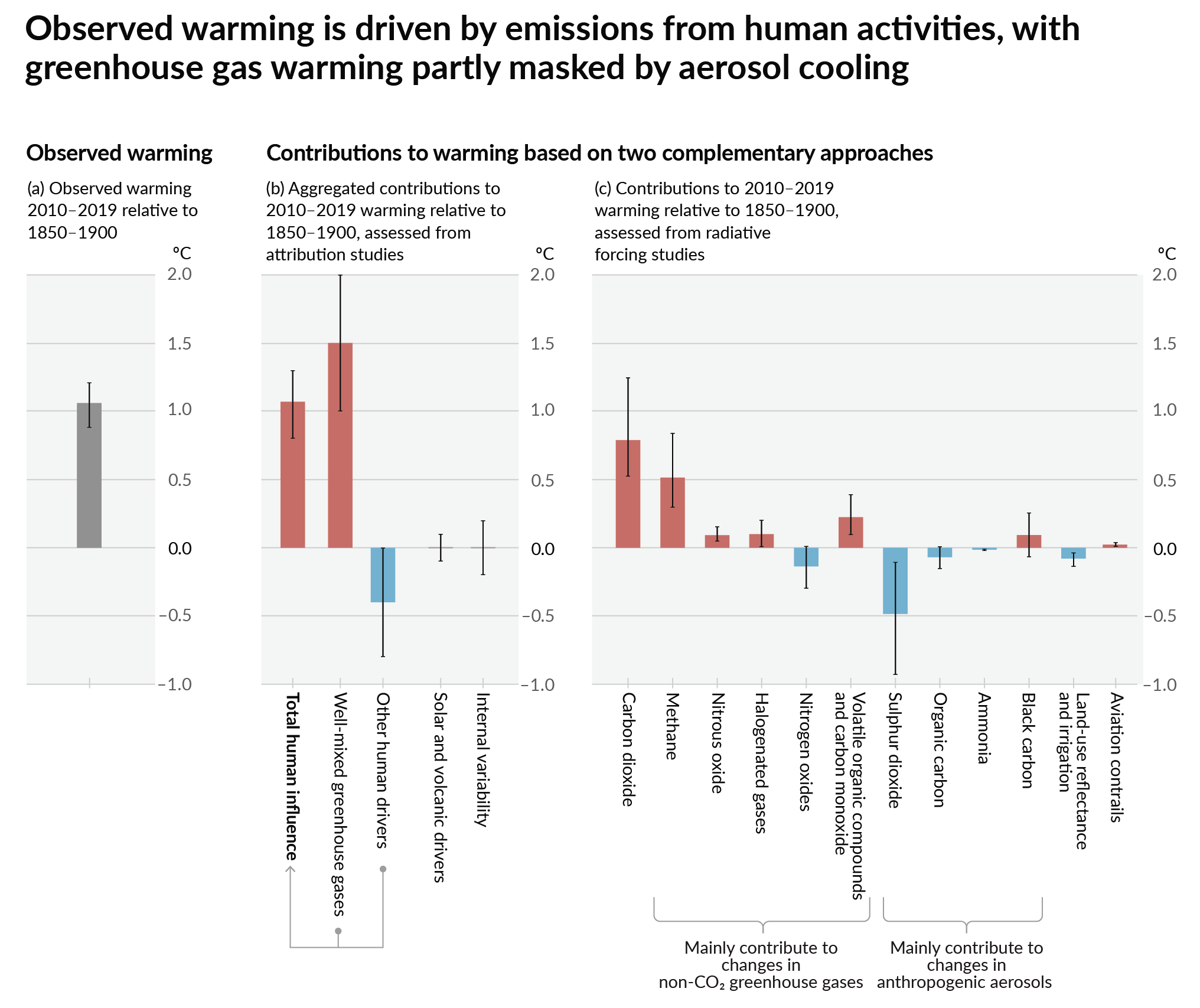
As a starting point, the burning of fossil fuels, and to a lesser extent deforestation and release of methane are responsible for the warming in recent decades:
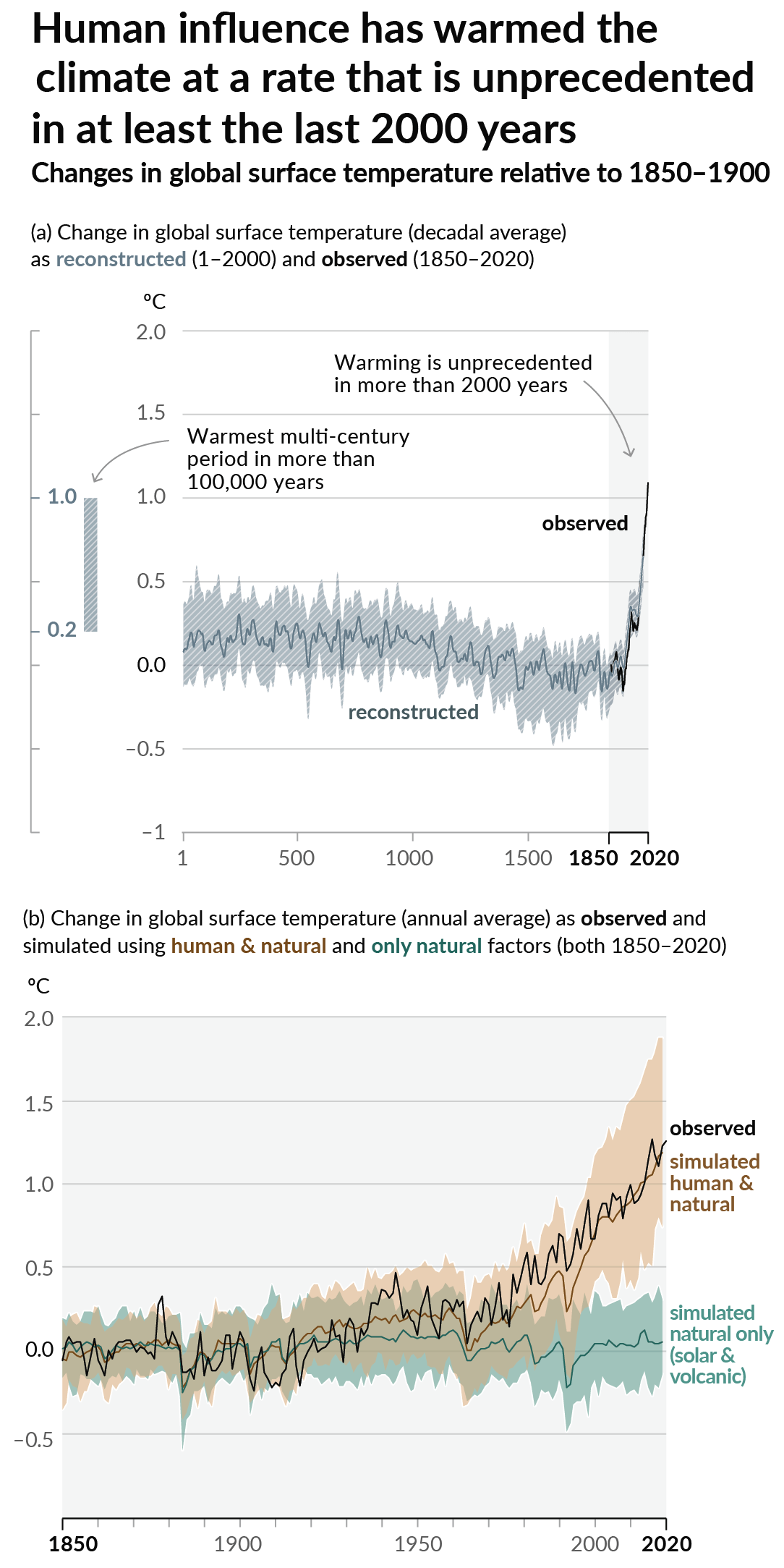
How much each change to the atmosphere has warmed the world:
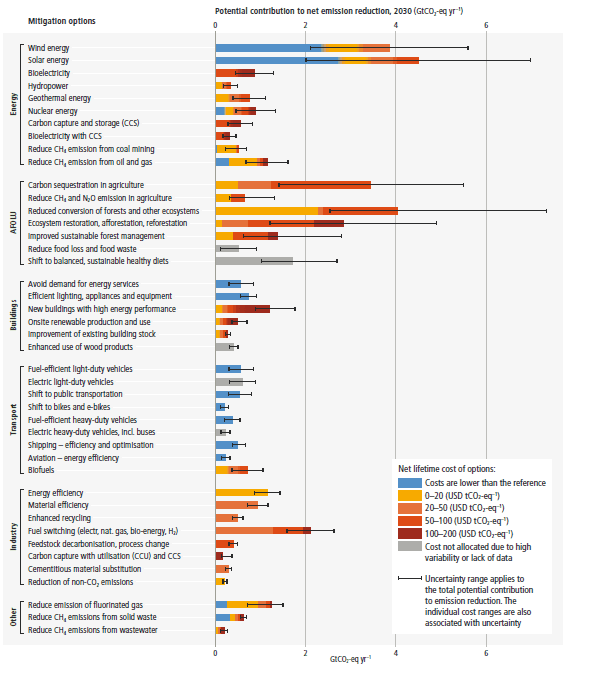
Recommended actions to cut greenhouse gas emissions in the near future:
Anti-science, inactivism, and unsupported conspiracy theories are not ok here.
It is a reasonable, most rational choice for normal people now. You do not need to be a fiery-eyed climate activist any more to swap the energy source.
I am thinking in this one:
I would love to drive an EV, but the price premium for it buys a lot of gas. I also detest cloud-depending computers on wheels, and the charging infrastructure is a bit thin.
You didn't have to be a fiery-eyed climate activist for a long time, just somebody with basic financial literacy, that is able to look at the total cost of ownership of a vehicle.
Are you sure? Because until fairly recently, the price difference would take the average owner about 10 years worth of charging at home to make up for and at the same time, EVs have depreciated faster than contemporary ICE vehicles.
If you got an Audi E-Tron or Porsche Taycan when they came out, you got OBLITERATED on depreciation. If you're buying them used now, deal of a lifetime (though VAG interiors have sucked for like a decade so you're still paying a lot of money for touchscreen hell). As long as you have someone that can repair õ the batteries and motors if needed, they were a bit, uh, problematic for the early years. And replacement costs are high. But repairs can be affordable.
You're trying to give a reference for the average person and then you mention Porsche Taycan, and repairing electrical systems capable of killing a human being...
I mentioned early non-sucky EVs available here in Europe. It was mostly those and Teslas (which suck for their own reasons and I don't just mean that Musk is a nazi - early Teslas also had REALLY poor quality for their price). Leafs sucked so badly, nobody wanted them after everyone found out how bad they were in the winter. I-Mievs were forced on social workers (as work cars) by the government here and they were barely useable brand new. The latter two models did more to destroy EVs' reputation in my country than oil industry propaganda ever could.
Then many companies copied Tesla's approach of "start with the high-end, then work your way down" for EVs. Which means if we want to talk about total cost of ownership over a period of more than 3-4 years, we only really have data on those high end cars... and a couple of turds that gave EVs an undeserved bad name.
As for the repairing electrical systems capable of killing a human being, I did mention that you should find someone who can do it. Definitely wouldn't do it myself and I normally do all my own repairs on my cars. It's essential for owning a cheap old EV, to have such a workshop available somewhere near you. Tesla had drive unit failures, so did Audi... So does the Hyundai Ioniq 5 and all its newer relatives and those started being made in the 2020s! And battery pack replacements are super costly for all of them. It's a lottery and you're quite unlikely to lose, but if you do, it's 5 figures for a new pack. Which is why I said you need to have a shop available to you that can replace individual cells or modules, depending on the design of the pack. For example, early Teslas literally used 18650 cells, same as most e-cigarettes. A single cell costs a few euros, but if it goes wrong, your car won't work properly. Tesla will only sell you a brand new pack. Same for other manufacturers, though the cells will be different.
We've only really had affordable AND good EVs available for about the last 4 or 5 years if not less, is my point. Earlier EVs were either expensive or shit or both, they all depreciated like crazy (even the cheap ones) and many had surprising reliability issues. Which is why you can now get the formerly super expensive ones for next to nothing... But may have to get high voltage repairs done outside of the dealer system at one point, since dealers don't repair, they replace.
In fact the early 2020s midrange priced EVs (Ioniq 5, Enyaq) have also depreciated a fair bit, despite the fact that most of the ones for sale are under 100k km and still in battery warranty.
For high-end depreciation example: Cheapest 2020 Q7 in Estonia, 39900 EUR, 175k km. Cheapest 2021 E-tron in Estonia, 24500 EUR, 169k km. The Q7 would've been about 80k new, the E-Tron about 100k.
For midrange depreciation example: Cheapest Ioniq 5 in Estonia, 29900, under 100k km. There was a 2022 for much cheaper, but it was an outlier because it had nearly 300k km on it. Cheapest diesel Sorento, 31490, 137k km. Those had a very similar price new, but the Sorento has been driven a fair bit more for the money.
So the depreciation difference is less noticeable on the cheaper, newer models. But that was my entire point: It's NOW cheaper to own an EV, but it wasn't always. That E-Tron didn't just dump its value like a tank because it's a luxury car (or, well, sold as one; I disagree). It's actually significantly less technologically advanced than the Ioniq 5. Charges way slower, gets 300km for a full battery because it's both heavy AND inefficient, etc.
If you go out and buy a new EV today and it isn't a 6 year old model that hasn't been updated, you can be pretty sure it'll keep its value okay. If you did it 8 years ago, it dropped like a tank and that really hurts the total cost of ownership.
If you got an Audi E-Tron or Porsche Taycan when they came out, you got OBLITERATED on depreciation.
Um, shouldn't you be talking about Priuses and cars accessible to normal people? Way to scapegoat!
A Prius is not an EV, it's a hybrid.
The E-Tron, EQC and Taycan were among the first non-Tesla EVs widely available in Europe that weren't utter shit like the Leaf and I-Miev. The original Ioniq (without a number) was also quite shit, it barely had a battery. There are plugin hybrids with similar size batteries out there. The Kona EV and its Niro sister were about the only cheap EVs that didn't absolutely suck, but these were also more expensive than their ICE counterparts and I have a hard time figuring out the actual depreciation because there are very few used ones for sale here outside of super low mileage ones at dealers. Despite the lower price, they seem to have sold much worse here than the luxury EVs. Basically 6-8 years ago if you were buying an EV, you probably weren't looking for the cheapest possible option because if you were, you would've just stayed with an ICE vehicle and probably buying used anyway.
If we're talking about total cost of ownership for EVs over their lifetimes and saying that EVs were cheaper to run than ICE vehicles for "a long time" already, those are the cars we have data on. Once we get into the 2020s, there are lower priced options that don't suck, and their depreciation curve isn't as bad. And honestly, the Ioniq 5 is probably a better car to own than the e-tron or i-pace. Which is why I'm saying that any of the early options that didn't suck, depreciated so much it was hard to justify them economically compared to ICE vehicles.
I wish I could afford one that has the range I need to get to work and back
Unless your job involves driving >100km DAILY, current EVs are perfectly fine at achieving that with just in home charging without any fancy installations.
I drive about 145km every day I go into work. The EVs I see $5000 or less can barely get me to work if even that.
This is what people often ignore, usually only new vehicles are compared. You can get 1600 km on a tank of diesel in a 2000 euro car and refuelling is quick anyway. Cheap used EVs have not gotten there yet.
A lot of people can start driving EVs when a used EV is cheap AND gets you proper range. I don't mean comparable to diesel, but like 400 km of range in a vehicle at 5k EUR and I reckon nearly everyone driving used cars will start looking at used EVs.
If you can charge at work you might only have to go a little above that price range to just comfortably get to work. If not tho that's rough
Yes, the higher range ones are quite expensive. Hopefully the second hand market will have a few reasonably priced in a few years.
also one without insane data tracking
I agree it’s not a rational choice but, as a human, I do not always make rational decisions.
I’ll be able to get so many cool cars that make fart noises!
The top comment of the OP article is very interesting, too.
This is a kind of economic tipping point. A sea change which will have global consequences. Among other things, it makes it much less interesting to invest in any new fossil infrastructure - if demand for gas shrinks that rapidly, investments are much less likely to turn into profits.
That is an interesting point, I’m in the category that only has an old gas car but it pretty much only gets used for occasional hiking trips and similar, not commuting or regular errands.
Yes. One reason is because the economic advantage of electric vehicles is largest for people who drive a lot. Thus the vehicles which are driven most, are being replaced fastest, just as said comment explains.
My next car will be electric for sure.
is that from regular stinkflation or because non-fuel based vehicles filled that 37%?
In the US, I'm worried our power grid wouldn't handle the load if everyone swapped to EVs. We're already struggling with all the data centers moving in.
For those downviting, I encourage you to read up on the areas where data centers are being built. Their power bills are going up and in some cases have to come up with alternate power solutions because there isn't enough power being generated to support the data centers and people.
If the grid can handle all these fucking data centres it can handle charging some cars.
Battery technology is improving so rapidly that it will become economical soon to charge a stationary battery from home solar during the day, and charge the car from that battery at night (which also means much more expensive fast-charging technology is just not needed to get to work and back). For many people doing some amount of home office or driving modest distances, charging from home solar is already the cheapest option.
And here in Europe, employers are offering charging at work.
EV charging really isn't as demanding as you'd think. Most people would be able to charge a couple days of use overnight using the same amount of power as running a space heater.
Sooo maybe you're right of you live in Texas.
As an electrician who designs charging stations, I beg to differ. The small 120v trickle chargers work the way you imagine. There's a much larger energy demand needed when you're running 60-120 amps per pedestal times 10 to 20 per station times how many stations we would need for every day commuters.
Edit: Here's a link to a fleet EV charging station . https://www.eaton.com/content/dam/eaton/products/emobility/green-motion-dc-ev-chargers/eaton-green-motion-dc-fast-charger-datasheet-td154002en.pdf
These are the chargers we install in mass for every day general public use. Your going to want to look for input amps to see how much power they require. Your trickle charger is in the single digits compared to these.
The point is that most commuters don't need the larger chargers, they can get all their commiting energy from a 120v wall charger and save fast chargers for road trips. I've been driving a PHEV or EV for 6 years, 120 mile commute ~3 days a week, and have used fast chargers maybe 10 times total.
Just because you do it doesn't mean the majority does.
I've had an ev for 8 years. I slow charge overnight for 95% of my milage. Same for everyone I know that lives in a house or townhouse. Apartment living varies depending on how old the apartment is and they may need to use other paid charging. Putting more all day or all night slower charging would help with load. Most people only have to use high speed charging when they don't have accessible charging either at home or at work.
it's typical car industry misinformation to highlight extreme use cases as if they were a reasonable average case. That's why Americans pony up to buy and pay for a massive truck while a french citizen in the same situation would be satisfied with a Fiat 500 or a Citroën CV2.
In Texas if there were a shitload of cars plugged into backfeed capable chargers it would probably save their shitty grid, not hurt it.
Diesel fuel generators will solve that problem. /s
Most EV charging is done over night during the most "off-peak" hours you can find. It won't really be a problem.
Oil refineries use so much energy that they quite often have a dedicated power plant. The energy required to refine enough fuel to drive 100km could instead be used to drive an EV more than 50km.
Switching to EVs will have much less of an impact on the grid than it initially appears. With overnight or midday charging, EVs can even help spread the load throughout the day and help reduce the evening peak.
V2G/V2H can reduce this peak even further, while only using a tiny amount from each car battery.
Air-conditioning is also a big concern for the energy grid, but as with all new technologies, the grid will be upgraded to handle it. Unless you are employed by a grid operator to plan for the future, you don't need to worry about it.
At the scale of minutes and seconds, this isn't wrong. It just misses a few nuances like frequency maintenance issues due to lack of inertia in a majority solar grid
My local grid frequently hits 100% renewable power, and has even exceeded 100% of demand from only rooftop solar with commercial solar and wind also producing at that time.
The grid needed a few modifications, and there was some brief instability, but everyone survived it and the grid has been stable for over a year.
I think we'll be fine.
For sure and it'll need to be done, one way or another. It'll just take a longer time for the unprepared grids