99
Your belief makes it real
(sh.itjust.works)
Sir this is a meme.
Jokes aside, I'm Indian. Sri Lanka has a much better education system than we do.
The best course of action for India is to remain neutral and trade with everyone. Whatever mistakes the current government is making, they have fortunately understood this principle.
I think the concern is that some group will launch a dirty bomb at Israel, Israel will retaliate with nukes, and then the best case scenario is 'only' thousands dying. Oh, and did I mention that a dirty bomb can make a pretty large area uninhabitable for decades?
But as you point out, they're acting like they have America's elections, where this schmuck who got 17% is now a massive liability to the runner-up who got 33%. If those two presumably-liberal blocs got together, they could handily oppose the leftist bloc.
It would be useful if you tried to understand Sri Lanka's political system before you made such comments. The SLFP / SLPP was historically supported by working class Sinhala people. The UNP was supported by Tamils, Muslims and richer / more urban Sinhalas. In 2022, the SLPP collapsed due to an economic crisis and widespread corruption. The SJB was an attempt by a section of the UNP to win over former SLPP voters by adopting centre-left economic policies and Sinhala nationalist rhetoric. The UNP base - largely Tamil and Muslim - are not going to vote for them! This is why the JVP was able to win - they consolidated the working class Sinhala vote, while not threatening Tamils and Muslims.
Their voters just aren't using it, for some goddamn reason.
The reason being that, for many people, there is only one choice that is acceptable.
Every single person who wanted him, last time, could have listed him... also. They sure didn't. His support was three percent. That's not a viable path to power, that's a punchline.
That's a viable path to getting your face in the public consciousness, so you can win next time. As you said, losing a prior election isn't a pre-requisite. But the posters you printed, the speeches you made, and the fact that one in thirty people took you seriously enough to vote for you, are a pretty strong boost when you run again.
Anyone who voted for only him, "last election," was a fool.
Or they were the people who made this year's result possible.
If you can't rally a shitload of people behind your guy... you lose.
Yes, but you show that so-and-so's platform has x amount of support, putting them in a better position next time around.
The winner of this election was not decided by everyone seeing through The Matrix or whatever and deciding to defeat a broken electoral system. It sounds like 95% of them are functionally unaware of which electoral system they have.
It's incredible how one can see some piece of evidence that contradicts their pet theory with their own eyes and say, no, the reality is wrong and my theory is right. I mean, it makes sense sometimes - the discovery of Neptune is a famous example - but in general, it is better to adjust theory to fit the facts, rather than the other way around.
Hydrogen.
You can't generate helium unless you have a fusion reactor.
Actually, nuclear powered flying T. rex sounds cool, so let's go with it.
Then there'd be one really deep print as they kicked off.
Sri Lanka has ranked ballots! What the fuck? They're not even using Plurality, they're doing RCV!
In theory, yes, but so few (~2%) people use it that in practice it is first past the post.
Instead of calculating who they hate more, the Sri Lankan people voted for the candidate they liked - an anti-corruption activist who got ~3% of the vote last time and was supported by a fringe left-wing party - and he won the presidency over the candidates of the two established parties.
The new guy won despite winning <5% of votes in the last election. If people vote for the candidate they like instead of trying to game the system by calculating who they'd rather not win the most, then maybe we can kick out corrupt incumbents and get in fresh faces (they'll get corrupted over time too, at which point you rinse and repeat).
I'm guessing the destroyers are doing something beyond just than praying they don't get hit.
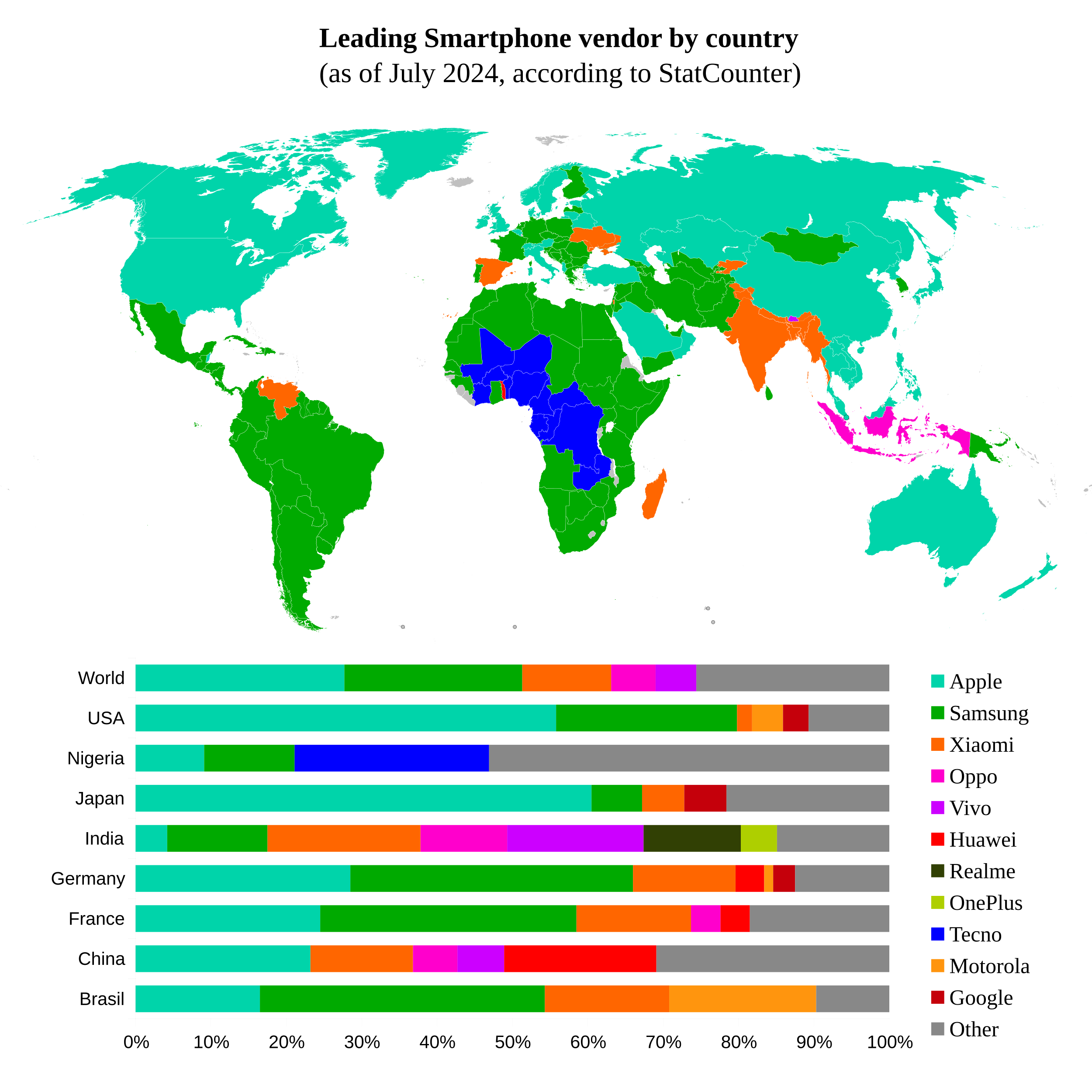
Across the world, the biggest smartphone manufacturers are Apple (28%), Samsung (24%), Xiaomi (12%), Oppo (6%) and Vivo (5%). However, there are geographic patterns in popularity, with Apple dominating North America and East Asia, while Samsung leads in South America, Europe, Africa and West Asia in addition to its home turf of South Korea. Xiaomi is the most popular phone brand across South Asia, Spain, Venezuela, Ukraine, Madagascar, Kyrgyzstan and Palestine, while Tecno is popular in West and Central Africa. Oppo, Vivo and Huawei lead in Indonesia, Bhutan and Togo respectively.
Across the world, the biggest smartphone manufacturers are Apple (28%), Samsung (24%), Xiaomi (12%), Oppo (6%) and Vivo (5%). However, there are geographic patterns in popularity, with Apple dominating North America and East Asia, while Samsung leads in South America, Europe, Africa and West Asia in addition to its home turf of South Korea. Xiaomi is the most popular phone brand across South Asia, Spain, Venezuela, Ukraine, Madagascar, Kyrgyzstan and Palestine, while Tecno is popular in West and Central Africa. Oppo, Vivo and Huawei lead in Indonesia, Bhutan and Togo respectively.
Across the world, the biggest smartphone manufacturers are Apple (28%), Samsung (24%), Xiaomi (12%), Oppo (6%) and Vivo (5%). However, there are geographic patterns in popularity, with Apple dominating North America and East Asia, while Samsung leads in South America, Europe, Africa and West Asia in addition to its home turf of South Korea. Xiaomi is the most popular phone brand across South Asia, Spain, Venezuela, Ukraine, Madagascar, Kyrgyzstan and Palestine, while Tecno is popular in West and Central Africa. Oppo, Vivo and Huawei lead in Indonesia, Bhutan and Togo respectively.
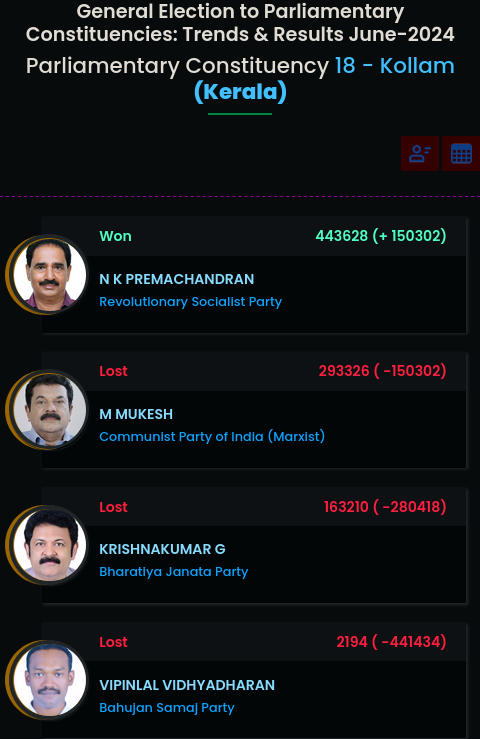
(Context: the 2024 Parliament elections in India, for the constituency of Kollam. The numbers in brackets are lead, not change from last election. Source: Election Commission of India)
Results for the 2024 Indian Parliament elections for the state of Maharashtra - constituencies coloured according to winning party (Cyan - Congress (13 seats), Green - SSUBT (9), Orange - BJP (9), Pink - NCPSP (8), Yellow - SHS (7), Blue - NCP(AP) (1), Grey - Ind (1)).



Ah, you're talking about SLFP voters second-preferencing the JVP. (I thought you meant UNP voters supporting the SJB.) That is more plausible, except the SLPP leaders and hardliners would attack it tooth and nail, fearmonger that it would split the vote and help the UNP win, and so on. No one wants to let go of power.
Hard to predict. Depending on how many seats his coalition gets in Parliament, Dissanayake might have to get support from one of the other blocs to get bills passed. But if he can get a majority, he has a great chance to destroy both the established parties simply by appointing an honest auditor and letting them loose on the previous government's files.
What the new party did was to challenge the old poor Sinhala vs Tamil+Muslim+rich divide, and turn it into more of a common people vs political / business class divide. Obviously, there aren't enough businessmen or politicians to form a party by themselves, so we'll have to see what they do. Maybe they'll negotiate with the new powers, or maybe they'll run smear campaigns, or maybe they'll wait for it to get corrupt and unpopular.
The other possibility is a de-facto one-party state, like Mexico or Japan. I really don't see hardline Sinhala nationalists and hardline Tamil separatists co-operating.