cross-posted from: https://news.abolish.capital/post/61983
Dmitry Medvedev proposes a formal anti-sanctions coalition to weaponize economic countermeasures and challenge Western financial blockades.
Related: OPEC+ is consider increase crude oil supply in August
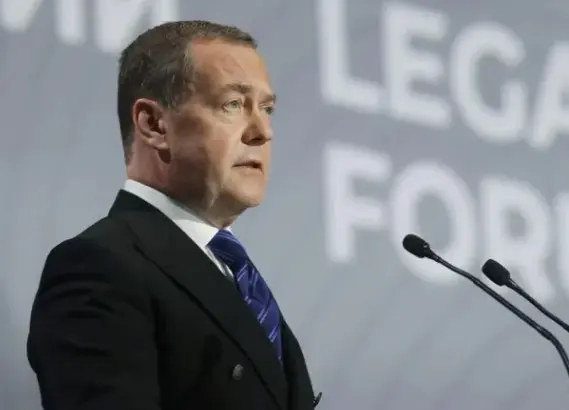
Anti-Sanctions Coalition: 3 Powerful Nations Defiantly Propose Revolutionary Global Shield
TEHRAN — The establishment of a formal anti-sanctions coalition has been proposed by Dmitry Medvedev, the Deputy Chairman of the Russian Security Council, to institutionalize global economic defense mechanisms against Western unilateral financial blockades.
Speaking directly from the Iranian capital, the former Russian President emphasized that the unilateral coercive measures imposed by Washington and Brussels demand an organized, legally binding multilateral response from sovereign states.
Medvedev delivered these remarks following his leadership of a high-level Russian delegation to Tehran on Saturday, July 4, 2026, where he participated in the state funeral services for Iran’s late Supreme Leader, Ayatollah Ali Khamenei, and held extensive working sessions with Iranian President Masoud Pezeshkian.
The high-ranking Russian official detailed that the institutional framework of this anti-sanctions coalition will specifically safeguard the financial sovereignty of nations currently targeted by Western economic warfare, primarily Rusia, Iran, and China.
Building a Multilateral Front Against Unilateral Economic Warfare
United Nations Conference on Trade and Development (UNCTAD) – Unilateral Sanctions Reports
The proposed treaty seeks to go beyond temporary bilateral trade agreements by establishing a permanent platform for defensive and offensive financial strategies. This platform will allow targeted states to coordinate synchronized countersanctions against blockading powers.
“We can discuss the idea of creating a formal treaty or, at the very least, an institutionalized platform where states subjected to illegal blockades can define joint strategies to neutralize external pressure,” Medvedev stated during his press briefing.
By shifting from a reactive economic posture to an offensive, organized structure, the anti-sanctions coalition intends to fundamentally disrupt the capacity of the United States and the European Union to arbitrarily deploy secondary sanctions against third-party trading partners.
The institutional mechanics of the initiative will focus heavily on accelerating alternative financial architectures, expanding non-SWIFT cross-border payment networks, and establishing mutual trade guarantees backed by sovereign wealth funds.
The Russia-Iran Strategic Axis and the New Multipolar Infrastructure
Moscow and Tehran are already bound by a comprehensive strategic partnership agreement, which serves as the foundational blueprint for the broader anti-sanctions coalition now being introduced on the world stage.
This bilateral framework has successfully translated into multimillion-dollar infrastructure projects, joint transport corridors like the North-South Transit Path, and deep technical-military cooperation designed to bypass Western maritime and aerial surveillance.
Furthermore, both geopolitical powers maintain an unbreakable voting alignment within the United Nations, consistently voting as a unified bloc to condemn unilateral coercive measures and western-centric resolutions.
This alliance is amplified through their active integration into Eurasian multilateral bodies like the Shanghai Cooperation Organisation (SCO) and the expanded BRICS bloc, which provide the institutional weight necessary to make the anti-sanctions coalition a viable alternative to the G7-dominated financial hierarchy.
Geopolitical Context: Reconfiguring Global Chokepoints and Trade Security
From a broader geopolitical perspective, the emergence of a formal anti-sanctions coalition signals an architectural shift toward a truly multipolar world order, stripping Western capitals of their traditional monopoly over global trade governance.
The strategic leverage of this coalition is significantly enhanced by Tehran’s operational control over the Strait of Hormuz, a vital maritime chokepoint through which approximately one-fifth of the world’s total petroleum consumption passes daily.
Medvedev pointed out that Iran’s ability to effectively restrict or regulate commercial traffic through Hormuz represents a profound geopolitical instrument that alters the balance of power, forcing Western nations to reconsider their reliance on economic coercion.
By linking Russia’s vast energy and agricultural reserves with China’s industrial dominance and Iran’s strategic geographic choke points, this emerging alignment possesses the material capacity to build an insulated, self-sustaining economic ecosystem completely independent of the US dollar.
Stalled Diplomatic Tracks and the Realities of Western Negotiations
Addressing the parallel peace and security negotiations between Iran and the United States, Medvedev offered a highly pragmatic, sobering assessment, labeling the ongoing diplomatic track as “extremely difficult” due to deep-seated systemic mistrust.
The principal friction points remain the permanent, verifiable lifting of all Western financial restrictions and the immediate release of frozen Iranian international assets earmarked for domestic humanitarian and infrastructure reconstruction.
The Russian Security Council official warned that current diplomatic understandings remain fragile because previous agreements were enshrined only in non-binding memorandums of understanding, which lack the strict legal obligations necessary to prevent future Western compliance failures.
Nevertheless, Moscow recognizes that these preliminary texts are indispensable foundations for future security architectures, as they encompass vital clauses regarding the safety of international shipping lanes, border demilitarization, and regional nuclear frameworks.
From teleSUR English via This RSS Feed.
This seems like the emergence of real multipolar world order.
Yes, this is great news. The Neocon madness of the 1990s and 2000s is fading away.