politics
Welcome to the discussion of US Politics!
Rules:
- Post only links to articles, Title must fairly describe link contents. If your title differs from the site’s, it should only be to add context or be more descriptive. Do not post entire articles in the body or in the comments.
Links must be to the original source, not an aggregator like Google Amp, MSN, or Yahoo.
Example:
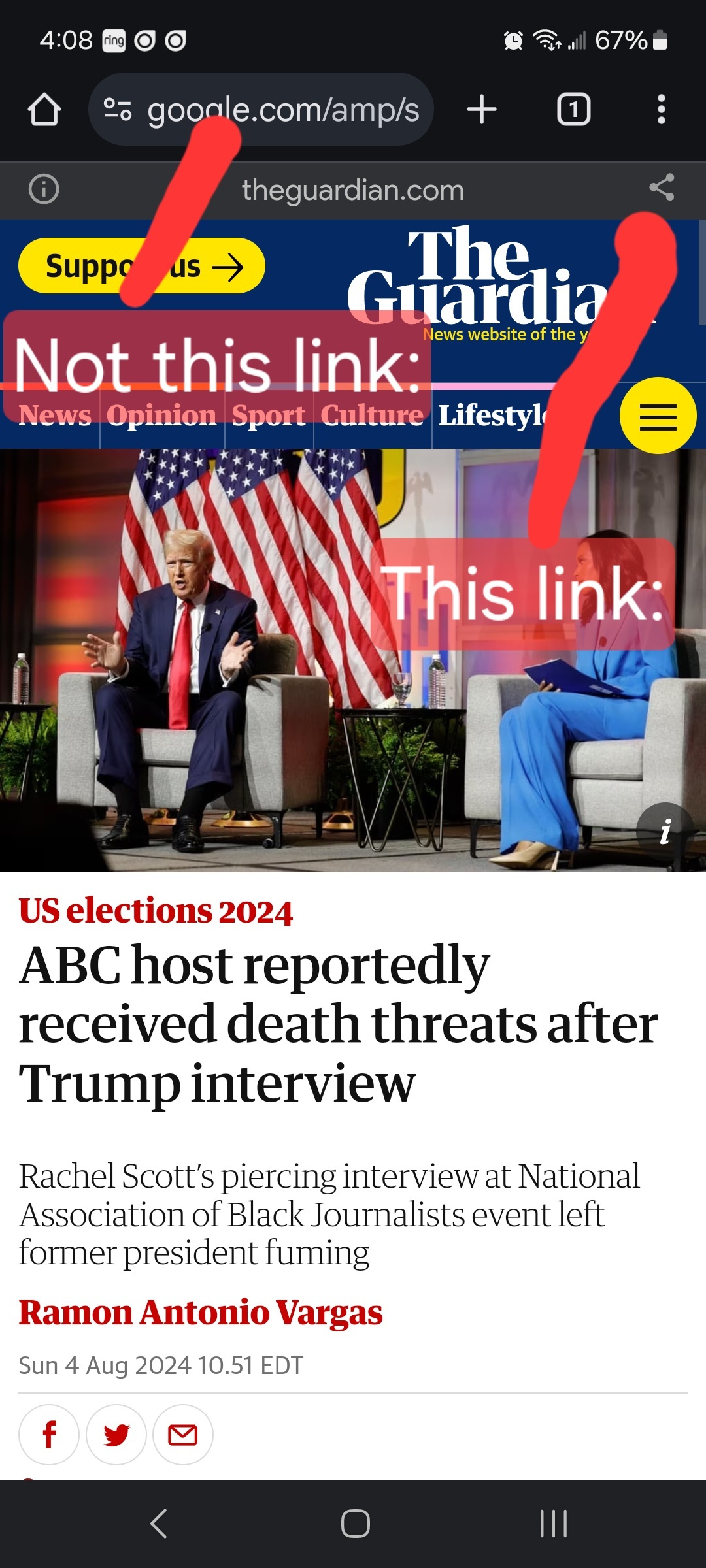
- Articles must be relevant to politics. Links must be to quality and original content. Articles should be worth reading. Clickbait, stub articles, and rehosted or stolen content are not allowed. Check your source for Reliability and Bias here.
- Be civil, No violations of TOS. It’s OK to say the subject of an article is behaving like a (pejorative, pejorative). It’s NOT OK to say another USER is (pejorative). Strong language is fine, just not directed at other members. Engage in good-faith and with respect! This includes accusing another user of being a bot or paid actor. Trolling is uncivil and is grounds for removal and/or a community ban.
- No memes, trolling, or low-effort comments. Reposts, misinformation, off-topic, trolling, or offensive. Similarly, if you see posts along these lines, do not engage. Report them, block them, and live a happier life than they do. We see too many slapfights that boil down to "Mom! He's bugging me!" and "I'm not touching you!" Going forward, slapfights will result in removed comments and temp bans to cool off.
- Vote based on comment quality, not agreement. This community aims to foster discussion; please reward people for putting effort into articulating their viewpoint, even if you disagree with it.
- No hate speech, slurs, celebrating death, advocating violence, or abusive language. This will result in a ban. Usernames containing racist, or inappropriate slurs will be banned without warning
We ask that the users report any comment or post that violate the rules, to use critical thinking when reading, posting or commenting. Users that post off-topic spam, advocate violence, have multiple comments or posts removed, weaponize reports or violate the code of conduct will be banned.
All posts and comments will be reviewed on a case-by-case basis. This means that some content that violates the rules may be allowed, while other content that does not violate the rules may be removed. The moderators retain the right to remove any content and ban users.
That's all the rules!
Civic Links
• Congressional Awards Program
• Library of Congress Legislative Resources
• U.S. House of Representatives
Partnered Communities:
• News
view the rest of the comments
The manual is the interpretation of the meaning of existing laws. Its not new law and changing the manual doesn't change the law. And neither Hesgeth or Trump have the authority to change those laws just because they want to.
So I looked it up. The DoD owns the manual. They can change it if they want. And it is an interpretation of international law. So technically, what was done is legal per US law. International law is pretty sketchy. Since it lacks robust enforcement, it pretty much means nothing unless a world power decides it does. So she may technically be right on that one. But of course the question shouldn't be if it was legal. It should be was it "right". Which it most certainly was not.
Right, except the problem is that it creates a very easy argument under which everyone involved COULD be prosecuted. Probably not by THIS DOD, but we still have elections in America and this makes it easy for the next bunch.
Perhaps the core problem is that the people expected to follow the rules get to make them too. That usually works out well.
Except they don't. These are laws passed by Congress just like every other law.
The manual is for interpretations of international law. Not US law. So no congress involved.
Yeah but they didn't change it though, so it was forbidden under the current rules. Too late to change that.
I am willing to bet that nothing in it rules out retroactive changes. It's a manual, not the letter of law. And really, it is more of a guide.
And I am willing to bet that nothing in it allows it. Not sure how that would be relevant though?
You can't be held to a standard that didn't apply at the time of the incident, but the standard that did apply during the incident clearly forbade it. So it doesn't matter even if they change it now, because judgement would have to be made in the context of the rules applicable at the time. Of course Trump could just pardon whoever gets found guilty...
You saying how it "should" be. But nothing stops them ftom changing the standard retroactively, which is relevant because it means change the standard now, and judge people's actions based on the new standard. They can do that. They shouldn't, but they can. And this guy certainly would if it was in his favor.
I doubt any court would agree to that line of reasoning if this ever goes to trial. The real problem is the administration is just openly ignoring the courts that don't rule in their favour. And again, Trump has pardoning power for federal crimes.
What courts? The UN courts? The manual covers international law interpretation.
Depends on the accused, in case of the general it would probably be a court martial. But for the Secretary of Defence I'm not sure, might be a civil court in that case. Either way I was talking about US courts deciding on this violation of international law. There never were international courts the US would obey.
Well, you can sue for anything in civil court... But if they tried to sue the person, and not the gov, it would get tossed immediately. And the courts have established very narrow conditions to allow it if the act happened outside the US.
Oh I didn't mean civil as opposed to criminal. I meant civil as opposed to martial.
Only if hegseth and trump wanted him to. Which they don't.
No you are still not following. I think if Hegseth was indicted it wouldn't be by a court-martial, because the Secretary of Defense is technically a civilian elected to an office and not an enlisted member of the armed services.
He didn't break any US laws because the manual isn't law, and the action happened outside the US. So I think all that can happen is he gets impeached by congress.
The manual is just giving an interpretation of the obligations arising from the Geneva convention, to which the US is a signatory and which it has ratified, so it actually is a law (the prohibition on killing helpless survivors, not the the Law of War manual). Also the action happened inside the US, since the action in question when talking about Hegseth is the alleged order to not leave any survivors.
It being law in the US is highly questionable. But again, the op wasn't talking about the geneva convention, it was talking about the manual. And while the manual is "A" interpretation of international law, it isn't the only one. So he can't be tried for going against the manual. If someone wants to claim he violated the parts of the grneva convention that congress agreed to, which is not all. That would be different. But that isn't what the post was about. And if they could reasonably do so, they probably would have.
What? How so? Do you not know how international law works? The US legislature ratified it, which makes it a law in the US.
What law do you think the "Law of War" manual is referring to? It's the Geneva Convention.
This is getting a bit silly. The manual is basically all former US administrations since the ratification of the Geneva Convention specifically stating that what the current US administration did is a war crime under it. Since at the time of the incident the Geneva Convention was applicable (as it still is now since the US didn't withdraw from it) the people involved in the incident could be tried under it, possibly by the next administration.
That is exactly what the post was about. What the hell are you talking about?
I get that you don't understand subtle differences. Ratifyng a treaty is not the same as passing a law. In your head it is, but in a lawyers head it most certainly is not. They will argue about what legal precedence applies and what doesn't based on the origin of the "law".
The manual of course is an interpretation by the administration. Not a judge. So the judge can feel free to completely ignore any and all of it. They could litterally write that by thier interpretation, they don't believe we need follow the geneva convention. Nothing stops them. So no, saying someone went against the manual doesn't mean they broke the Geneva convention.
Last, the international laws are not only the geneva convention. There were several updates. The US did not ratify ANY of the updates. So no, the geneva convention rules are not all law in the US.
You are way off in your understanding of these things and are confidently wrong on a lot of them.
Oh yeah? Well the constitution seems to disagree with you (article VI):
Huh.
That part of the constitution only says that federal overrules state. Meaning states can't make laws that disagree with federal laws or treaties. By your interpretation, states would be responsible for enforcing federal laws, which is clearly not the case. This is a well established interpretation of this part of the constitution and is taught in most high schools.
Right, just ignore that "treaties" are "the supreme Law of the Land", which was the entire point of this quote.
International treaties are in fact of the same rank as federal law and the constitution in the US as per this article, which is even broader then the mere "ratified treaties are law" statement I made earlier, which I was trying to prove here after you called me stupid and confidently incorrect for it.
Dude, at this point let us just agree to disagree, because from my point of view you seem impervious to reason; As I probably do from yours. So let's just cut our losses and part amicably. Good bye.
I didn't ignore it. It specifically means states can't make laws that go against the treaties. That is all. It does not mean they are laws like any other law. Congress passes laws to say things are bad. Not everything that is technically a law is the same as something that a person can be put on trial for. But speaking of things being ignored. You ignored that congress has refused to approve any of the updates to the geneva convention. So you would have to check if the things that were done are even in the part they ratified. Even if they are, by not ratifying the updates, they have made clear they no longer support it. So again, it is highly questionable as to if the things they did ratify can be considered laws like normal bills that are drafted and passed by congress.
The part you ignored is where international treaties are called "International Law", and "supreme Law of the Land"; They are therefore a law in a general sense of the word. As in "a piece of text defining rules of conduct".
Also they are ratified by Congress (the Senate specifically), and are enforced by the contracting parties inside their own jurisdictions; So they are technically equivalent to a federal law (not just in the US, in most jurisdictions I'm aware of), insofar as de jure they have to be treated like one by the executive and judicial branches. So not sure why you are even trying to make up this distinction without a difference here.
Yeah I ignored that because it's irrelevant and also incorrect. The US ratified Protocol III from 2005.
The rule in question is derived from Article 12 of the Second Geneva Convention from 1949, which the US also ratified. Also you seem to be suggesting that the DoD released a manual discussing rules which don't apply to them, which seems bonkers.
Not how this works. If you want to no longer be bound by a contract you cancel it. The US did not do so. They could, but they did not.
To you maybe.