this post was submitted on 29 Dec 2025
247 points (96.3% liked)
zerowaste
2956 readers
1 users here now
Discussing ways to reduce waste and build community!
Celebrate thrift as a virtue, talk about creative ways to make do, or show off how you reused something!
founded 4 years ago
MODERATORS
you are viewing a single comment's thread
view the rest of the comments
view the rest of the comments
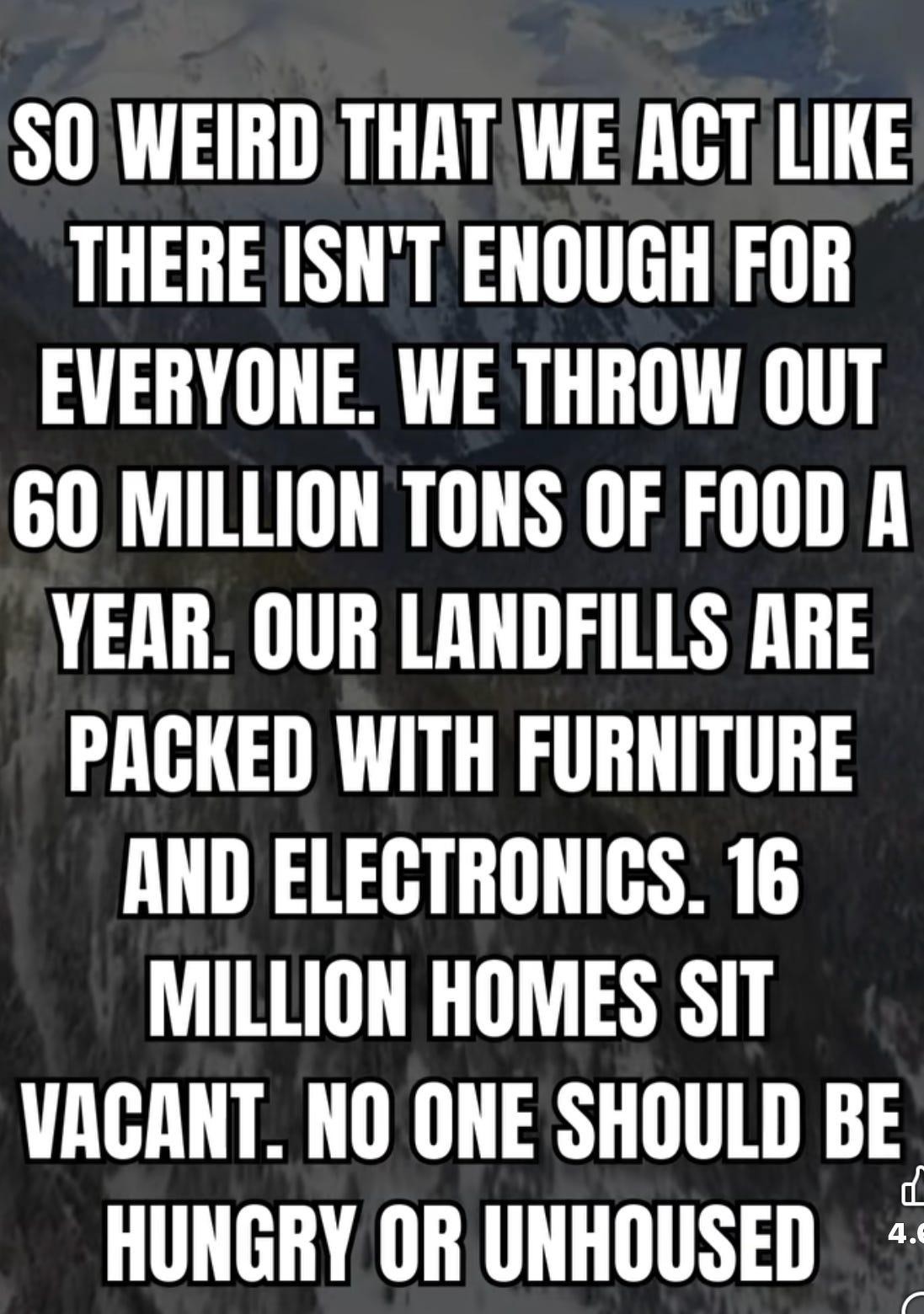
It’s more a problem with distribution than with production. If we could figure out how to get perishable items everywhere then we’d have less waste.
Unfortunately that would eat into people’s bottom lines and we can’t be having that. /s
Or, you know, not overproduce.
That would only be possible in a planned economy, and for some reason, most people don't like the idea
so i went down a rabbit hole about the village of Chorleywood in Hertfordshire in England and the US Army being responsible for all bread being nasty nowadays and all i can find of it now is this article for the US military and this article for Chorleywood but like, follow this train of thought: you got a dry perishable. put it in a chip bag. fill the chip bag with nitrogen gas. seal it. bam. aerobic processes stop. as far as food distribution, there is no problem. we have refrigerated rail, train, and air. the only thing missing is the will.
There's also the fact that housing requires upkeep to remain habitable, and many unused homes rapidly fall into significant disrepair. And these homes may not all be in good locations for people who don't have anything. Congrats homeless person, here is your home 20 miles from any source of employment or food!
Certainly not insurmountable, still emblematic of the issues at the core of society, but there's more to this than only numbers of things existing.