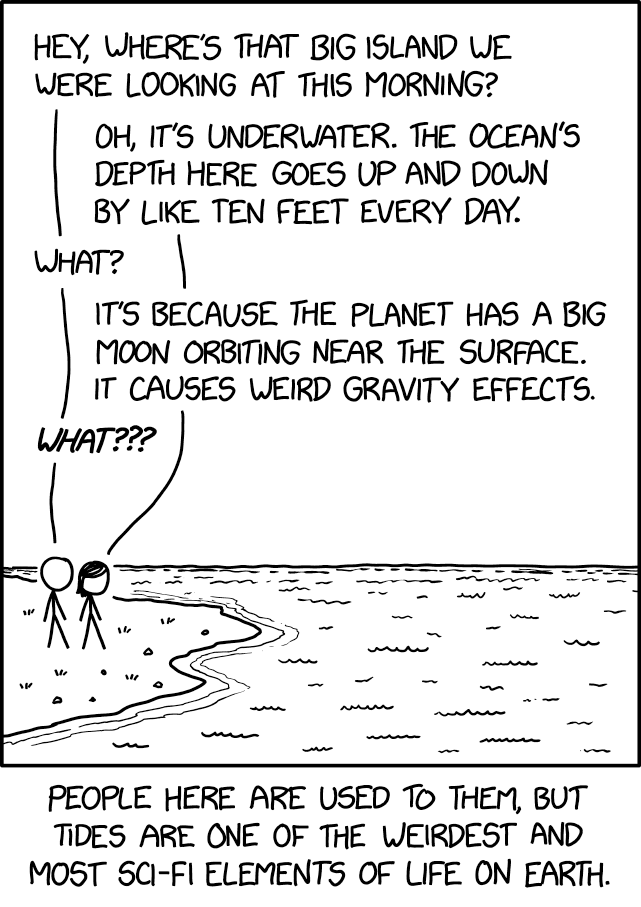
Alt text: They're up there with coral islands, lightning, and caterpillars turning into butterflies.
A place for majestic STEMLORD peacocking, as well as memes about the realities of working in a lab.

Rules
This is a science community. We use the Dawkins definition of meme.
Alt text: They're up there with coral islands, lightning, and caterpillars turning into butterflies.
While a novel idea, a leap month would throw the concept seasons and therefore agriculture off significantly. Relatively predictable seasons and being able to track our place in it with calendars was a great help to agrarian communities, helping them know when to plant and harvest most effectively.
Only if you measured agriculture by the calendar instead of other signs.
For example: Hesiod's Works and Days, a Greek poem about farming and right living from about 800 BC, includes a poetic agricultural calendar that has nothing to do with months - plough your fields when the cranes are migrating and the Pleiades are no longer visible over the horizon, harvest when the Pleiades appear again; cut wood for tools when Sirius is high in the sky; prune grape vines sixty days after the solstice; etc.
So the calendar could say whatever it wanted. Farmers - who were generally illiterate anyway - knew when to plant and harvest without it.
Fun fact: the earliest Roman calendars had only ten months, 305 days, from March to December. The days between December and March didn't belong to any month and could be as many as the Romans wanted to make March start appropriately in spring.