this post was submitted on 14 May 2026
14 points (100.0% liked)

Ask Lemmy

40160 readers
2109 users here now

A Fediverse community for open-ended, thought provoking questions


Rules: (interactive)


1) Be nice and; have funDoxxing, trolling, sealioning, racism, toxicity and dog-whistling are not welcomed in AskLemmy. Remember what your mother said: if you can't say something nice, don't say anything at all. In addition, the site-wide Lemmy.world terms of service also apply here. Please familiarize yourself with them


2) All posts must end with a '?'This is sort of like Jeopardy. Please phrase all post titles in the form of a proper question ending with ?


3) No spamPlease do not flood the community with nonsense. Actual suspected spammers will be banned on site. No astroturfing.


4) NSFW is okay, within reasonJust remember to tag posts with either a content warning or a [NSFW] tag. Overtly sexual posts are not allowed, please direct them to either !asklemmyafterdark@lemmy.world or !asklemmynsfw@lemmynsfw.com. NSFW comments should be restricted to posts tagged [NSFW].


5) This is not a support community.
It is not a place for 'how do I?', type questions. If you have any questions regarding the site itself or would like to report a community, please direct them to Lemmy.world Support or email info@lemmy.world. For other questions check our partnered communities list, or use the search function.


6) No US Politics.
Please don't post about current US Politics. If you need to do this, try !politicaldiscussion@lemmy.world or !askusa@discuss.online


7) No Hit-and-Run questions.
Please don't delete your post for no apparent reason. If you plan on deleting a question later, say so in the post, or if you feel that you have a good reason to remove it, message a mod beforehand. It's not fair to the ones who took their time to answer, and it's not in the spirit of the community.


Reminder: The terms of service apply here too.

Partnered Communities:

Tech Support

No Stupid Questions

You Should Know

Reddit

Jokes

Ask Ouija


Logo design credit goes to: tubbadu


founded 3 years ago
MODERATORS
 

My grocery bill is steadily climbing and I am not sure what to do. I make too much for SNAP. Any tips or tricks? It's just me in my household, so would buying in bulk be worth it?

Edit: I want to thank everyone for their responses. I have a lot to think about.

top 38 comments
sorted by: hot top controversial new old
[–] SpookyBogMonster@lemmy.ml 4 points 1 month ago

Dry goods. Bulk bags of dry rice, beans, lentils, corn grits. That stuff will last forever, and are healthy!

If you and some friends/family can pool your money together and afford it, buy a whole entire cow. Parcel out the meat, and freeze it. My family has been doing this for a long time now, and a whole cow, split between 3 households, lasts a little over a year.

Get into canning, pickling, etc. Don't let the fresh produce you buy at the store, or grow in a garden, just flounder in your fridge, preserve it!

I can a lot of salsa over the summer. Its easy, and it's easy to make in big batches that last awhile.

[–] acutfjg@feddit.nl 2 points 1 month ago (1 children)

Rice cooker

Bought a nice one (zojirushi brand that has the little elephant), but I've read most rice cookers work well. I use it so often for different meals and it's been a game changer and money saver. Making rice is so simple now, and an easy cheap way to supplement a meal.

Rice eggs is a staple for us now: Make some rice, and when there's about 5 minutes left on time, throw in some scrambled eggs for a tasty protein.

Mine is microwave safe so was relatively cheap. Follow the 1-2-2-12 to perfectly cooked rice. 1 measure of 2 cups of rice, 2 of water, some salt, 12 minutes. Can reheat, Fri overnight leftover rice and side carbs with anything specially beans.

[–] exasperation@lemmy.dbzer0.com 2 points 1 month ago (1 children)

When I had no money and no time, I relied heavily on a rotation of the following meals, with current 2026 costs in my expensive city:

  • Chili Mac: 1 lb dried pasta ($1.25 for 1600 calories, 54g protein) boiled in salty water (let's call salt and water basically free), a can of chili ($2.50 for 540 calories, 32g protein), 2 oz of shredded cheese ($1 for 220 calories, 12g protein), 0.25 oz of hot sauce ($0.25 for flavor but negligible calories/protein). Total: $5, 2360 calories, 98g protein.
  • Stir fried chicken and broccoli on rice: 1 lb chicken thigh ($4.50, 600 calories, 87g protein), 1 lb broccoli ($1.50, 150 calories, 9g protein), 1 lb rice ($1.50 for 1600 calories, 32g protein), $0.50 of condiments/seasoning. Total: $8, 2350 calories, 128g protein.
  • Ramen with enough stuff to make it not suck: 1 package of Shin Ramyun ($2 for 500 calories, 10 g protein), 2 eggs ($0.30, 150 calories, 12g protein), 4 oz frozen edamame ($2, 90 calories, 9g protein), 2 oz scallions ($0.20, let's round down to 0 calories and 0g protein). Total: $4.50, 740 calories, 31g protein.
[–] raynethackery@lemmy.world 1 points 1 month ago

Just as an aside, chicken breasts are actually cheaper per pound than thighs at Walmart.

[–] starlinguk@lemmy.world 2 points 1 month ago (1 children)
[–] Malyca@lemmy.zip 0 points 1 month ago (1 children)
[–] ChexMax@lemmy.world 0 points 1 month ago (3 children)

Costco really only makes sense with a family or group. Buying in bulk isn't necessarily better for a single person, especially given that any impulse buys are more expensive at Costco

[–] Malyca@lemmy.zip 1 points 1 month ago

That makes sense

[–] Flagstaff@programming.dev 1 points 1 month ago

You can coordinate splits with Costco members.

But beware, Aldi's Greek yogurt (for example) is actually cheaper than Costco's, $/oz (at least when I last compared). Costco is not always cheaper; if you really wanna save, you have to do the math relative to what local stores are available.

If it is freezable, it is fine (rotisserie chicken, for example).

I also make them into preservable forms, like I made little jar of scallion oil from a giant bag of scallion and they last years in the fridge. Ginger and garlic works as well.

You can also cook produces and store in the fridge, they will last longer, although not forever. For example, mushrooms, cabbage, etc.

[–] AoxoMoxoA@lemmy.world 1 points 1 month ago

Rice , rice cooker , various sauces , dried beans, peanut butter, making bread is cheap and easy ( I haven't gone there yet but its coming). I don't buy shit else unless it's on sale.

I don't really make a grocery list anymore other than fruit, veggies, tofu etc and buy non perishable items on sale when I see them and got a serious stock pile going of decent stuff .

I like going to middle eastern and asian food markets where things are a little cheaper and ingredients seem better.

✌️

[–] mrcleanup@lemmy.world 1 points 1 month ago (1 children)

While pretty much everyone here is taking a moment to talk about beans, peas are higher in a lot of nutrients and a lot easier to digest (I think they are tastier to). You can often get them frozen in bulk if you don't want to deal with dried and they can disappear into a lot of recipes.

Consider backing up your rice dishes with peas if you aren't a bean fan.

[–] BeardedBlaze@lemmy.world 1 points 1 month ago

Chucked a handful of frozen peas into spaghetti sauce during the cooking process for the first time last week. Was surprised how well it worked, that's going to be a permanent addition.

[–] Mhsull@thelemmy.club 1 points 1 month ago

For dinners and lunches, buy grains like rice, bulgar, farro in bulk. International grocery stores sell big bags on the cheap. Buy protein in bulk at a store like Aldi. Simple meals are 2 parts grain, one part protein, one part vegetable. Sautee or roast and sauce.

Breakfast, buy oats. Lots of ways to do oatmeal/hot cereal.

Cooking for yourself is the cheapest way to eat. My wife and I spend around $120 per week for all the meals for a family of 4 because we can cook.

[–] backalleycoyote@lemmy.today 1 points 1 month ago

Bulk on the dry staples. I’ve found that a good hack for saving on having to buy on storage containers is buy the giant pickle jars and then reusing them for beans, rice, and oats. I break down my prices per ounce, so while most of my food comes from Winco, there’s a few things I get at Albertsons on occasion because their overpriced foods are less likely to sell and end up on exceptional markdowns. I hit food banks.

I’m fortunate to have a lot of growing space and ramped up my casual, for fun garden to an actual food producing garden. I’m planting in waves, little fast growers like radishes in the boxes the tomatoes are starting in. Eventually the tomatoes will block but I can get a few cycles of the radishes before that happens. Also built a coop and have four lovely little hens that should start laying in a couple more weeks. The trade off is that all of this takes a lot of time.

I bought quality pressure cooker and make giant batches of beans that can be divided and frozen. About every three weeks I have to cook a batch but they work as burrito filling, nacho topper, taco salad fill. I do a lot of stir fries with frozen veggies and ramen or brown rice I made in the pressure cooker.

Bread machines are a frequent find at thrift shops. People buy them, never use them, dump them, so they’re brand new but 1/10 the cost. You can get fancy with them or just spend about 10min getting the ingredients assembled, set it and forget it. It’s been one of the best investments I’ve made.

[–] dejected_warp_core@lemmy.world 1 points 1 month ago

Nutrition is expensive, and controlling waste is crucial. So yes, if you can get a price break on anything essential, consider freezing and pickling (veggies) what would otherwise spoil. In general, try to learn about how different vegetables and meats will keep.

Rice, beans, and potatoes are great staples that last a while and are good for you.

Lower-end "potted meat product" and similar canned meats may be less expensive per ounce than full cuts. That said, it's usually full of sodium and is usually only good on sandwiches and things like that.

Some grocery stores sell cooked rotisserie chicken as a loss-leader (discount). That said, cost-compare against whole birds in the freezer section just in case. Besides, you can't beat home-made roast chicken, and it's fairly easy to do.

I was broke-as-a-joke back in the 2000's. So the following advice may have aged like the milk I bought back then:

  • Obviously, go down-market on your grocery store chain. Cost-compare if your time/energy budget allows it.
  • Learn how to cook what's cheap. What's not imported and in season is usually (not always) in this category.
  • Avoid box-mixes (e.g. hamburger helper). Buy raw ingredients and consider seasoning packets or bulk seasoning to make the same dishes.
  • Bologna, souise loaf, and pickle loaf (if they even still make that) can be cheaper than non-processed cuts
  • Bananas and corn are subsidized as fuck. There are likely others. As a result, they're artificially cheap.
  • Regularly check the store circular (those newspaper things nobody reads) and jump on limited store specials and BOGOs.
  • Tofu can be pretty cheap IF you buy it at an asian grocery store; there may even be bulk options. Making these can be a chore, but a huge bargain if you buy soybeans in bulk. It also freezes okay too, but it does change the texture (some recipes use this).
[–] GreenKnight23@lemmy.world 1 points 1 month ago

rice, beans, canned meats, food banks.

if you can, grow a garden with staples that you can eat.

squash, tomato, eggplant, potato.

anything to add to a meal that can stretch grocery ingredients out and make them not as expensive.

not enough room to grow your own? find a community garden in your area. not find one? reach out to city planning and ask if there's anywhere you can use for a community garden. they might even have some funds to help you get it established.

[–] BigBananaDealer@lemmy.world 1 points 1 month ago

pushing my bank account to its limit lol

[–] Mouselemming@sh.itjust.works 1 points 1 month ago (1 children)

Only buy in bulk what you can and WILL eat before it spoils. Staring into a cupboard that's empty except for a huge box of something that seemed like a deal but now makes you gag is .... a life lesson.

Since it's just you, buy cooking vegetables frozen in bags, so you can take out one serving and don't have to hurry to eat up the broccoli wilting in the fridge. Unlike canned, frozen veg keep their nutrients. Which you do need. Being unhealthy isn't frugal.

[–] djdarren@piefed.social 1 points 1 month ago

Only buy in bulk what you can

This is the Sam Vimes boots theory in action.

Not criticising you, and you're not wrong. However, buying in bulk suggests a) having the money to do, and b) having somewhere to store the bulk items.

[–] STUNT_GRANNY@lemmy.world 1 points 1 month ago* (last edited 1 month ago)

I feel pretty lucky in this regard, in that I've got family members who work at a grocery store, and they let me bum off their employee discount. It's only good for store-brand items though, and it only works while they're off the clock, so it takes some coordination for me to use it. Stacks with coupons though, which also helps.

Buying in bulk can absolutely be helpful, if you can shop at wholesalers or warehouse clubs, and take advantage of coupons and sales. Wouldn't recommend doing this for perishables though, if you're only buying for yourself. Might also be annoying trying to find space for everything at home.

[–] aramis87@fedia.io 1 points 1 month ago

I have a farm share (CSA). At the start of the year, you pay up front for a share; in return, you get boxes of veggies during the season. Since the farmer is paid up front, they don't need to borrow money from the bank and hope for a decent harvest to repay the loan, so there's less pressure on them: they know their farm will still be around next year. And you get boxes of veggies that were picked within the past 24 hours, so they're all incredibly fresh. You'll get some stuff you can find in the grocery store (ex: roma tomatoes, bell peppers) but since all the middlemen have been cut out, they last a long time (I've had heads of lettuce last like a month); and you'll get some that's either heirloom varieties (too fragile for handling by the supply chain feeding grocery stores) or unusual (ex: pawpaws, ground cherries).

I'm going to say up front that a farm share isn't for everyone; it takes some adjustment and a bit of work to make it work well, but for me it's worth it. I'll note that I'm single (so it all falls on me) and vegetarian (so I can sometimes eat a lot of veggies).

Each farm chooses how to operate, so I can only speak in generalities. To accommodate different family sizes, some farms offer boxes of different sizes/prices; others offer a half-share, so instead of getting a box every week for 20-26 weeks, you get a box for 10-13 weeks (you choose which weeks you want a box). You can also find a friend to split the cost and content of a share, either splitting each box, or alternating pickup weeks.

Some farms will pre-pack the boxes for you; others will put the veggies on a table and let you choose among them; for example, this week's share might be something like "choose 3 zucchinis/eggplants; choose 2 lbs of a bunch of different types of tomatoes; choose 4 varieties of hot peppers", etc. Some farms you have to pick up at the farm itself; other farms have distribution points in outlying areas, will let you pick up at local farmers markets, or have home delivery for an additional fee. Some farms have work shares: instead of paying for a share, you can choose to work like 4 hours a week during the season and get a box of veggies each week in return. Most farms have pick-your-own availability for veggies that may not be to everyone's taste (okra, herbs), where some people may want extras (tomatoes, peppers, beans), or where personal taste is important (flowers).

I've been with a bunch of different farms over the years (I've moved several times; and sometimes I've joined a farm that isn't a great fit for me). For the past couple years, I've been getting my own box instead of splitting a share, and I've opted to get a 10-week share (I choose the weeks). One thing I like with the 10-week share is that I'm not facing fresh veggies to work with every week; sometimes a weekly share can seem overwhelming!

Most people make some adaptations to make a CSA work for them. It's taken me a while, but I've finally come up with a set a recipes for stuff that I like, that uses the veggies I tend to get, much of which stores well; and I have a pattern of processing that works for me:

Each week, the farm sends out an email ahead of time, letting you know what's in season and sometimes with a rough idea of how much to expect ("this'll be the last week for blackberries, but we have lots of tomatoes!"); that helps me plan what to do ahead of time.

On weeks that I have a share, I go to the farm, do the PYO (it's included in my share, and my starving Irish ancestors would be upset if I didn't get them!), and choose the veggies for my box. When I get home, I wash everything, then sit in front of the tv, watching my guilty-pleasure shows and processing the veggies - as applicable, I trim, peel, slice, dice, mince, etc. As I finish each veggie, it goes into a sealed bowl or a Ziploc and goes into the fridge. I also have a spare bowl for scraps - ends and peels of onions and carrots, trimmings from peppers and leeks, etc. Those join other scraps in a big Ziploc in the freezer; when I have enough scraps, I use it to make veggie stock. And there's another bowl for stuff I can't use, that either goes in the garbage or a compost pile (I've stopped composting in recent years).

On Saturday, I spend a couple hours cooking, usually 2-3 big dishes or 4-5 smaller ones - it depends on my mood and what's in season. Then half the food gets portion-sized and frozen; the other half gets eaten over the week or so following. While cooking, I may pickle some veggies. Pickling is easy: you put your chosen veggies and spices in a jar, heat up your pickling brine, pour the brine over the veggies, and seal the jar. During a season, I may pickle dilly beans, beets, giardinieri, garlic, onions, cucumbers, etc; I may eat them out of the jar or use them as ingredients in future dishes.

[continued in next comment]

[–] Vex_Detrause@lemmy.ca 1 points 1 month ago

Start with a goal of no food waste. If you manage your food inventory like rations in a bunker then the savings on wasted food can help offset the expense.

Together with inventory management is preserving your food. Not jarring your stuff or pickling. Utilizing your fridge and freezer to limit food waste is good at saving you money.

Learning to cook and tapering your food expectations helps a lot with savings. Also learning that cooking with vinegar or acid can extend cooked food just like sweeter food lasting longer.

Or get a partner that came from poverty and learn how to cook(/s).

[–] jenesaisquoi@feddit.org 1 points 1 month ago* (last edited 1 month ago)
  1. Don't eat out.
  2. Buy staples and spices and learn to make tasty dishes from them. Pretty much every culture on this planet has figured out super tasty and nutritious dishes from the staples that are available to them. Learn from them. (This will take time, as in it's a long term goal, but it's so worth it.)
  3. Don't buy processed products of any kind. Pre-processing terribly bad ingredients for convenience is how the food industry takes your money. Buy real food.
  4. If you can, don't buy meat. If you can't, buy as little as possible. It will be better for you, for your wallet, for the animals, and for the planet. But also don't buy any preprocessed meat replacement products (see point 3).
[–] Tiral@lemmy.zip 1 points 1 month ago

I don't buy stupid shit like Starbucks. You can get better "coffee" much cheaper. I buy half a cow from a farmer every year. It's roughly $3.00/lb, but that includes 50lbs of ground beef, a couple dozen steaks, roasts, ect. All in I spend about $500 and it lasts 4 of us a year and it's about $2,000+ in meat were in buy it at a store.

[–] iocase@lemmy.zip 1 points 1 month ago (1 children)

I've been meal prepping more and getting into tinned fish.

Sardines are nature's protein bars and are full of healthy fat and cholesterol. Lots of vitamins too plus calcium from their bones, plus they taste good! I quite like smoked sprats or just Deenz in olive oil or tomato sauce.

They also work well as an ingredient. I haven't tried this recipe yet but it looks fantastic!

I would get dried beans and rice and make that a staple. You can soak the beans overnight, rinse them, and then boil them for 10 minutes with salt and freeze them. Then when you need beans you take a bag out (I freeze mine in flat sheets. Same with soups stews and home made stocks) and either simmer them for 3 hours or you pressure cook them for 20-60 mins (depending on what type of bean)

Mexican and Brazilian recipes use a lot of rice and beans so you can use those as a reference on what to make and which seasonings to use.

$/kcal it's hard to beat those two.

[–] ieGod@lemmy.zip 1 points 1 month ago* (last edited 1 month ago)

Love sardines. Watch out for the bigger tinned fish though, mercury levels can sneak up on you if you consume them regularly.

mercury

[–] MonkRome@lemmy.world 0 points 1 month ago (1 children)

It really depends on circumstance. Do you have a broad pallette, do you cook, do you have access to land or community garden to grow pricer food per calorie (lettuce, fruit), will you lower your meat intake, can you reduce meals on the go or nights out?

There are a lot of ways to reduce your food budget, the biggest is refraining from eating out. Probably followed by more meals without meat, which is healthier anyway. Americans eat way too much meat. If you are a creative cook you can make the food you have on hand go further, instead of letting random ingredients go to waste.

[–] jenesaisquoi@feddit.org 1 points 1 month ago* (last edited 1 month ago) (1 children)
[–] MonkRome@lemmy.world 0 points 1 month ago* (last edited 1 month ago) (1 children)

Ahh thanks, didnt notice. Not a word I use enough to notice the difference, pallette/palate. I also have a phoneme disorder that makes recognizing the difference difficult.

[–] jenesaisquoi@feddit.org 1 points 1 month ago

It's not just you, English spelling is a disaster. Other languages are mostly or completely consistent. Only in English is "Gloster" spelled "Gloucester" and "kernel" "colonel", while "lead" and "lead" have different pronounciations, depending on whether you mean the heavy metal or leadership.

[–] BurgerBaron@piefed.zip 0 points 1 month ago* (last edited 1 month ago) (1 children)

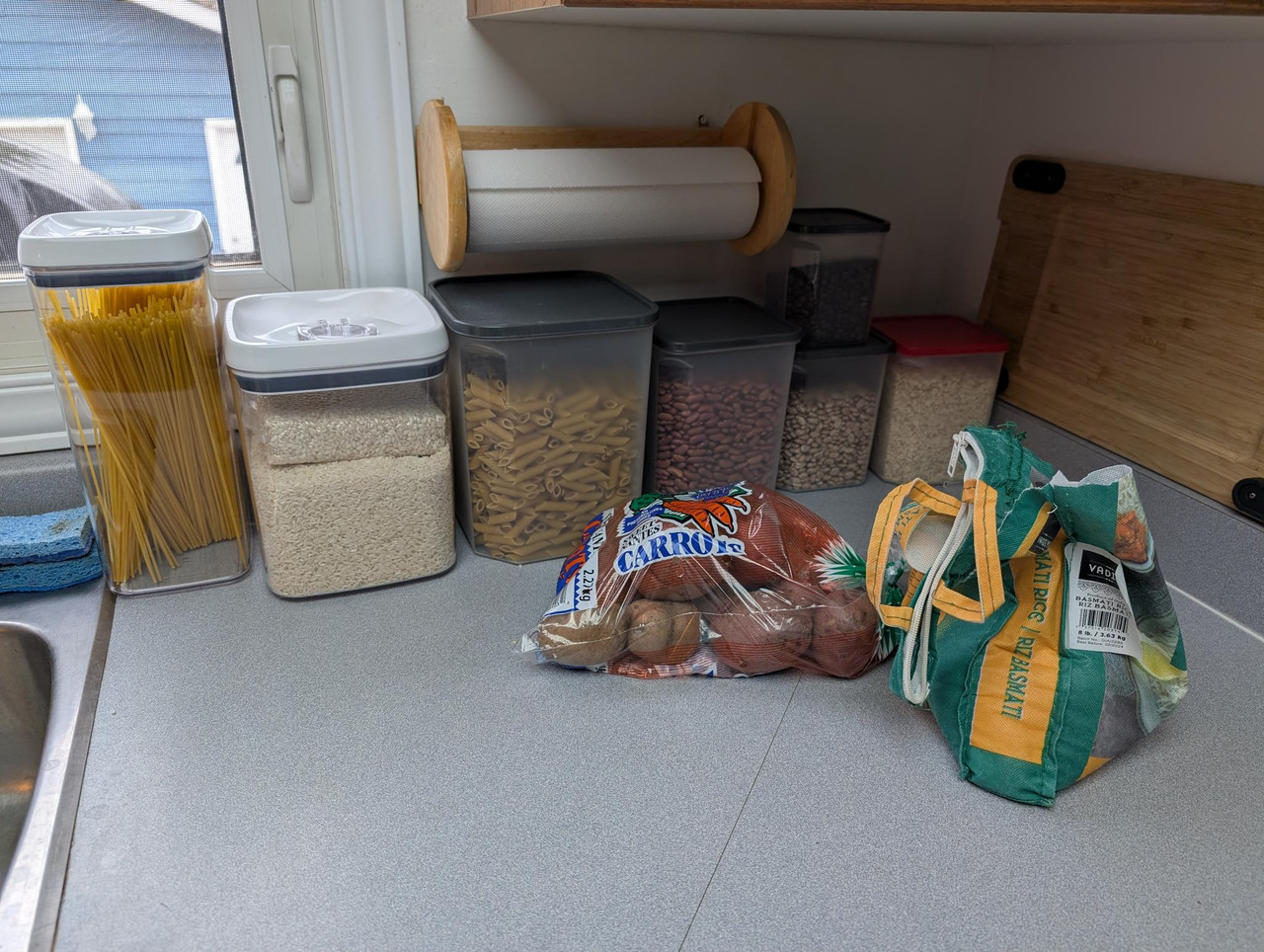
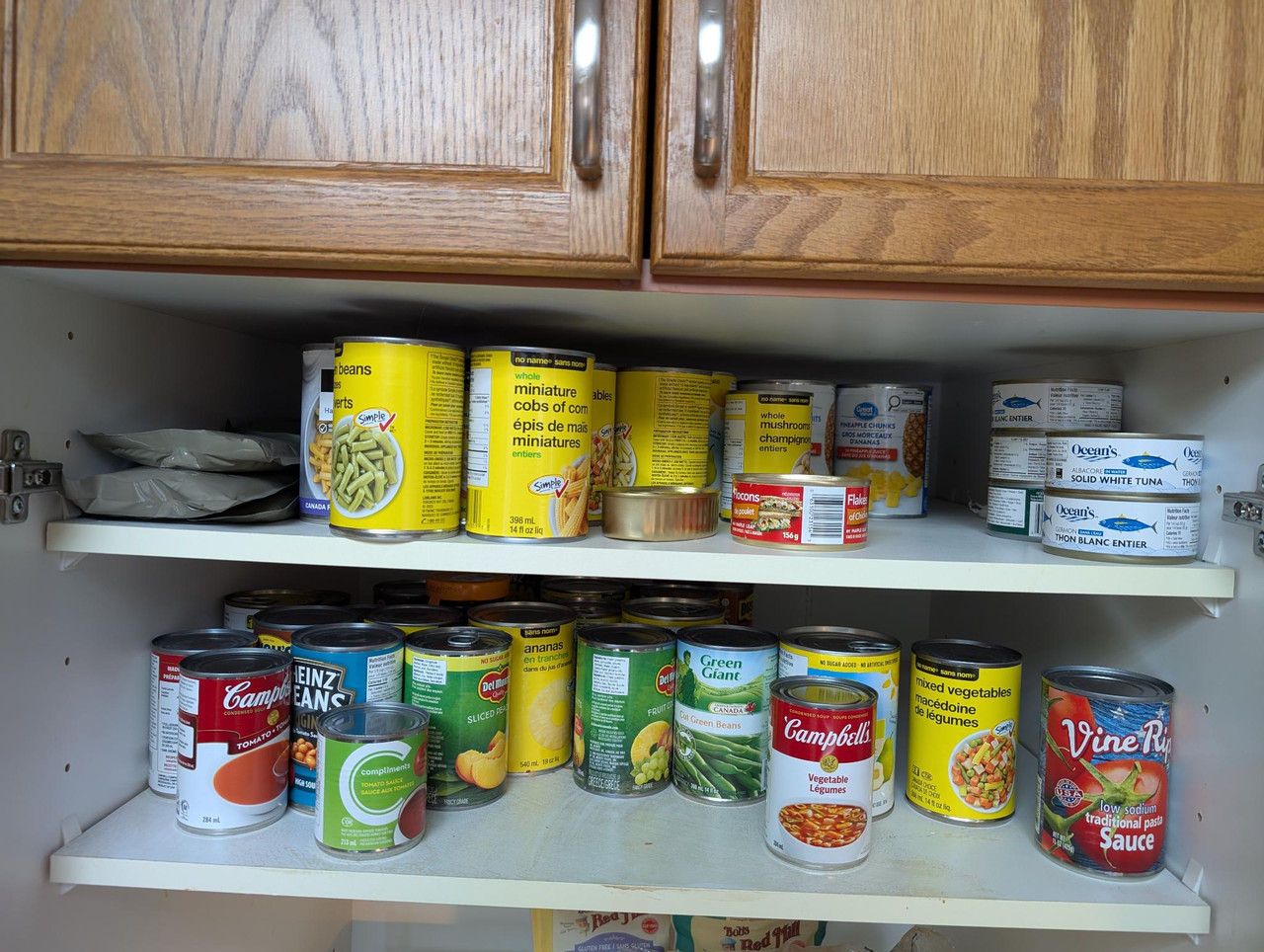
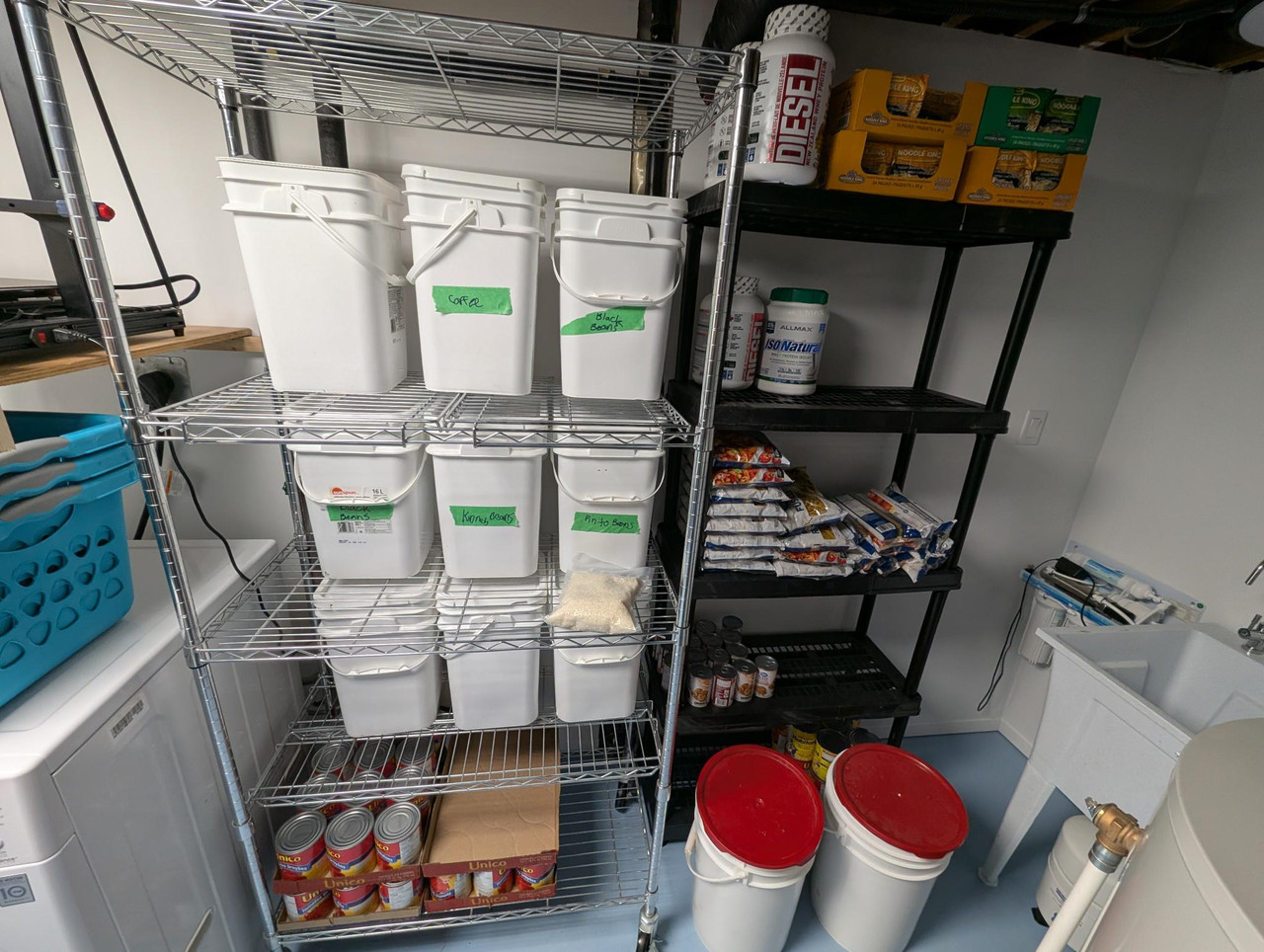
Dried, Canned, Frozen, Fresh in that order of preference for us anyways. Off-screen half size chest freezer we've finally just finished the frozen sour cherries from the backyard tree last year that's now budding for spring. Besides that it usually has a bunch of frozen baked potatoes from my backyard again, pork cuts that were on sale, Mennonite colony DIY chicken. Vacuum packing keeps away the freezer burn. I have the choice of three discount grocery/markets near me where I can buy fresh produce it's just b-grade/misshapen. I've been slowly adding more backyard planters too but I focus on fruit tree/berry bushes since I'm a shite veggie gardener. Too lazy for the upkeep so just hardy stuff that I can't easily kill from neglect in our short growing season, hardiness zone 3B. Potatoes are easy at least but we ran out half way through winter.


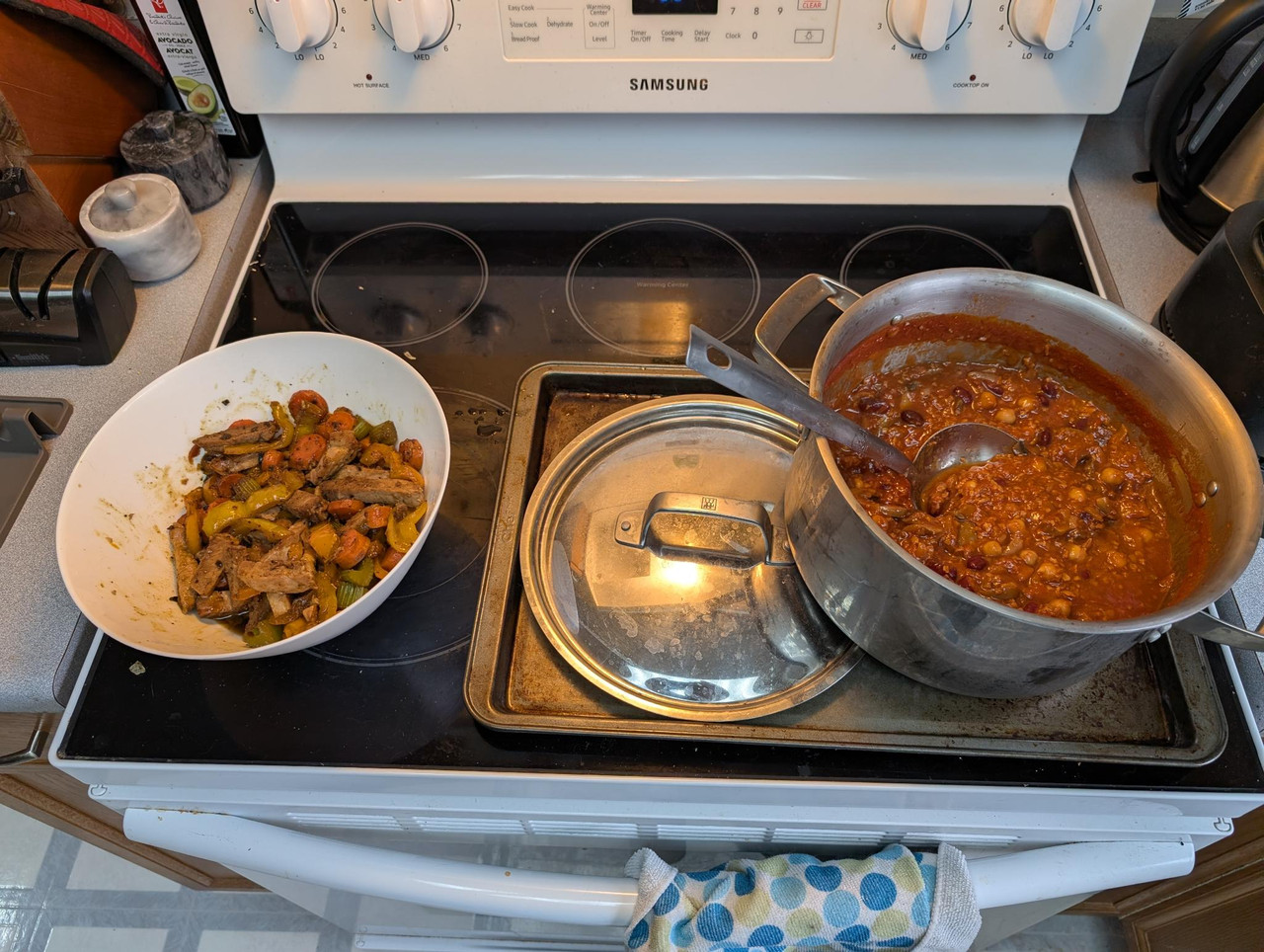
Bonus: This week's slop pots. Metal pot used textured vegetable protein: https://i.postimg.cc/xdm5S0c8/signal-2026-05-14-144201.jpg

[–] Drusas@fedia.io 0 points 1 month ago (1 children)

Canned is usually the worst option in terms of both nutrition and palatability.

[–] jenesaisquoi@feddit.org 0 points 1 month ago (1 children)

I agree with you, but it seems that for many people, convenience is more important than almost anything else. Which is exactly how the food industry makes most of their profits.

[–] Drusas@fedia.io 0 points 1 month ago (1 children)

I find frozen to be the most convenient for many veggies, but I would imagine it doesn't appear that way to anyone who's used to cans.

[–] jenesaisquoi@feddit.org 0 points 1 month ago (1 children)

Maybe they have a small freezer, idk. We have a vegetable subscription from a local farm, it's great. Vegetables get delivered once a week, and they're so fresh we can really taste the difference.

[–] Drusas@fedia.io 1 points 1 month ago

I like to buy fresh as-needed and to enjoy seasonality but to also have my favorite staples in the freezer.