Looks like more solar panels are needed.
this post was submitted on 12 Jul 2026
129 points (99.2% liked)
Climate
8803 readers
278 users here now
Discussion of climate, how it is changing, activism around that, the politics, and the energy systems change we need in order to stabilize things.
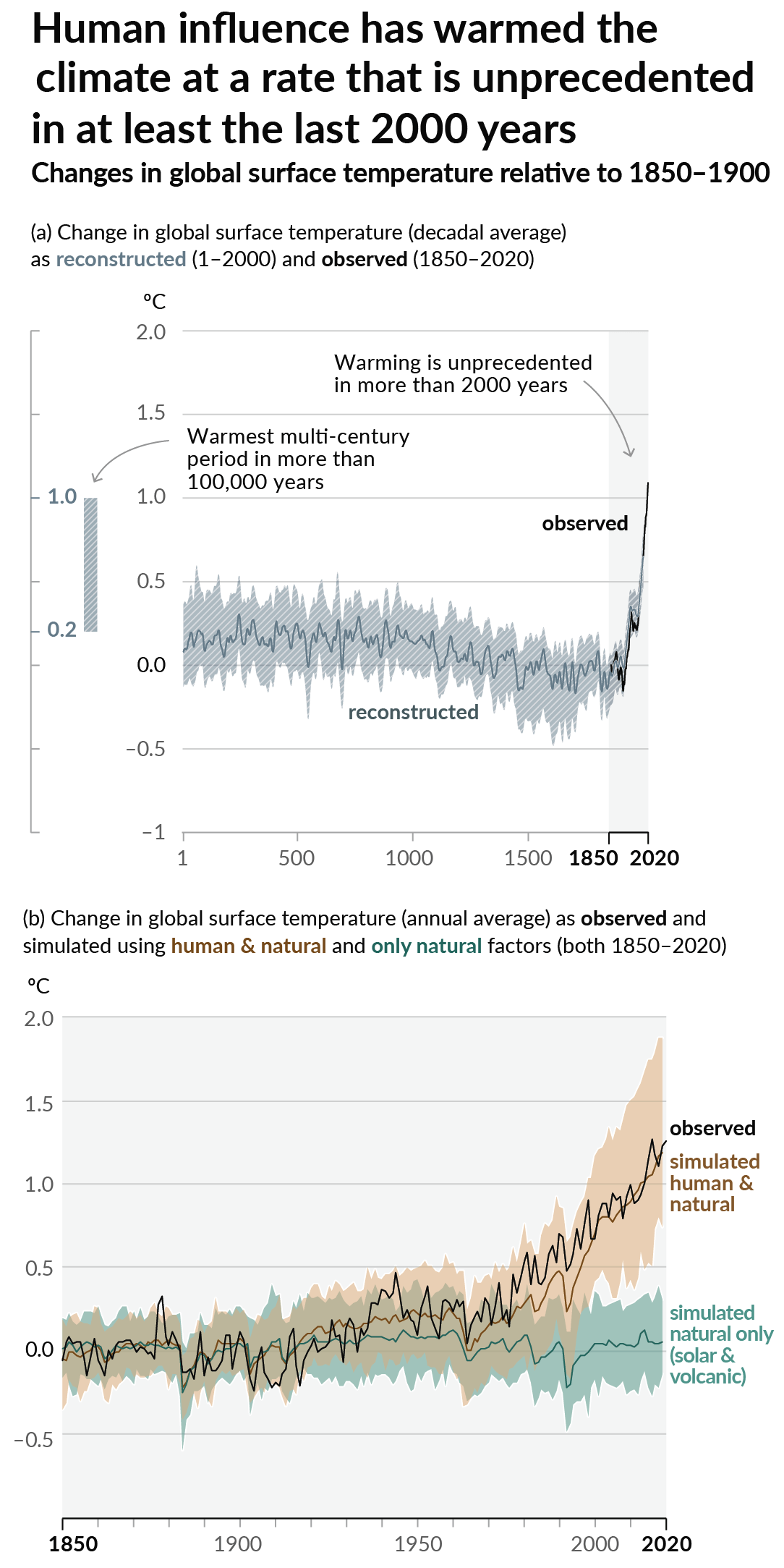
As a starting point, the burning of fossil fuels, and to a lesser extent deforestation and release of methane are responsible for the warming in recent decades:
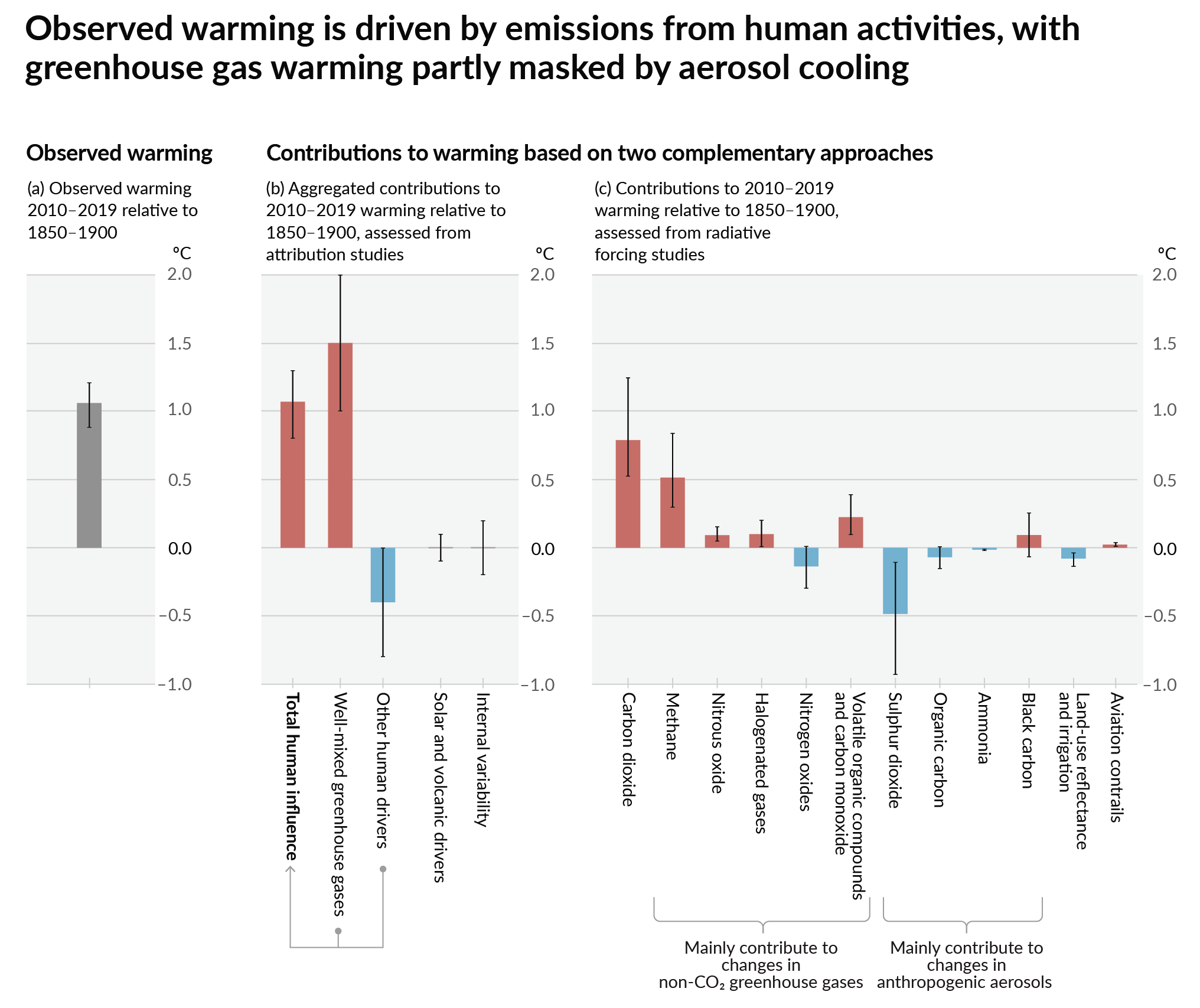
How much each change to the atmosphere has warmed the world:
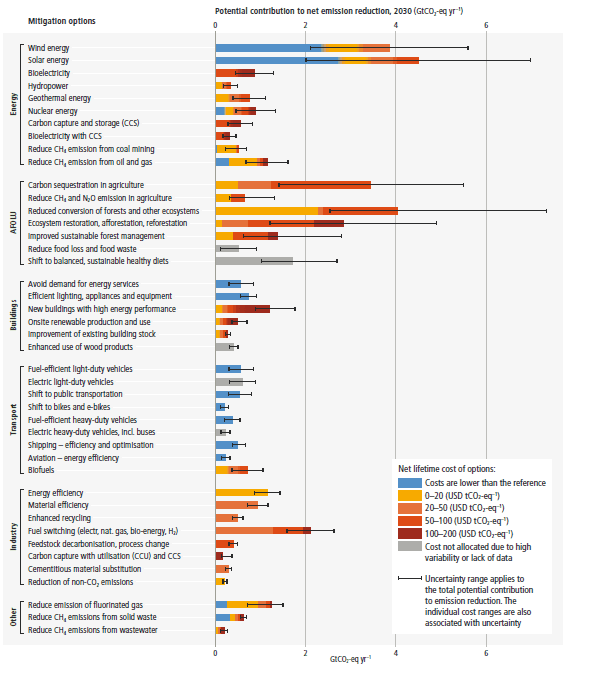
Recommended actions to cut greenhouse gas emissions in the near future:
Anti-science, inactivism, and unsupported conspiracy theories are not ok here.
founded 3 years ago
MODERATORS
Somehow this sounds like a quote from a strategy game.
you must construct additional pylons
It was semi serious comment based on the Australian rooftop and utility solar. One the impacts is abundant power for air conditioning during summer.
They can't replace nuclear, at least not without insanely huge energy storage.
Solar panels would help with the peaks. They don’t need to replace the nuclear plants but deal with air conditioning.
They would certainly help, but there is more energy demand than just AC during the day.
We have a large number of rooftop solar systems in Australia (as well as batteries) and they provide a large part of the daily need. The batteries have reduced the evening peak as well. As it is all getting cheaper, it makes senese.
https://cleanenergycouncil.org.au/news-resources/rooftop-solar-and-storage-report-july-to-dec-2025
Its not insane at all, in fact battery based energy storage is already keeping black outs from happening in California. Batteries are currently on an exponential tech development curve, so in 5 years data becomes obsolete. The result of that is we have people thinking Europe can't use battery grid storage to help easy nuclear maintaince down time.
Let's see, a smaller nuclear power plant operates at 1GW, that means you'd need to store 12GWh per day (plus 12 of direct use) assuming half day solar doesn't yield, or more with cloudy days and long winter nights. Where do we have such energy storage?
Here's a chart of average daily generation in the NEM (Australian south/east network) over the last 28 days. The dark blue bit is battery charging (average just over 13GWh per day). The dip below the zero line during midday is when batteries and pumped hydro are charged using the excess of solar power.
Speaking of excess of solar power, we have three hours of free power during the day because there is so much free solar that isn't being stored.
China’s grid-scale battery energy storage capacity surged from just 2.4 gigawatts in 2020 to more than 140 gigawatts in 2025
Chinese nuclear power output is 62GW, which means you'd need 12h*62GW for simplistic optimistic night worth of energy. Which is 744GWh. But realistically you have to look at worst case scenario during long winter nights and cloudy days. Which is a lot more storage required and less solar power output. And batteries get degraded over time, some malfunction etc.
First, Nuclear power plants degrade much faster and at a higher cost than solar/batteries. Its the moving parts simplification. Its a major factor in why we replaced relays with transistors. Senond, you need to do some new research that reflects current technology. China will absolutely produce that amount of grid storage. Look up their production curve its insane.
Nuclear power plants can run many decades at full power with adequate maintenance, even more so newer ones. Can the li-ion batteries though? Note that they'd be under stress each day. Perhaps with new/different battery tech, but that's yet to see how it pans out. As per China and batteries, perhaps, but that's yet to see how it turns out at the end. They also reverted from not building (many) coal power plants and they are increasingly building them again. So, it's complex. Also read "China Targets 180 Gigawatts of Battery Storage by end of 2027" which is far away from minimum required for getting rid of nuclear and coal.
85% of the 180Gw capacity was installed in 2026. The machines to make that storage dont go away at the end of the year. Also the science on li-ion batteries is showing they degrade much lower than expected as well. All your data is out of date. Go read.
"Where do we have such energy storage?" - You're asking for overnight replacement with something that currently exists!
I wonder what the analysis on ground source heat exchangers are. A future dominated by climate change and extreme heat events, this looks lile a strategic liability.
It should be noted that these regulations are there to protect the rivers from overheating, the nuclear power plant doesn't really care that much.
They're still a liability though, not only for the reason of heating up rivers
I'm well aware. Both are important, thus my question.
Europe as in the EU member states don't mine uranium, so it's a strategic dependency anyways. If you're not a nuclear power (i.e. France or the UK, though no longer a Union member), nuclear makes no sense
True, but a reliable supply exists with your friends in Canada. Nuclear has to be secondary to wind and solar, but in a fossil fuel free world it still has a place.
"Surely this time relying on partner nations won't get us in trouble"
What is the EU if not partners you count on? It's not wise to go it alone. Friends and partners are good to have. Also as I stated, nuclear comes after wind and solar.
My point was relying on Canada for Uranium is like relying on the US for, I don't know, weapons or something, you're only one election away from being cut off a resource
I totally get that. But that is really a fact of life. No country can afford to live on only its own resources.
Edit: Canada has always wanted to sell its resources and is not aspiring empire. So one election away isn't accurate. Both major parties will gladly sell. It is vital to us, and makes us just that more reliable a partner.
Ah makes sense, I was really confused why we were protecting a steam turbine from summer heat.
So instead of turning off they could also run it at 50%? If that's even a thing.
Probably cost. Way cheaper to simply intake and output water than too build and maintain a ground loop heat exchange.
I did some shitty mental math and its cost and land and overall feasibility. There is so much consistent heat a power plant would overwhelm the thermal gradient. To offset this you would need increadible land masses and pipe networks. Twas a nice passing thought.
I don't see how that could work. Water cooling is just so much more effective.
A 1 GW reactor operating at 35% thermal efficiency is dumping out ~~650 MW~~ 2 GW of heat (Edit when I realized the nameplate capacity of a reactor is its electrical output, not its total power). It's hard to see how you can put that heat somewhere in the ground at a continuous rate and maintain some kind of equilibrium.
Evaporative cooling can handle roughly 2400 joules/g of water evaporated, so 1 MW (1 MJ/s) of heat could translate into about 416 g of water evaporated each second. That's what those cooling towers are doing in the stereotypical image of a nuclear power plant.
Meanwhile, if you're allowed to dump the waste heat by discharging warmer water than you take in, water can take on 4.184 J / °C g, so 1 MW would raise the temperature of about 240 kg of water by °C per second.
That's a lot of water used to cool these plants, but there's really nothing that can compete with water at these scales. That's why these plants are next to plentiful water, like on riverbanks next to rivers that have 100-10,000 cubic meters of water per second flowing by. Evaporate just 1 cubic meter (1,000 kg) of water per second for cooling 2.4 GW of heat.
Or, even without evaporative cooling, you could dump about 4 MJ of heat into each cubic meter of water that passes by and only raise it by a single 1°C.
So when the rivers are already running hot or with low water levels, there's really nothing else a power plant could do to expel/reject all the heat it's generating.
So if nuclear and solar are heat sensitive, how do you power ACs during a heatwave that lasts a month?
Edit: look people, I just heard that solar panels are affected by heat, I'm not saying it as it is an unbreakable truth. If you know it to be otherwise then share it.
For Pete's sake no need to be so butt hurt for a question.
Solar is heat sensitive? I mean yes it operates at sub optimal conditions, but it still operates also during summer solar energy per m2 is higher due to more optimal earth tilt than during winter months.
So solar panel operating at 15% of 100W absorbed produces 15W in summer. Same panel in winter operating at 20% capacity of 80W in winter makes 16W. Yes summer is lower output, but by not that much. And if it's not heatwave conditions it's even better.
Anyway back to the main point, there solar panels operating at 48 degrees right now that I just visited this month.
Completely agree, saying that solar is heat sensitive when talking about not being able to power ACs is pretty far out there.
Adding to what you said, ambient temperature only has a slight impact on solar's efficiency. Solar's efficiency usually mainly goes down due to self-heating which is due to higher irradiance. So in some sense they are less efficient because they generate more power.
However your example numbers are way off, solar panels generate much more peak power during summer than during winter, they aren't close to being similar (depending on lattitude, but I guess that's a given when talking about "summer" and "winter").
^[Source]
And the other part that should not be overlooked is that there tends to be some correlation between hot weather and long sunshine, which can also be seen in the plot. So not only is peak power of solar higher during the time when heatwaves are more likely, they also generate power longer.
So if I put panels at home they won't let me hanging if heat outside goes up, cool.
Solar is not heat sensitive, for many reasons but ultimately it comes back to two major ones 1. Solar is efficient at any scale so infrastructure bottlenecks and vulnerabilities are a non-issue and 2. There are no "moving parts" in solar, so heat extremes have less mechanical impact. No steam is being generated in traditional solar.
Toronto downtown is 75% cooled in summer by cold lake water. Since 2004.
I heard Paris is also looking at using river water to control temperatures which I find quite cool.