117
Germany's coal exit quietly progressing, likely completed by 2032 – researcher
(www.cleanenergywire.org)
Discussion of climate, how it is changing, activism around that, the politics, and the energy systems change we need in order to stabilize things.
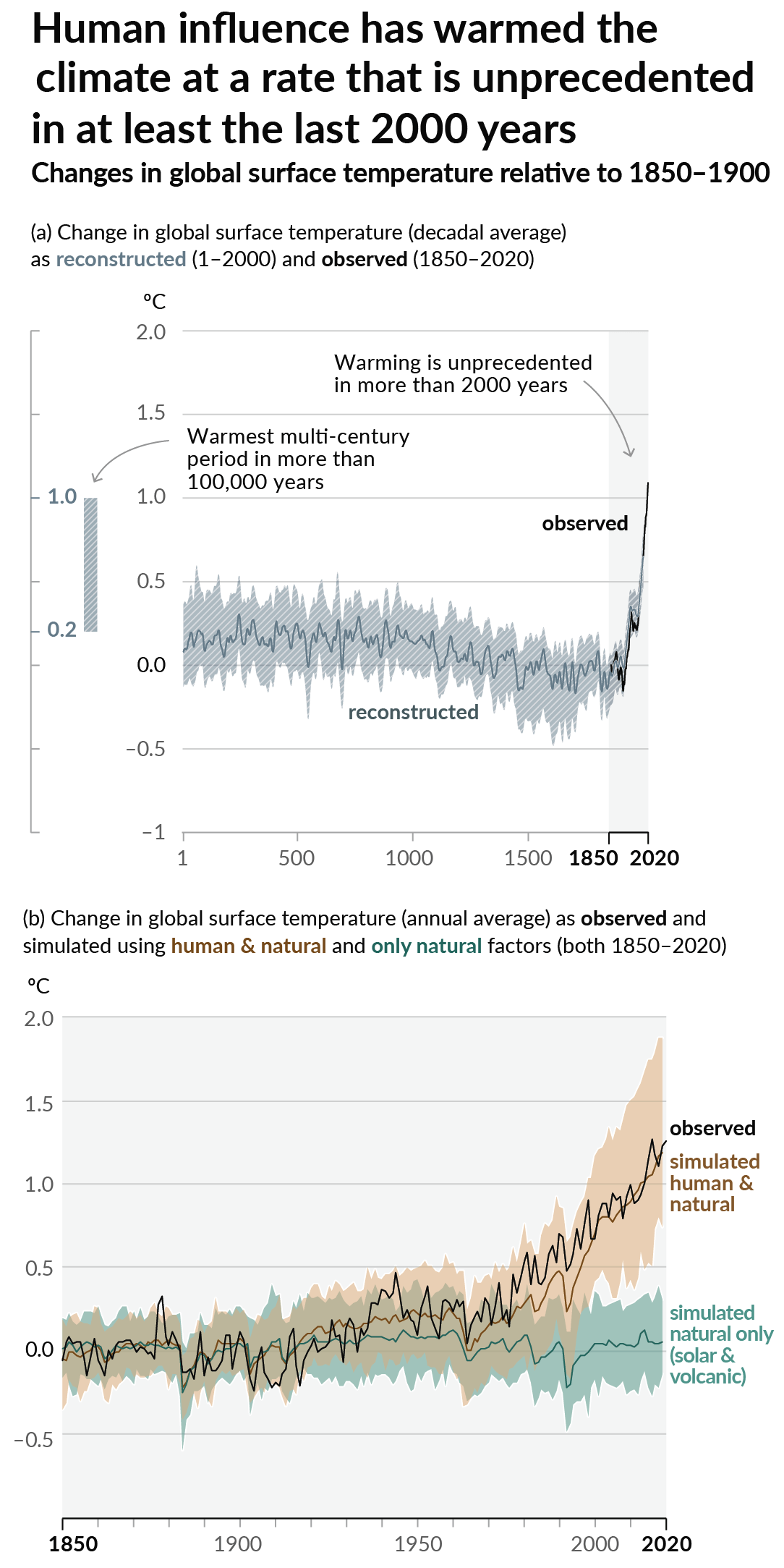
As a starting point, the burning of fossil fuels, and to a lesser extent deforestation and release of methane are responsible for the warming in recent decades:
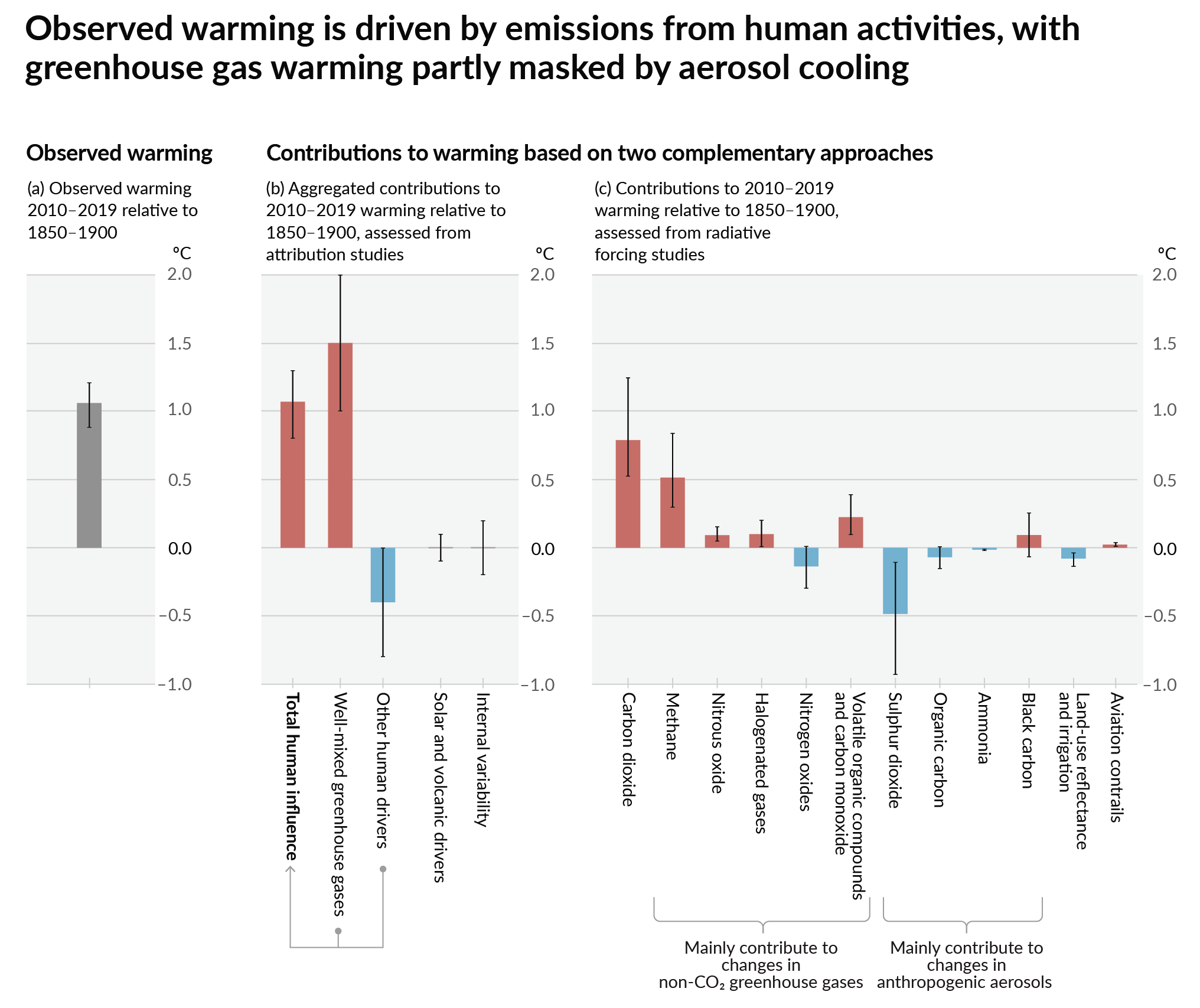
How much each change to the atmosphere has warmed the world:
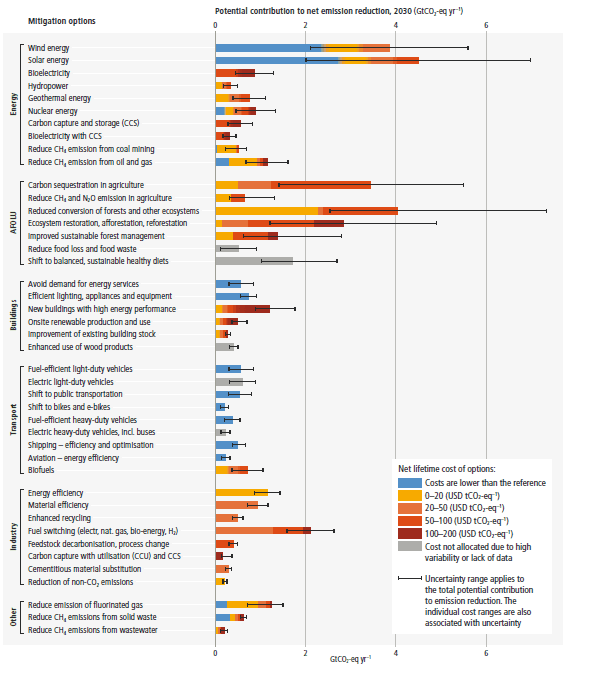
Recommended actions to cut greenhouse gas emissions in the near future:
Anti-science, inactivism, and unsupported conspiracy theories are not ok here.
What are these graphs saying about the future coal phase out?
My read of those graphs is that coal (and lignite) have both been going down and will likely continue to do so. Natural gas has been constant, it does not appear to replace the reduction in coal.
Usage of both can go down only to some extent. Then what? Germany has no nuclear, where will energy come from during windless nights/cloudy days? France?
Other parts of Europe that have wind and battery storage. That isn't rocket science and improving the grid makes way more sense and is cheaper than building white elephant nuclear reactors (that will not be online before way into the 2040ties anyways).
So, let's just put another cable to the grid and everything is solved then?
In combination with enough renewables distributed over Europe yes.
Last year there were 78GW of battery grid connections approved in Germany. That is with 720GW pending for approval. So safe to say that segment is growing quickly. Add to that trade with other countries. Europe is large enough, that the weather is very different across the continent.
Oh and also, there always is some wind at least. The worse week last year was at 12.8% of electricity consumption from wind and average is 28%. That week also had pretty good solar.
Shouldn't that be GWh? Anyway, that's peanuts if you want to rely purely on renewables. You also can't look at average wind, you have to cover energy demand all the time. If there is no wind for minutes in such case, you have big problems.
No, grid connections are measured in GW.
These batteries usually are planned to have two hours of storage. Some more some less. So 158GWh would be enough to power Germany through sunny, but windless days. 1440GWh are more then a days worth of electricity consumption of Germany. Again there are no days with absolutely no wind and solar and Germany needs more of them to even charge those batteries up anyway. So it is on the lower end of what is needed to run a country like Germany without fossil fuels.
At that point you can talk about some weird forms of storage like hydrogen or use a bit of biomass or something like that. You might even get away with carbon capture and storage, because the amount of fossil fuels needed for that grid are so low.
I think you need more than one day of energy's worth, plus there is a problem with short and cloudy winter days where you'd struggle to generate enough energy let alone store it. I'd be really curious if there are some actual studies that observe past years and calculate all this.
Nuclear can't be used for that either way. Nuclear power plants are notoriously expensive, so they need to run at a constant 100% output to be remotely economically viable. That means you can't just dial them up to fill a gap in renewables since they already are at max output.
Even if we ignore economic concerns, the old reactors we had weren't build to operate in load following mode, meaning you couldn't just ramp their output up/down if you wanted to. New reactors are often build with that capability in mind, but that would've required pretty much a full rebuild of the reactor chamber and the control system. With the already required maintenance it would've been easier to just build a new reactor at that point.
If the two options are a new nuclear reactor or investment in renewables, than the latter option is faster, more reliable and cheaper. The gaps in renewables could easily be solved with more water reservoirs and battery stations as power storage. The main problem is that germany, like always, introduced so many diplomatic hurdles in the process that no one wants to do it. You can thank our totally not corrupt politicians for that.
Yep, Nuclear is all you listed above. But OTOH they are reliable and predicatable 24/7.
You sure? Nuclear is reliable, renewables aren't because they depend on weather.
"Easily". Besides corruption, the sheer amount of energy storage required is enormous, there are nowhere enough batteries available nor pumped storage hydropower. Perhaps in the future where sodium and other batteries appear in mass production, but not today.
Edit: also you can't look at average consumption but at peak daily consumption which might be quite higher during winter than summer.
Yes
Germany is very much opposed to nuclear, but when it needs it, it has no problems with importing it? That's a bit hypocritical and not really self sufficient, isn't it. Besides it might happen there is dr~~a~~ought plus/or huge energy demand and France won't be able to export energy.
A bit hypocritical to think nuclear could prevent that when it takes 15 years under optimal conditions to build a reactor.
Nuclear could prevent that, but Germany closed even their functional NPPs, let alone planned new ones when it should. How come France emissions are incredibly low and state is self sufficient, even exports a lot...
Germany closed half a century old plants that were over or close to their maximum design lifespan.
France is still having Russia of all places process a large part of the needed uranium 🙄 And the nuclear power plants are causing huge debts for the operators.