
 using water for trees to capture carbon and create natural habitats for wildlife
 using water for cooling AI data centers because air conditioning costs a lil more
For posting all the anonymous reactionary bullshit that you can't post anywhere else.
Rule 1: All posts must include links to the subject matter, and no identifying information should be redacted.
Rule 2: If your source is a reactionary website, please use archive.is instead of linking directly.
Rule 3: No sectarianism.
Rule 4: TERF/SWERFs Not Welcome
Rule 5: No bigotry of any kind, including ironic bigotry.
Rule 6: Do not post fellow hexbears.
Rule 7: Do not individually target other instances' admins or moderators.
using water for trees to capture carbon and create natural habitats for wildlife
using water for cooling AI data centers because air conditioning costs a lil more
oh no, ebil seeseepee caught planting too much trees 
The Chinese are raising an army of communist ents to wage war against the west. This is why we should launch a pre-emptive invasion and firebombing campaign.
Huh losers. Deforestation is an indicator of a growing economy. China is collapsing
It's a waste, I tell you! All that water getting trapped in the trees and not plastic bottles.
That article is actually good, though. Its just a stupid headline.
Obviously chinas massive engineering projects are going to effect the environment, sometimes in negative and unexpected ways. Their best universities are studying those effects.
That article is actually good, though. Its just a stupid headline.
Common result of headlines being written by editors instead of the person who wrote the article
Better to chop them all down and make half of it a golf course and the other half an AI data center.
Altering the climate in any way except through recreational tire fires is communism! 
Removing those trees in the first place changed the water cycle too.
its being changed chinesely now
A lot of the area planted was originally grassland
Ah, but how long was it grassland? Humans have been changing the landscape for tens of thousands of years, on top of major climate changes before and during that. Much of what we call "natural" or "wild" was/is actually curated and lived in.
I'm not really sure I'm following your point. Sure, humans have been extensively altering the environment, probably since the extinction of the megafauna if not before (which probably resulted in a lot of conversion of grassland and savanna to forest). But natural succession also occurs, and a large, even-aged monoculture planting is a different beast than gradual afforestation. We could discuss whether the tradeoffs were worth it, but "this resulted in an abrupt shift to the local water cycle in an area where water scarcity is an impediment to agricultural production" is a reasonable observation to have.
The point is that this land was not immutably grassland historically, and so the prior point re: its prior state is not inherently valid. The only question is how long it was the case, if that's what we are meant to care about.
I haven't said anything about whether it's strategically better in this case, that's just a category error re: your reply. I am highlighting that one should avoid the (often settler naturalistic fallacy mindset) that the right thing is what it "used to be", where "used to be" tends to be a somewhat mythological description of the place 50 years ago.
The point is that this land was not immutably grassland historically, and so the prior point re: its prior state is not inherently valid.
So is the assumption I was responding to, which assumed that there were trees there to cut down in the first place.
I am highlighting that one should avoid the (often settler naturalistic fallacy mindset) that the right thing is what it "used to be", where "used to be" tends to be a somewhat mythological description of the place 50 years ago
I wasn't making any normative claims about what the land should be, just pointing out that this process appears to have been afforestation of an area that, prior to this intervention, was grassland, and so the implicit assumption in the original comment that the local water cycle had already been perturbed may be wrong.
So is the assumption I was responding to, which assumed that there were trees there to cut down in the first place.
Both the comment you responded to and the comment you made had that kind of assumption. And I'm not replying to what they said...
I wasn't making any normative claims about what the land should be, just pointing out that this process appears to have been afforestation of an area that, prior to this intervention, was grassland, and so the implicit assumption in the original comment that the local water cycle had already been perturbed may be wrong.
I don't think that's what you communicated, actually.
Both the comment you responded to and the comment you made had that kind of assumption. And I'm not replying to what they said...
You did jump in on the conversation, though, so I'm trying to fill you in on context that you appear to have been missing.
I don't think that's what you communicated, actually.
You are welcome to apply the provided clarification.
Whatever
At what cost???
Riiiiight, because desertification never dries out anything.
China could find the cure for cancer and Westerners would still find a way to call Xi Jinping evil because of it.
"But at what cost?" 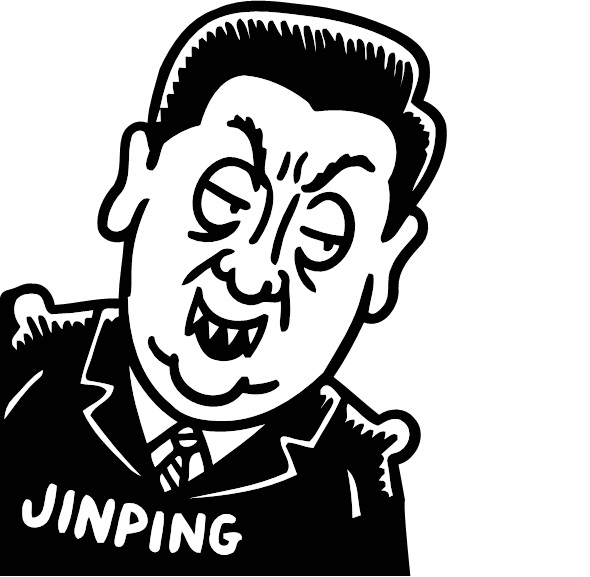
Unlike me, I just cut down all the trees. That surely has no consequences whatsoever he he he he
But
At
WOT
CAWST?!?!?

You know even if there was an underlying adverse ecological impact, the cool thing about planting too many trees is you can just cut them down again WAYYY easier than if you needed to plant another forest.
I know which problem I'd rather have is all I'm saying.
The water changed place, what an irremediable tragedy, everybody knows there's no way to transport water
This is a little bit simplistic, local hydrology could change, like rainfall patterns or the presence/absence of water courses and aquifers. Rainfall in an environment can't really be replaced by transported water. For some areas it could result in habitat loss or change and species loss or change. For agriculture yes it could possibly be piped in but this still requires building sufficient infrastructure to replace the loss of flows, and in the meantime some people may no longer be able to earn an income/work the land. This is not to say that I don't broadly support afforestation and reforestation efforts, but to say that it's just water moving from one place to another is missing the river for the trees.
missing the river for the trees
we are digging the flaying pit right now, please come with me

Okay, makes sense, thank you for the effortpost, very informative!
No probs!
who will stand up to the sino-conifer menace?
i will not be breathing the chinese air. i’ll accept chinese plastics in my blood stream if american corporations profit off it but how are they gonna make any money off some trees in china that aren’t even being planted just to be harvested like all the trees in america are?
Think of all the Pokémon cards those could become
Popular Mechanics Understand the Biotic Pump Challenge: Impossible